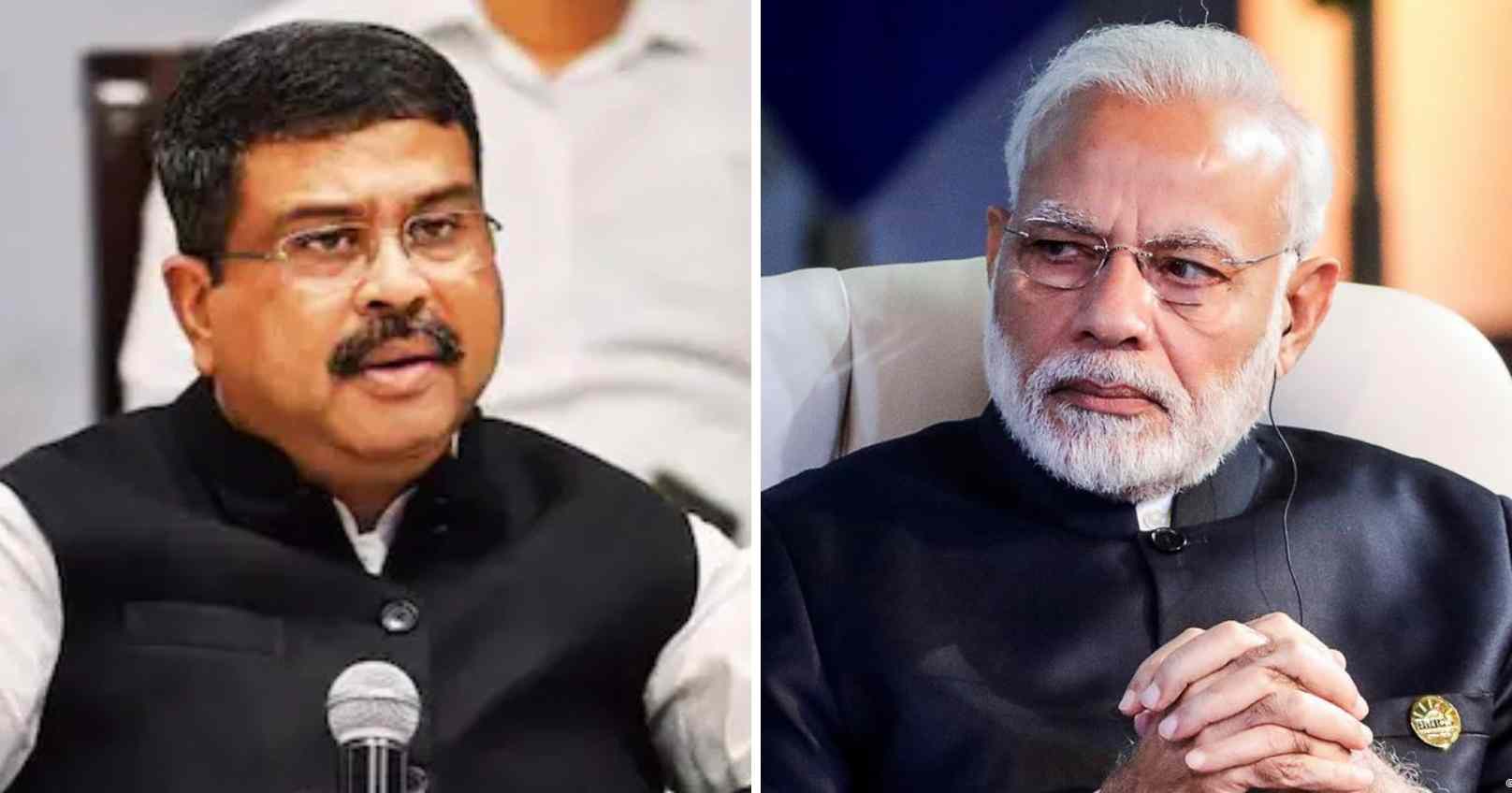
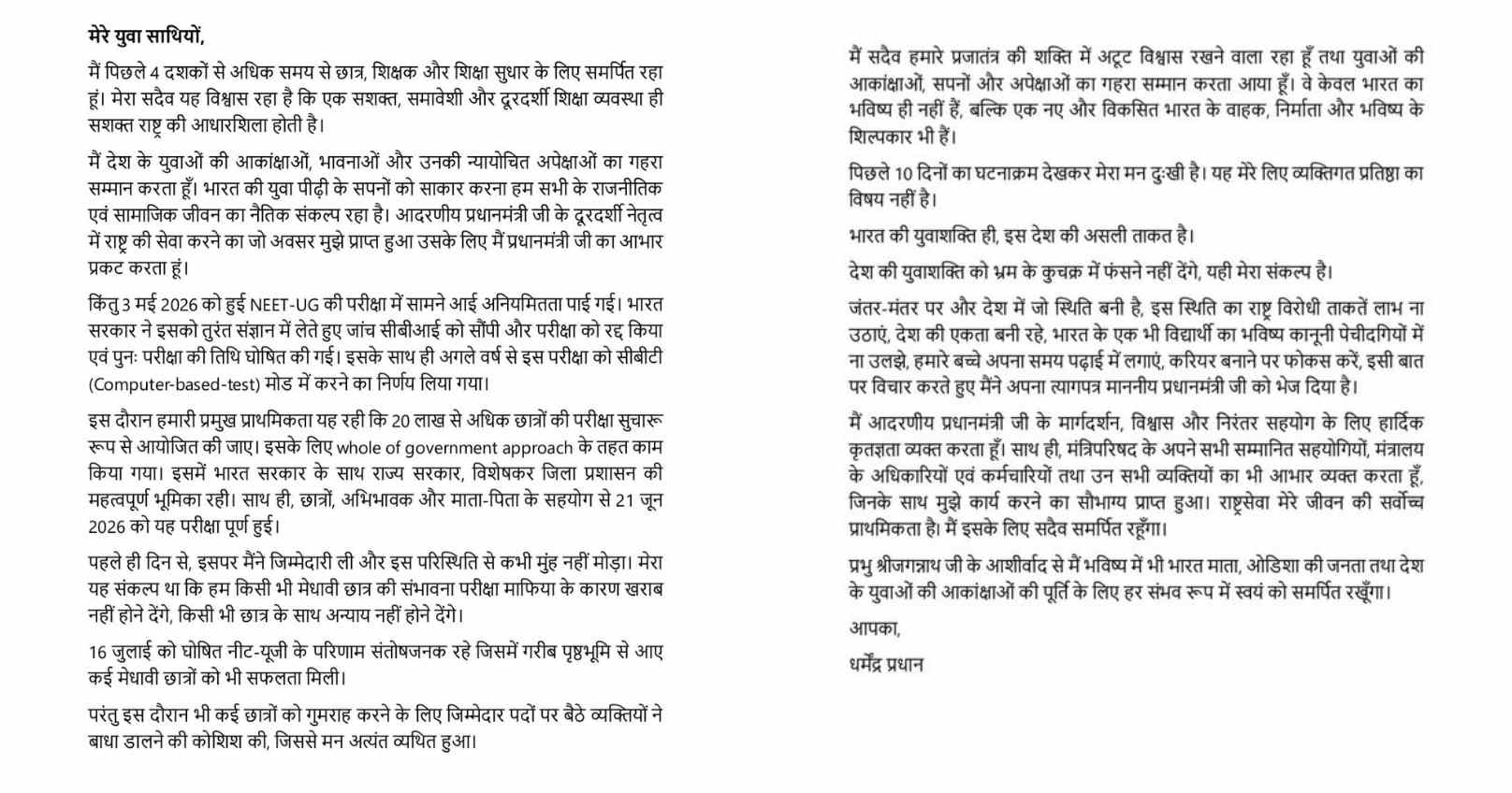
Following weeks of escalating agitation by students across the country regarding widespread irregularities and leaked question papers in the NEET examinations, Union Education Minister Dharmendra Pradhan submitted his resignation to Prime Minister Narendra Modi on Saturday.
The announcement was published on Pradhan's official X account shortly before central officials were scheduled to convene for a third round of talks with representatives of the Cockroach Janta Party (CJP). The minister’s step-down had stood as the primary non-negotiable condition for the demonstrators who have been camped at New Delhi's Jantar Mantar for over four weeks.
Negotiations between the government and the CJP had stalled earlier in the day after the group refused to proceed with discussions unless Pradhan was relieved of his post. While federal representatives had agreed during Friday’s deliberations to grant immunity from legal prosecution to student protesters and to provide financial relief to the families of candidates who lost their lives to suicide following the leak, they had initially held back on accepting the demand for the minister's removal.
In his public statement, Pradhan noted that his decision was guided by a desire to protect the nation's integrity, prevent external entities from exploiting the situation, and ensure students could return to their academic pursuits without facing legal repercussions. He expressed gratitude to the Prime Minister for the opportunity to serve and reiterated his commitment to the welfare of Indian youth.
News of the resignation triggered widespread celebrations at the Jantar Mantar demonstration hub. CJP founder Abhijeet Dipke addressed the crowd, hailing the development as a historic achievement for the student movement, while official social media handles of the group commemorated the outcome.
The student movement, which originated in the capital, quickly expanded to numerous cities across India in recent weeks, drawing strong backing from opposition parties and creating significant political pressure on the central leadership.