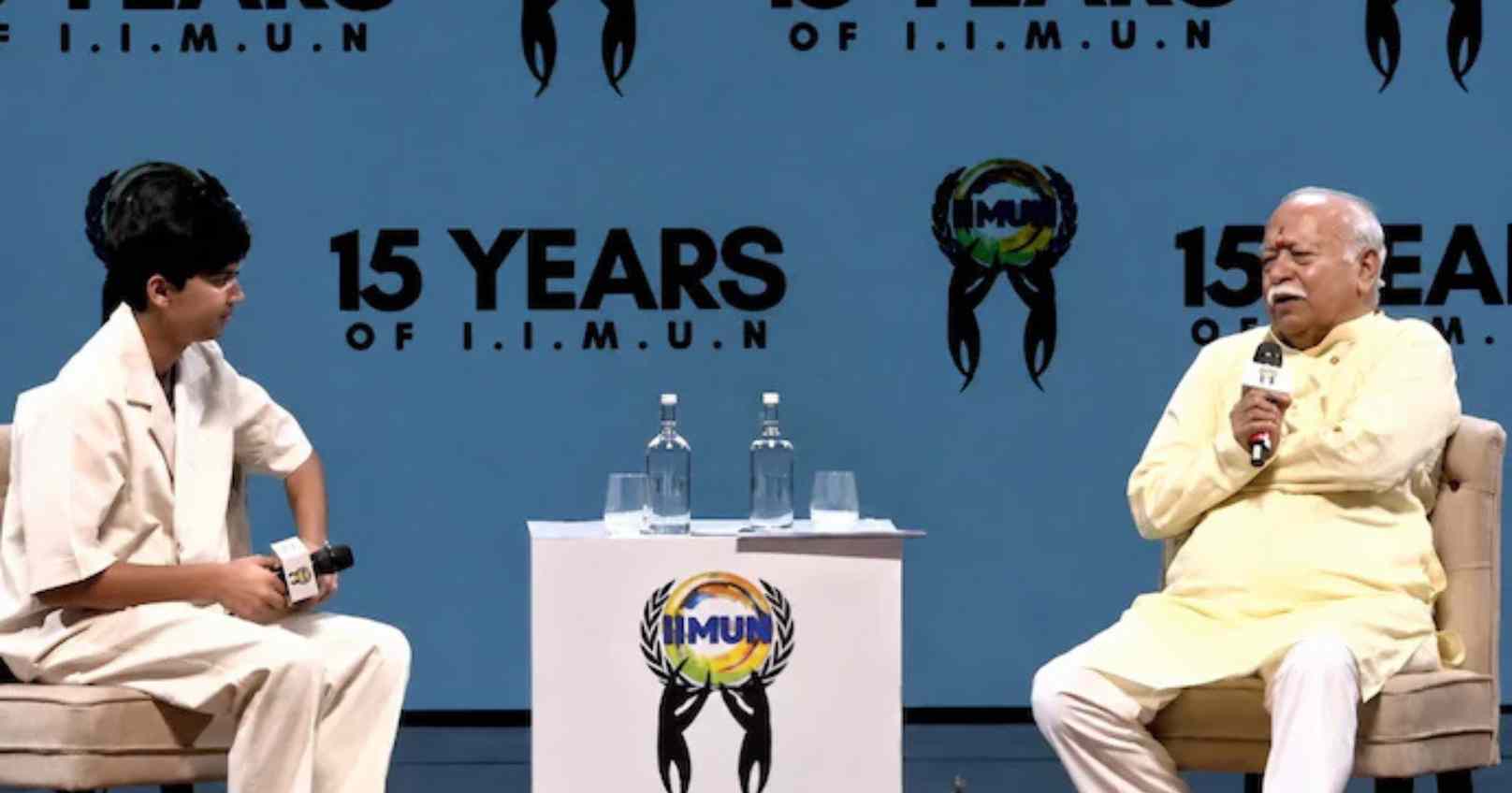
Rashtriya Swayamsevak Sangh (RSS) chief Mohan Bhagwat on Thursday came out in support of student-led movements, asserting that young people who take to the streets to raise concerns should not be branded anti-national. Addressing nearly 2,000 members of Gen Z and Gen Alpha at an event in Mumbai marking the 15th anniversary of the International Movement to Unite Nations (IIMUN), Bhagwat said he had immense faith in the country's youth and believed their voices deserved respect and engagement.
Expressing confidence in the younger generation, Bhagwat remarked that he would "trust Gen Z blindly" and stressed that protests, when rooted in genuine concerns, are an essential component of a democratic society. According to him, disagreements should be resolved through dialogue rather than suspicion or hostility.
The RSS chief observed that today's youth are more willing to question established systems and demand logical explanations, unlike earlier generations that were less inclined to challenge authority. He described Gen Z and Gen Alpha as more honest and transparent, adding that qualities such as patriotism, integrity and a commitment to public service should guide them.
Referring to recent clashes involving protesters and the police, Bhagwat cautioned against drawing conclusions without complete information. He acknowledged reports of excessive force as well as allegations of anti-social elements infiltrating protests, but said opinions should be formed only after facts are independently verified.
Calling dissent a natural aspect of democracy, Bhagwat said protests often reflect a desire for improvement rather than opposition for its own sake. He noted that India's education system still requires substantial reforms and argued that constructive conversations between authorities and students are necessary to address long-standing grievances.
Bhagwat also shared his views on leadership, rejecting the idea that leadership is defined by public speeches or electoral victories. In his view, genuine leaders work quietly, empower others and create future leaders instead of seeking personal recognition.
He further emphasised that education should not be treated as a commercial enterprise and said society, along with the government, bears responsibility for ensuring access to quality learning. Reiterating a long-standing demand, he supported greater public spending on education and called for stronger community participation in improving schools and institutions.
On social media, Bhagwat argued that legislation alone cannot curb misinformation or harmful content. He said changing societal attitudes and encouraging responsible behaviour among influencers and users would be more effective than relying solely on legal restrictions.
Touching upon international affairs, Bhagwat said citizens should stand with the government during national crises while maintaining a humanitarian outlook. Referring to relations with countries such as Pakistan and China, he said enduring hostility could never be a permanent solution and emphasised the importance of preserving humanity above political differences.
The RSS chief also addressed issues relating to the LGBTQ community, saying they are an integral part of society and deserve recognition and acceptance. However, he distinguished between marriage and companionship, arguing that while same-sex relationships should be accommodated socially, marriage remains a broader social institution connected to family and community structures.
Bhagwat's remarks come amid an ongoing national debate over student protests, democratic dissent and the state's response to public demonstrations, with the RSS chief urging society to engage with young people through dialogue and understanding rather than mistrust.