Former external affairs minister Salman Khurshid has said India-China relations remain deeply strained and cannot be repaired through diplomatic statements alone, stressing the need for greater trust, transparency and concrete action from both sides.
Speaking about the BRICS Summit in New Delhi and Prime Minister Narendra Modi’s meeting with Chinese President Xi Jinping, Khurshid said the two countries needed to move beyond broad assurances about improving ties and address the issues that have repeatedly triggered tensions.
“I think that it's worsened. Over a period, it's worsened. It's become, depressingly, very bad,” Khurshid said in an interview with India Today.
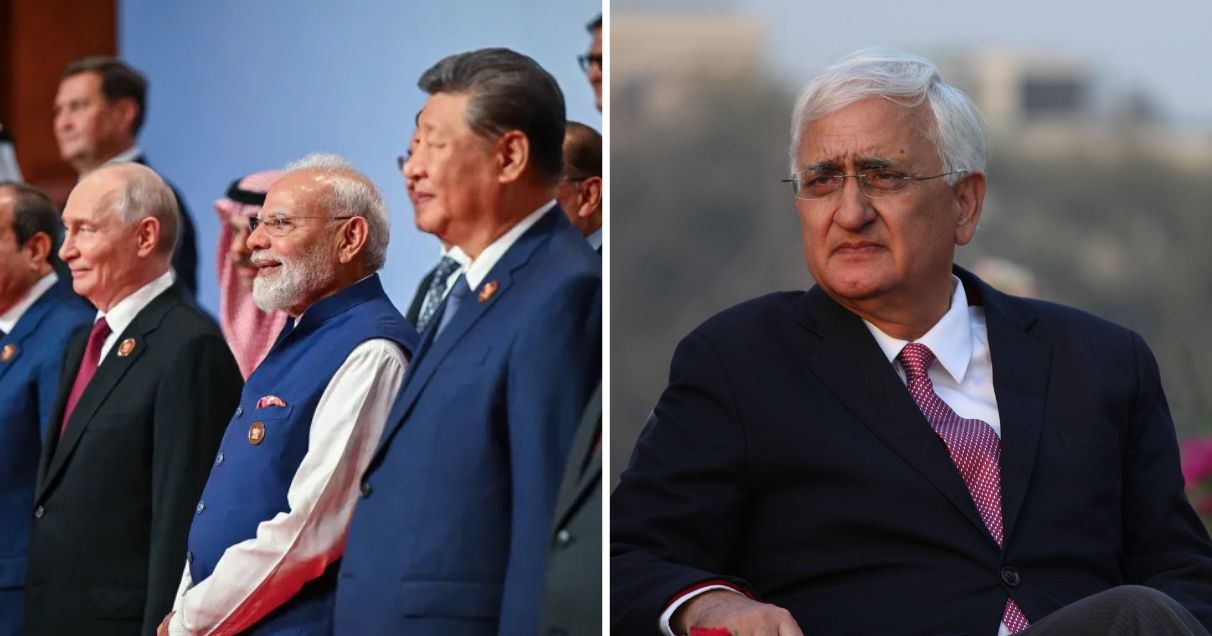
His comments came after Modi and Xi held talks in New Delhi, their first bilateral meeting on Indian soil in seven years. The two leaders discussed ways to improve bilateral cooperation and emphasised the potential for India and China to benefit from each other’s strengths.
‘Need to move beyond generalities’
Khurshid said New Delhi should take a closer look at the trajectory of the relationship, assess what recent diplomatic engagement has achieved and identify the issues that remain unresolved.
He argued that repeated claims that relations had been restored to a normal path were insufficient without measurable progress.
According to Khurshid, India and China need a more direct conversation about the reasons behind recurring confrontations and how similar crises can be avoided in the future.
He said the objective should not be to assign blame but to understand the causes of tensions and establish mechanisms to prevent their recurrence.
Khurshid also called for less reliance on formal diplomatic language and greater focus on substantive discussions.
‘Trust has to come first’
Referring to earlier border flashpoints, including Chumar, Depsang, Doklam, Galwan and Thag La, Khurshid said India should carefully assess whether the latest engagement with Beijing amounts to a genuine improvement in relations.
He supported a “trust but verify” approach, while stressing that verification would be difficult without first establishing a greater degree of trust and information-sharing between the two countries.
Khurshid also criticised political exchanges in India in which the government and opposition accuse each other of being either too soft or too accommodating towards China.
He said such rhetoric could make it harder to build a domestic consensus on dealing with Beijing.
The former minister suggested that the government should share more information with the opposition so that political parties could take informed positions on sensitive foreign-policy issues.
Trade deficit requires action from both sides
Khurshid said improving economic ties would also require efforts from both India and China.
While Beijing could take steps to provide Indian businesses greater access to its market and help address the trade imbalance, he said New Delhi should also examine measures it could undertake domestically.
He argued that responsibility for reducing the trade deficit could not be placed entirely on China.
Khurshid said economic engagement needed to be accompanied by progress on border peace and stability if the overall relationship was to improve.
BRICS declaration marks gradual progress
On the BRICS Summit, Khurshid viewed the adoption of the New Delhi Declaration as part of a longer diplomatic process rather than a sudden breakthrough.
He welcomed the reference to the Pahalgam terror attack and condemnation of cross-border terrorism, while acknowledging that India may have wanted a more explicit reference to Pakistan.
Khurshid said expectations in a multilateral forum needed to be realistic because reaching consensus often required countries to compromise on individual demands.
He also cautioned against assuming that public criticism or diplomatic isolation alone would force Pakistan to change its approach to terrorism.
According to him, India needs to continue its diplomatic outreach beyond BRICS to address the issue.
India’s balancing act
Khurshid also discussed India’s approach to its competing international partnerships.
He said New Delhi could not afford to abandon its relationships with the US and Europe while simultaneously strengthening ties with BRICS members such as China and Russia.
India, he argued, has traditionally sought the flexibility to engage different countries according to its national interests rather than becoming locked into a single bloc.
Khurshid pointed to the BRICS declaration’s reference to Bandung and linked it to the historical principles associated with the Non-Aligned Movement.
He said multilateral institutions must also become more representative, particularly by giving developing countries and the Global South a greater voice in bodies such as the United Nations, IMF and World Bank.
People-to-people links remain important
Despite the deterioration in political and strategic ties, Khurshid noted that some channels of engagement between Indians and Chinese have begun to reopen.
The resumption or easing of travel-related arrangements, including flights and visas, could help restore people-to-people contact, he said.
For Khurshid, the next phase of India-China relations will depend on whether the diplomatic language surrounding partnership and cooperation can be translated into tangible measures.
That, he suggested, means rebuilding confidence, maintaining peace along the border, improving economic access and addressing the trade imbalance through efforts on both sides.