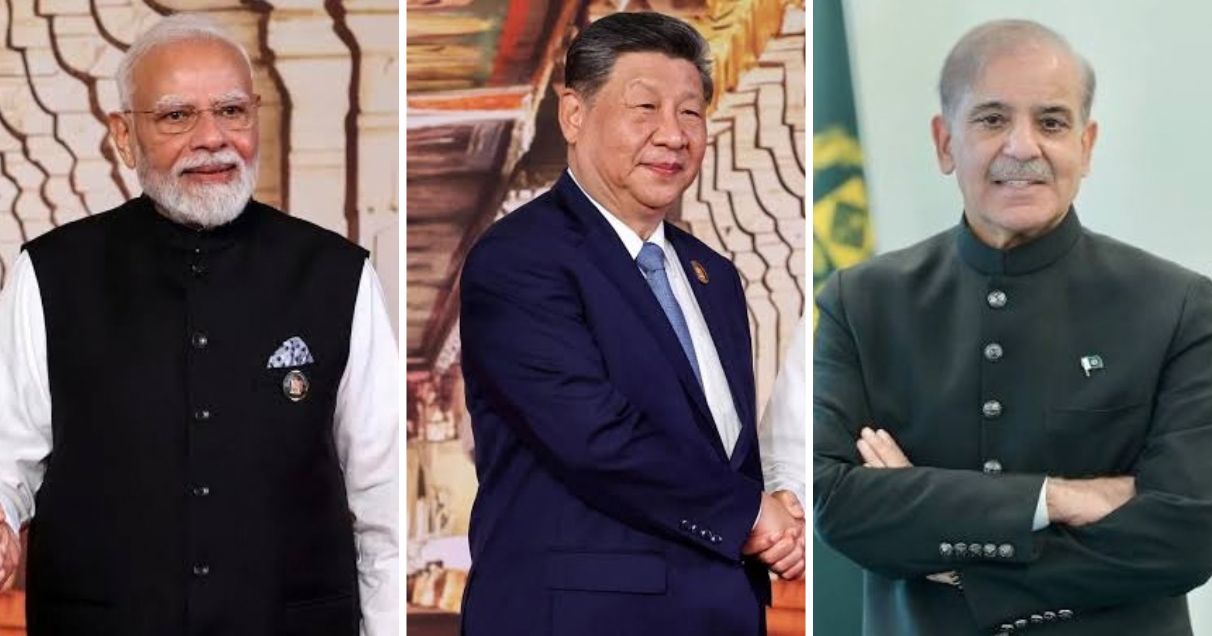
India on Wednesday rejected the operationalisation of the Pakistan-China Boundary Joint Commission, saying the body has no legal basis to deal with territories that New Delhi considers part of India.
Responding to questions on the commission, Ministry of External Affairs spokesperson Randhir Jaiswal reiterated that India has never recognised the 1963 China-Pakistan Boundary Agreement. New Delhi's response came after the commission held its first meeting in Islamabad.
India reiterates position on J&K and Ladakh
Jaiswal said India's position on the issue remains unchanged, maintaining that there is no recognised Pakistan-China boundary involving Indian territory.
He reiterated New Delhi's position that the Union Territories of Jammu and Kashmir and Ladakh are integral and inalienable parts of India.
The MEA spokesperson said Pakistan has no authority, in India's view, to enter into arrangements involving territory that New Delhi says is under Pakistan's illegal and forcible occupation.
1963 boundary agreement rejected
India has consistently rejected the China-Pakistan Boundary Agreement of 1963, which was concluded between Beijing and Islamabad.
Jaiswal said New Delhi has never accepted the agreement and continues to regard it as invalid.
India has also maintained that any subsequent arrangement between China and Pakistan concerning territories claimed by India cannot affect its sovereignty over those areas.
New Delhi objects to boundary cooperation
The MEA said India opposes any effort that, in its assessment, could alter the status of territories under occupation or give legitimacy to what it describes as illegal occupation.
Jaiswal said any boundary-related cooperation between China and Pakistan involving Indian territories would be unacceptable to New Delhi and would not change India's position on sovereignty over those areas.
India asks Pakistan to vacate occupied areas
Reiterating the government's long-standing position, Jaiswal called on Pakistan to withdraw from areas that India describes as being under illegal and forcible occupation.
The latest statement comes amid continued diplomatic differences between New Delhi, Islamabad and Beijing over territorial claims and arrangements involving Jammu and Kashmir. India has also objected to Chinese-Pakistani projects and agreements involving areas of Jammu and Kashmir that it claims as its sovereign territory.