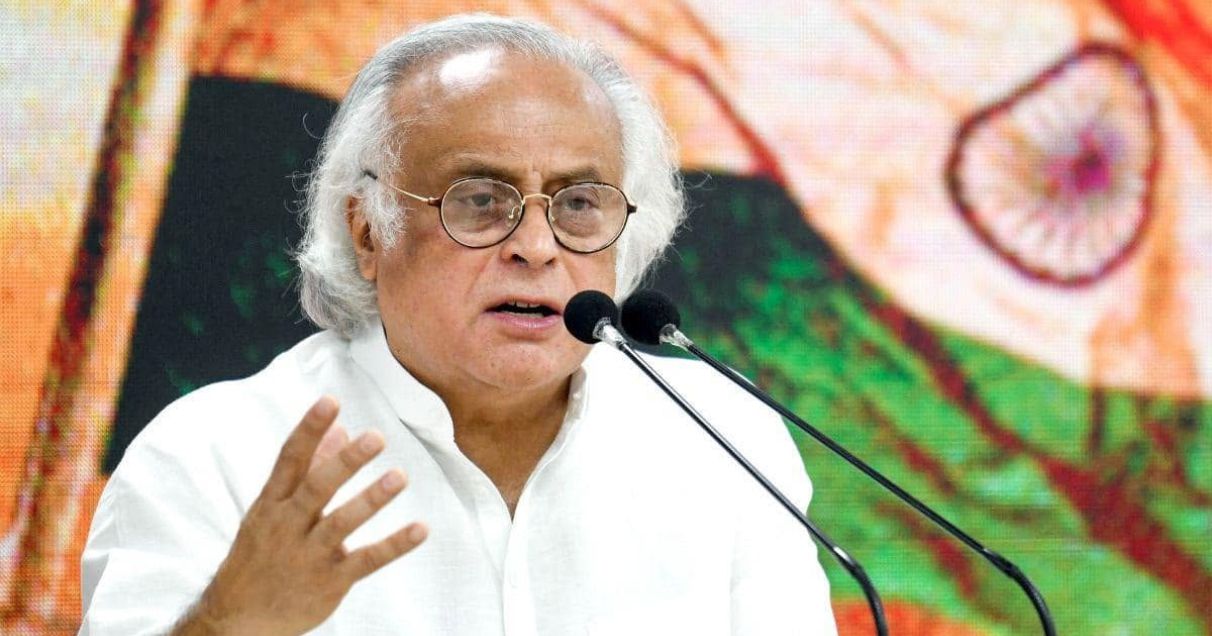
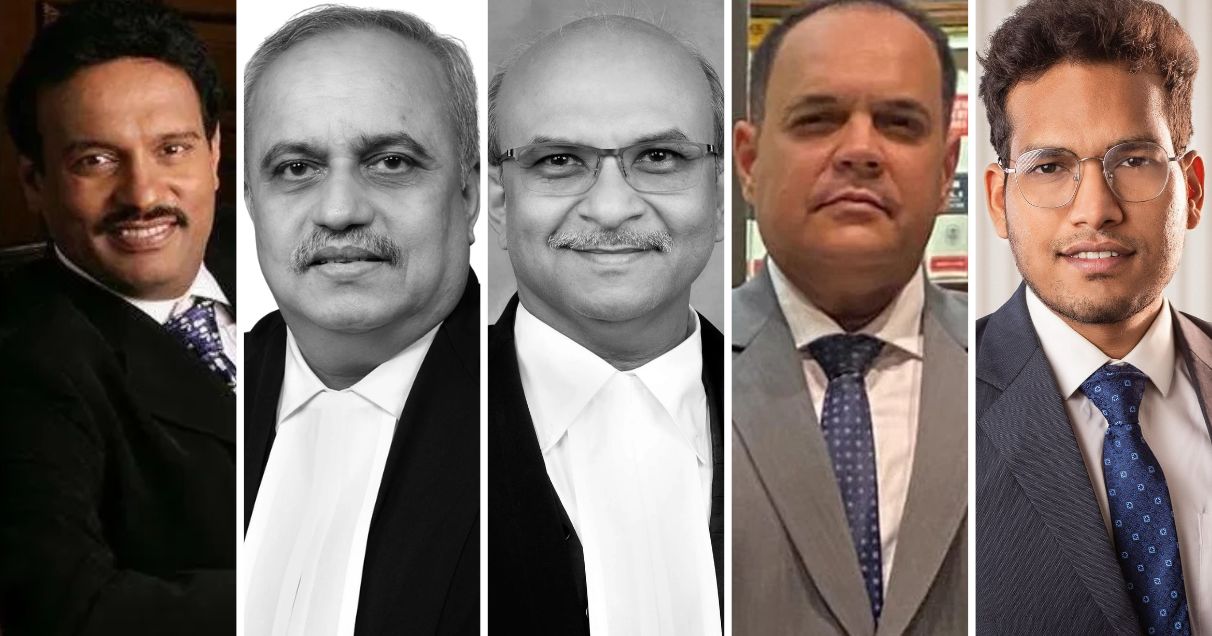
Congress leader Jairam Ramesh has raised serious concerns over the Supreme Court’s August 20 judgment in State of Uttar Pradesh v. Jai Bir Singh, arguing that the ruling could inject fresh uncertainty into one of the most consequential concepts in Indian labour law , what constitutes an “industry”.
The judgment was delivered by a nine-judge Constitution Bench headed by Chief Justice of India Surya Kant. By a narrow 5:4 majority, the Court revisited aspects of the celebrated 1978 ruling in Bangalore Water Supply & Sewerage Board v. A. Rajappa, which for nearly five decades provided the governing framework for interpreting “industry” under the Industrial Disputes Act, 1947. Contemporary reporting on the judgment confirms the 5:4 split and the majority’s decision to refine the earlier test.
Ramesh has linked the judgment to a much larger debate over the future of workers’ protections under the Modi government’s Industrial Relations Code, 2020. “The Modi Government’s Industrial Relations Code, 2020 significantly weakens essential safeguards for our workers,” Ramesh said, warning that the latest Supreme Court judgment must be viewed against that backdrop.
Why The Definition Of ‘Industry’ Matters
At first glance, the dispute may appear to revolve around statutory terminology. Its consequences, however, can be substantial. Whether an establishment or activity constitutes an “industry” can determine whether its employees and disputes fall within the industrial-disputes framework and therefore gain access to important labour-law remedies.
The 1978 Bangalore Water Supply judgment adopted the famous Triple Test. Broadly, an activity could constitute an industry where there was:
- systematic activity;
- cooperation between employer and employee; and
- production or distribution of goods or services intended to satisfy human wants and wishes.
The judgment took an expansive view: a profit motive was not indispensable, meaning charitable organisations, public bodies and other non-commercial establishments could potentially come within the definition. The doctrine nevertheless recognised an exception for core sovereign functions.
The breadth of Bangalore Water Supply consequently became one of the foundations of Indian industrial jurisprudence. The Supreme Court’s reconsideration of that precedent had itself travelled through multiple Constitution Benches: a five-judge Bench made the reference in 2005, and a seven-judge Bench in 2017 sent the matter to nine judges.
Ramesh: Majority Has Added A New Requirement
Ramesh’s principal concern is that the August 20 majority has narrowed the earlier approach. According to him, the majority’s reformulation introduces the requirement that an activity possess a “discernible commercial character” resembling trade or business, something he says was not part of the original Triple Test.
He also argues that the judgment expands the potential scope of the sovereign-function exclusion, creating the possibility that a wider range of governmental activities could fall outside the concept of “industry”.
That matters because the narrower the gateway into the definition of industry becomes, the greater the potential consequences for workers seeking industrial-law protection. The case had attracted particular attention for precisely this reason. Before judgment, the nine-judge Bench had heard arguments over three days in March 2026 on whether the expansive interpretation of “industry” in Bangalore Water Supply should survive.
‘Pandora’s Box Of Litigation’
There is, however, an important limitation to the judgment. The Supreme Court has protected concluded and pending proceedings under the erstwhile Industrial Disputes Act from disruption and addressed separately the relationship between the old jurisprudence and the Industrial Relations Code.
Ramesh nevertheless argues that putting the majority’s reformulation on the judicial record could itself have significant consequences.
He warns that the “hypothesis” could create an “interpretive vacuum” and potentially open a “Pandora’s box of litigation and uncertainty” before Labour Courts and Industrial Tribunals.
His concern is particularly significant because the statutory landscape itself has changed with the Industrial Relations Code, 2020. The Supreme Court’s ruling therefore sits at the intersection of two major developments: judicial reconsideration of a landmark labour precedent and Parliament’s restructuring of India’s industrial-relations regime.
Nagarathna’s Dissent Draws Praise
Ramesh reserved particularly strong praise for Justice B.V. Nagarathna’s dissent. “Justice B.V. Nagarathna’s dissent is, as always, courageous, clear and compelling,” he said.
According to Ramesh, Justice Nagarathna concluded that the Bangalore Water Supply Triple Test did not require reconsideration and emphasised the importance of judicial certainty rather than unsettling a legal principle that had governed industrial relations for decades.
The disagreement goes beyond technical statutory interpretation. It raises a fundamental jurisprudential question: when a precedent has governed employment relations for nearly half a century, how compelling must the case be before the Supreme Court redraws its boundaries?
Bigger Battle Over Workers’ Rights
Ramesh argues that the timing makes the judgment particularly consequential. India’s economy today bears little resemblance to that of 1978. Government functions are increasingly outsourced; private entities deliver services once associated principally with the State; charitable, educational and welfare institutions can employ large workforces; and the distinction between commercial and non-commercial activity has become increasingly complex.
It is precisely in such an economy, Ramesh contends, that narrowing the meaning of “industry” could have ramifications far beyond the parties before the Court. “In an open economy with increasing private delivery of services, any move to narrow or distance the law from the broad definition of ‘industry’ risks weakening worker safeguards precisely when they are needed most,” he said.
The Supreme Court judgment may have resolved a reference that remained alive for more than two decades, but the political and legal debate it has triggered is unlikely to end with the verdict. The central question now moves from precedent to implementation: as India’s new industrial-relations regime takes shape, will the law preserve the broad protective philosophy that emerged from Bangalore Water Supply, or will the boundaries of industrial protection progressively contract?