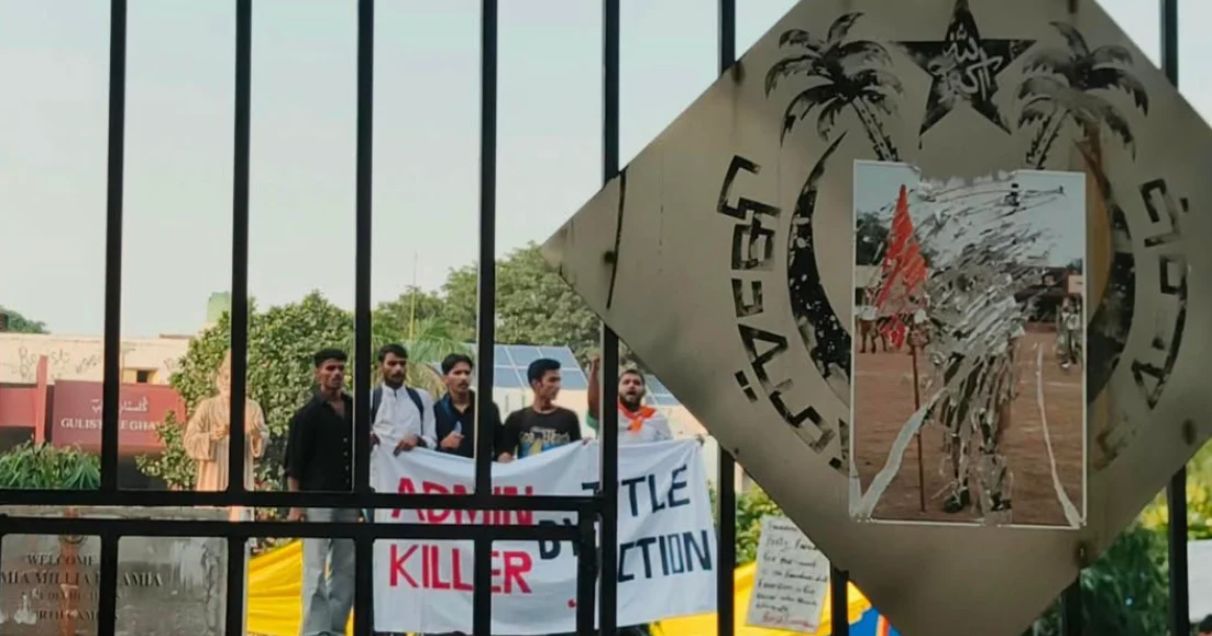
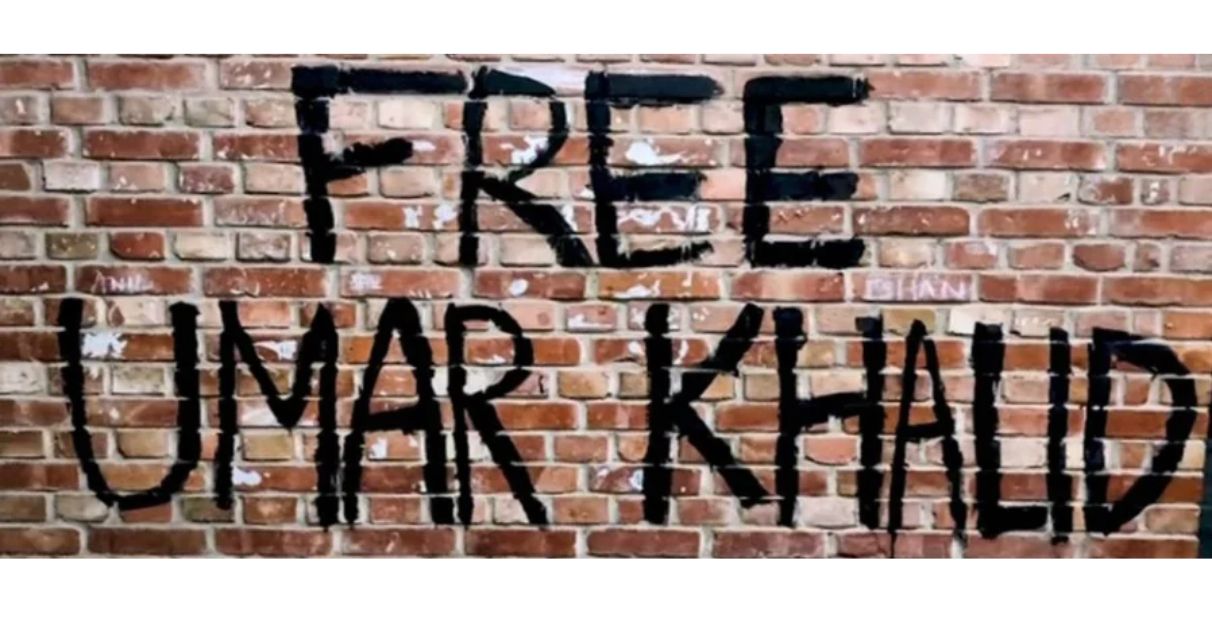
Tensions intensified at Jamia Millia Islamia in New Delhi on Saturday as police cleared a gathering of students outside Gate No. 7, even as slogans continued to be raised from within the university campus. The confrontation unfolded amid a prolonged student agitation for the restoration of the students’ union and a parallel political controversy over pro-Kashmir and pro-Sharjeel Imam graffiti found on campus walls.
Four students have been on hunger strike for 13 days, PTI reported, as protesters continued pressing the university administration to announce a schedule for student union elections.
Female police personnel initially moved to disperse women students gathered outside the gate. Police subsequently cleared the area of both male and female protesters, while students inside the campus continued their demonstration.
The university has also shifted classes across courses to online mode with immediate effect, citing the prevailing situation and concerns over student safety. Police personnel were deployed in strength outside the campus as tensions persisted.
BJP targets Congress over Imran Masood’s visit
The campus unrest took a political turn after the BJP demanded that the Congress clarify its position on slogans reading “Free Kashmir” and “Release Sharjeel Imam”.
The demand followed Congress MP Imran Masood’s visit to Jamia on Friday to express support for students seeking the restoration of the elected students’ union. Delhi Police detained Masood near the university after the visit.
At a press conference at the BJP headquarters, party MP Ravi Shankar Prasad questioned why the Congress leader had visited the campus when such slogans had appeared on its walls. The BJP framed the issue around calls it described as separatist and demands concerning Sharjeel Imam, who is an accused in the February 2020 northeast Delhi riots case.
The graffiti controversy has drawn national attention to the campus, adding a political dimension to the students’ original demand for elected representation.
Students seek elections after two-decade gap
The current agitation began on October 12, when students launched an indefinite hunger strike seeking an official notification outlining the schedule for student union elections.
Jamia last held student union elections in 2005. The Jamia Millia Islamia Students’ Union (JMISU) was dissolved in 2006 following campus violence, and elected student representation has not been restored since.
Protesters argue that the prolonged absence of an elected union has deprived students of a democratic platform to represent their concerns. They want the administration to announce a clear timeline for elections.
The university, however, has maintained that any decision on student representation must follow the Jamia Act, relevant ordinances and statutes, court orders, and the recommendations of the Lyngdoh Committee, whose guidelines for student union elections were issued in 2007.
University condemns graffiti and attacks on security staff
Jamia’s administration, including Vice-Chancellor Mazhar Asif and Registrar Md Mahtab Alam Rizvi, joined teaching and non-teaching staff in condemning the defacement of campus walls and attacks on security personnel.
The university described the graffiti as an affront to the institution’s dignity and the country’s sovereignty. The administration’s response came as the dispute over the slogans increasingly overshadowed the students’ demands for union elections.
The controversy has also sharpened the political exchange between the BJP and Congress, with the former questioning Masood’s visit and the latter MP presenting it as an expression of solidarity with the students’ agitation.
Sharjeel Imam remains in judicial custody
Sharjeel Imam has been in judicial custody since his arrest on August 25, 2020. He was booked under the Unlawful Activities (Prevention) Act (UAPA) in connection with the February 2020 northeast Delhi riots.
Investigators have accused Imam of being among the alleged masterminds behind the violence, which claimed 53 lives and left more than 700 people injured. The allegations remain part of the legal proceedings against him.
As police maintain a presence outside Jamia and the hunger strike continues, the university faces pressure to address the demand for student representation while managing security concerns and the fallout from the politically contentious graffiti.