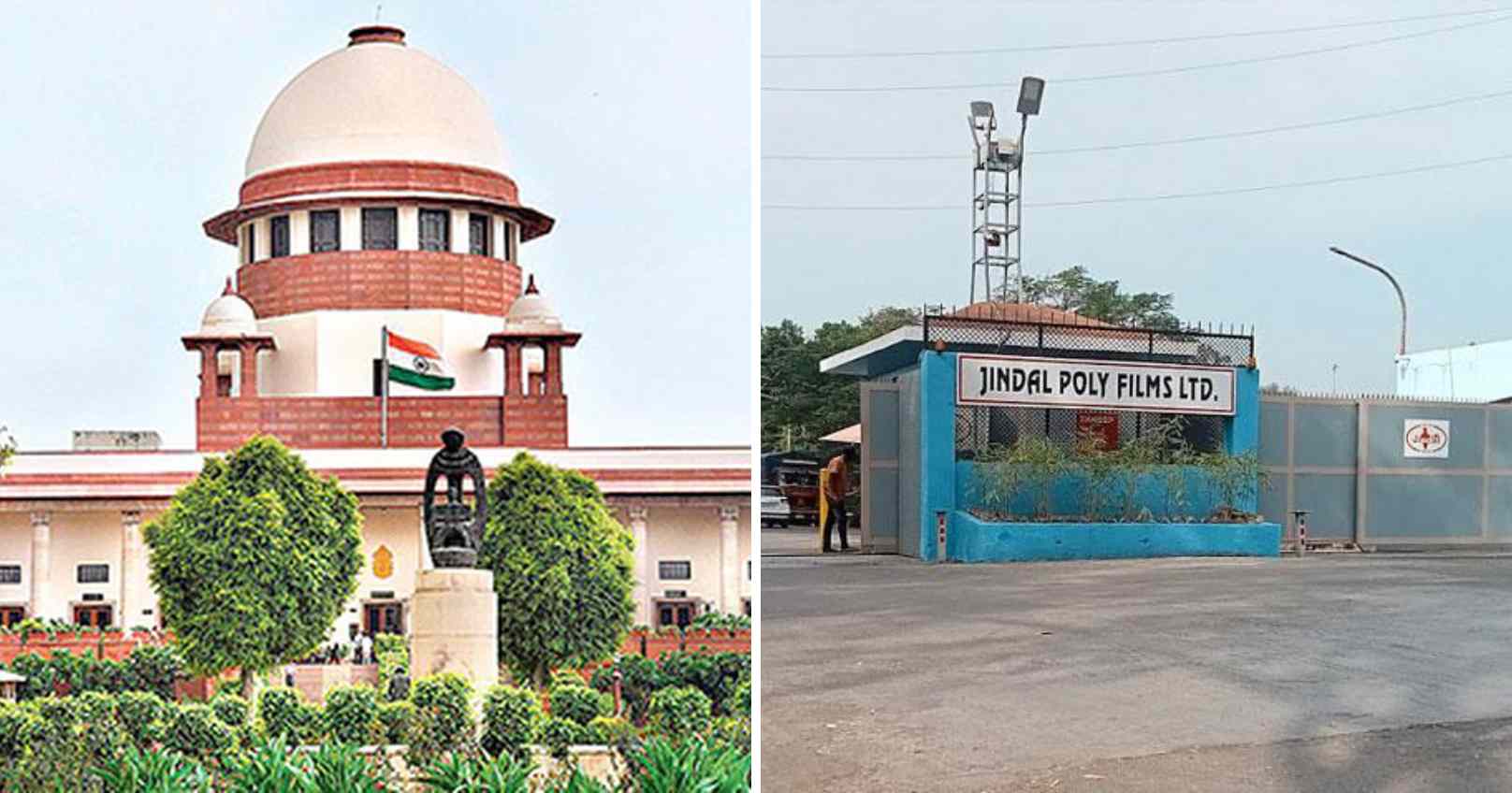
The Supreme Court’s order dated June 8, 2026 in Jindal Poly Films Ltd. v. Monet Securities Pvt. Ltd. has quietly wiped out what was widely regarded as India’s first significant judicial pronouncement on shareholder class actions under Section 245 of the Companies Act, 2013.
Much of the commentary surrounding the case has focused on the Court’s decision to refer the dispute to arbitration. However, the more significant legal consequence lies elsewhere. By expressly setting aside the orders of both the National Company Law Tribunal (NCLT) and the National Company Law Appellate Tribunal (NCLAT), the Supreme Court has removed the only detailed judicial findings that had upheld the maintainability of the Section 245 class action.
The Section 245 petition was filed in March 2024 by shareholders holding approximately 4.99% of Jindal Poly Films. The petition challenged a series of promoter-linked transactions, including the sale of OCPS and RPS in Jindal Powertech to the SSJ Trust and Jindal Poly Investment for approximately ₹105 crore, transactions alleged to have been significantly undervalued and to have caused losses running into several thousand crore rupees. Parallel investigations by SEBI and the Enforcement Directorate were also underway.
In February 2026, the NCLT delivered a comprehensive 61-page judgment holding that the petition was maintainable under Section 245. The Tribunal held that Section 245 is a uniquely Indian shareholder class action provision intended to protect not only shareholders but also the company itself. It further held that the provision is broad enough to cover completed transactions and permits compensation even in respect of past acts through Section 245(1)(g). The Tribunal directed issuance of public notice to all shareholders under the statutory framework governing class actions.
The NCLAT subsequently affirmed the NCLT’s reasoning in a detailed judgment, endorsing the maintainability of the petition and allowing the class action to proceed.
However, those judgments no longer hold the field.
On June 8, 2026, acting upon consent between the parties, a Bench of Justices Prashant Kumar Mishra and Atul S. Chandurkar disposed of the matter by appointing a sole arbitrator and, significantly, set aside both the NCLT and NCLAT judgments, while recording that all contentions of the parties were kept open.
The legal consequence is important.
Once the Supreme Court set aside the NCLT and NCLAT judgments, the findings contained therein including their conclusions that the Section 245 petition was maintainable ceased to operate. Those decisions no longer constitute binding precedent on the scope or maintainability of Section 245.
Equally important is what the Supreme Court did not decide.
The Court did not examine whether a Section 245 class action is arbitrable. It did not affirm or reject the reasoning adopted by the NCLT or the NCLAT. Nor did it pronounce that the shareholder class action was either maintainable or not maintainable. Instead, by setting aside the earlier judgments and expressly leaving all issues open, the Court refrained from deciding the substantive legal questions involved.
Accordingly, while the arbitration reference has attracted considerable attention, it cannot be read as a judicial endorsement of either side’s position on Section 245. The earlier judicial recognition of the maintainability of the class action has disappeared because the underlying judgments have been set aside, not because the Supreme Court has ruled that such petitions are legally impermissible.
As matters stand today, there is no surviving judicial precedent affirming the maintainability of the Jindal Poly Films Section 245 petition. The legal questions concerning the scope, maintainability and arbitrability of shareholder class actions under Section 245 remain open and will have to await authoritative determination in an appropriate future case.