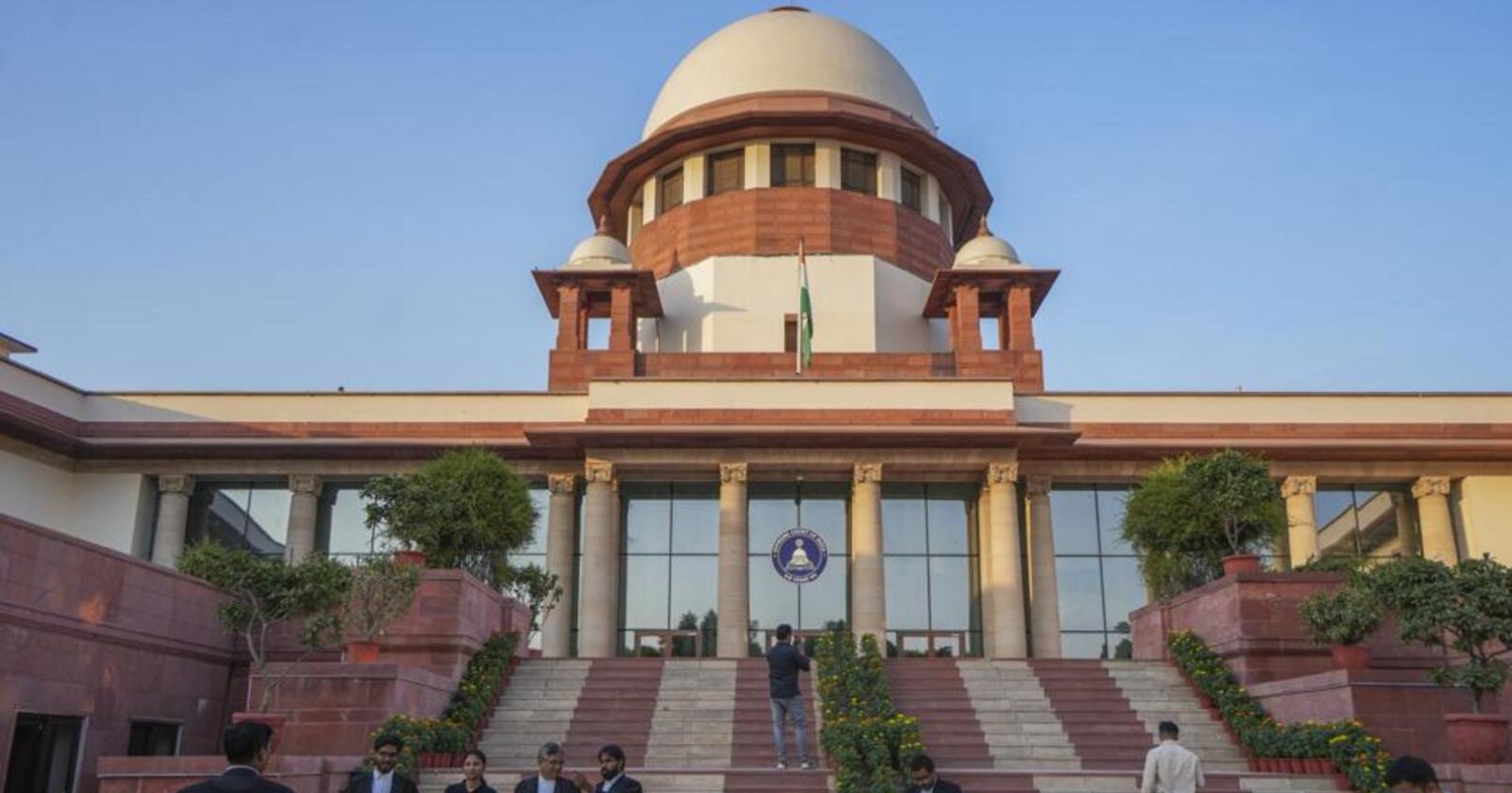
India's judicial system continues to struggle with mounting delays, with more than 5.64 crore cases awaiting resolution across various courts, according to figures shared by the Union government in Parliament.
In a written response in the Rajya Sabha last week, Union Law Minister Arjun Ram Meghwal revealed that over 10,000 matters pending before the Supreme Court have remained unresolved for more than a decade. He also disclosed that 80,660 cases in high courts have been awaiting adjudication for over 30 years.
The data paints a stark picture of the country's judicial backlog, which spans the Supreme Court, 25 high courts, and district and subordinate courts. Information available on the National Judicial Data Grid (NJDG) shows that millions of litigants continue to face prolonged waits for justice.
According to the minister, the Supreme Court alone has more than 96,000 pending cases. Among these, 26 matters have been pending for over three decades, while 558 cases have remained unresolved for more than 20 years.
The figures come despite the Centre spending over ₹9,800 crore since 2011 on upgrading court infrastructure and introducing technology-driven reforms aimed at speeding up the justice delivery process, according to a report by The Times of India.
Addressing concerns over delays, Meghwal told Parliament that the responsibility for disposing of cases lies exclusively with the judiciary. He noted that pendency is influenced by multiple factors, including the complexity of disputes, the volume of evidence, and the role played by lawyers, investigating agencies, witnesses and litigants.
The government acknowledged that case backlogs remain a major challenge even as digitisation initiatives and infrastructure upgrades have accelerated in recent years.
The latest figures have once again brought attention to the persistent issue of judicial delays, with concerns growing over the impact of prolonged litigation on citizens and the overall efficiency of the legal system.