The Supreme Court has reserved its verdict on a significant challenge by 29 minority shareholders of Jindal Poly Films Ltd, who are seeking recall of the Court’s June 8, 2026 order referring a shareholder class-action dispute to arbitration.
At the centre of the controversy is a fundamental question: Can original litigants consent to arbitration and effectively bring an end to a statutory class action when thousands of minority shareholders, who allegedly became parties to the proceeding after public notice, did not consent?
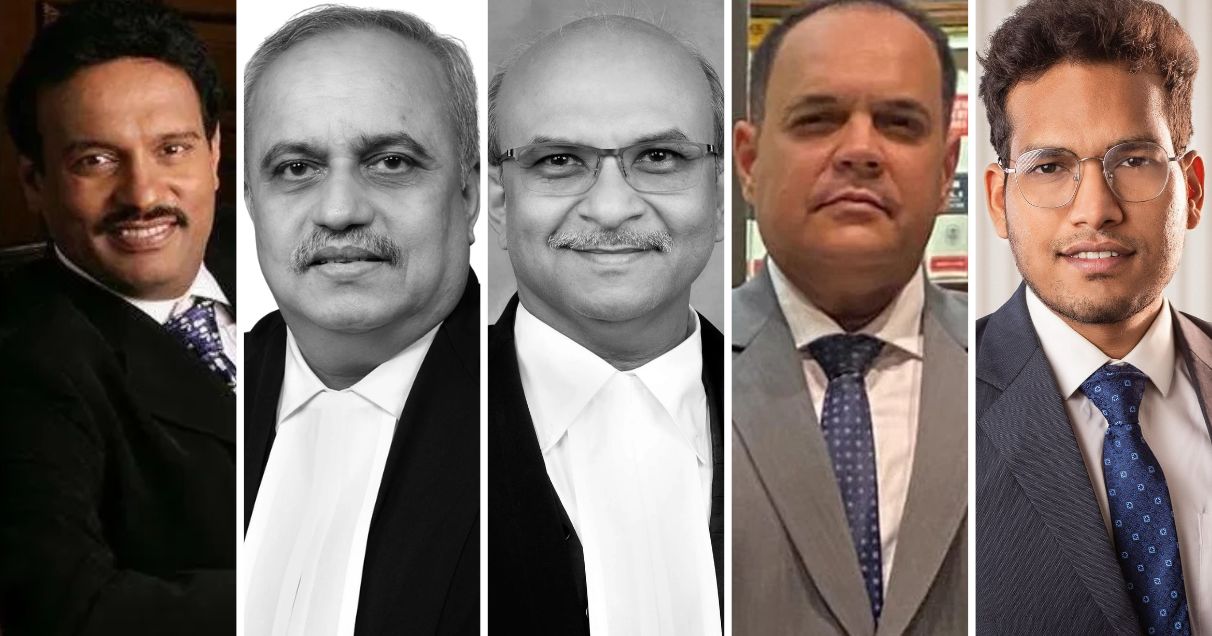
A Bench of Justice Prashant Kumar Mishra and Justice Atul S. Chandurkar heard the recall application and reserved its verdict.
Supreme Court Questions Effect Of Consent On Thousands Of Shareholders
During the hearing, the Bench itself questioned how the June 8 consent order could operate against shareholders who were parties to the Section 245 class-action proceedings before the NCLT but were not before the Supreme Court.
After admission of the class action and issuance of public notice, the Bench observed that “all the public shareholders are parties” to the proceeding.
The June 8 order had arisen after the parties jointly sought referral to arbitration and placed draft consent minutes before the Supreme Court.
The Court consequently set aside the NCLT and NCLAT orders, appointed Justice Manindra Mohan Shrivastava, former Chief Justice, as sole arbitrator, fixed Delhi as the seat and left the contentions open before the arbitrator. The 29 shareholders now want that order recalled.
Amit Sibal: Court Wasn’t Told True Nature Of Proceedings
Appearing for the minority shareholders, Senior Advocate Amit Sibal argued that the June 8 order was obtained without the Supreme Court being informed of the true character of the proceedings.
The original Section 245 petition had been instituted on February 28, 2024 by Ankit Jain and two other shareholders, cumulatively holding approximately 4.99% of Jindal Poly Films’ share capital, alleging mismanagement and siphoning of company assets.
According to Sibal, everything changed once the NCLT admitted the petition on February 5, 2026 and ordered statutory public notice.
He argued that the proceeding thereafter became a representative class action encompassing non-promoter minority public shareholders and could no longer be compromised or withdrawn simply by the original petitioners. Sibal told the Court that the proceeding had become in rem and affected thousands of shareholders.
25.46% Non-Promoter Shareholding At Stake
Sibal relied upon the Supreme Court’s decision in Vidya Drolia to argue that disputes affecting third-party rights, having an erga omnes effect and requiring centralised adjudication may not be appropriate for private arbitration.
He submitted that all 25.46% non-promoter shareholders were directly affected by the Section 245 proceedings. The argument strikes directly at the validity of referring a statutory class action to arbitration merely on consent between parties appearing before the Supreme Court.
SEBI Findings And Alleged ₹800 Crore Fraud Raised
Another major dimension surfaced during the arguments. Sibal informed the Court that SEBI had intervened before the NCLT on February 9, 2026 and placed its investigation findings on record, concerning alleged diversion and transfer of funds and assets of Jindal Poly Films to promoter-linked entities.
According to the submissions recorded in the material, these transactions involved an alleged fraud of at least ₹800 crore and were claimed to be prejudicial to minority shareholders. The Supreme Court, however, indicated that the merits of those allegations were not presently before it.
The immediate issue is narrower but extremely consequential: whether its June 8 consent order can survive given the circumstances concerning the representative character of the underlying class action.
“How Does Monet Have Authority To Speak For Thousands?”
Sibal also questioned the authority of Monet Securities Private Limited, which had been substituted as petitioner before the Supreme Court, to consent to disposal of the class action and its referral to arbitration.
He argued that Monet had not been chosen as lead applicant and asked how it could speak for thousands of shareholders.
Sibal further contended that the Supreme Court’s June order recorded that “both the parties” had consented, whereas the underlying class-action proceedings allegedly involved far more persons after statutory notice.
Singhvi, Nadkarni Oppose Recall
Senior Advocates Abhishek Manu Singhvi and A.N.S. Nadkarni, appearing for Jindal Poly Films, strongly opposed the recall application. They argued that the 29 applicants were not parties before the Supreme Court when the June 8 order was passed.
Singhvi questioned their locus and shareholding and argued that a miscellaneous application could not ordinarily be converted into a mechanism for reopening a concluded Supreme Court proceeding.
He further submitted that the original petitioners, who held around 4.9% of the shares, had subsequently sold their holdings, while the present applicants had acquired a considerably smaller shareholding and had not approached the Court at the relevant stage.
Singhvi warned of the consequences of permitting someone to purchase even a minimal shareholding after proceedings had concluded and then seek reopening of the Supreme Court’s order.
Court Wants Facts, Not Assertions Across The Bar
The Bench nevertheless repeatedly returned to the effect of the statutory public notice and whether admission of the Section 245 proceeding had given it a representative character extending beyond the original petitioners.
Significantly, the Court said factual controversies could not be determined merely through oral assertions. It directed the parties to clarify their positions on affidavit and specifically required the company to file a reply regarding the disputed factual assertions and place relevant documents on record. After detailed arguments, the Bench reserved its verdict.
The decision could have ramifications beyond Jindal Poly Films. It may address the intersection between shareholder class actions under Section 245 of the Companies Act and private arbitration, particularly where statutory proceedings have acquired a representative character involving shareholders who never personally consented to arbitration.
Case: Jindal Poly Films Ltd v. Monet Securities Private Limited & Ors.
Diary No.: 37515/2026