Karnataka Allows Hijab in Schools, Revises Uniform Policy to Permit Religious Symbols
State government withdraws 2022 dress code order, permitting hijab and other faith-based identifiers within prescribed uniforms
14-05-2026

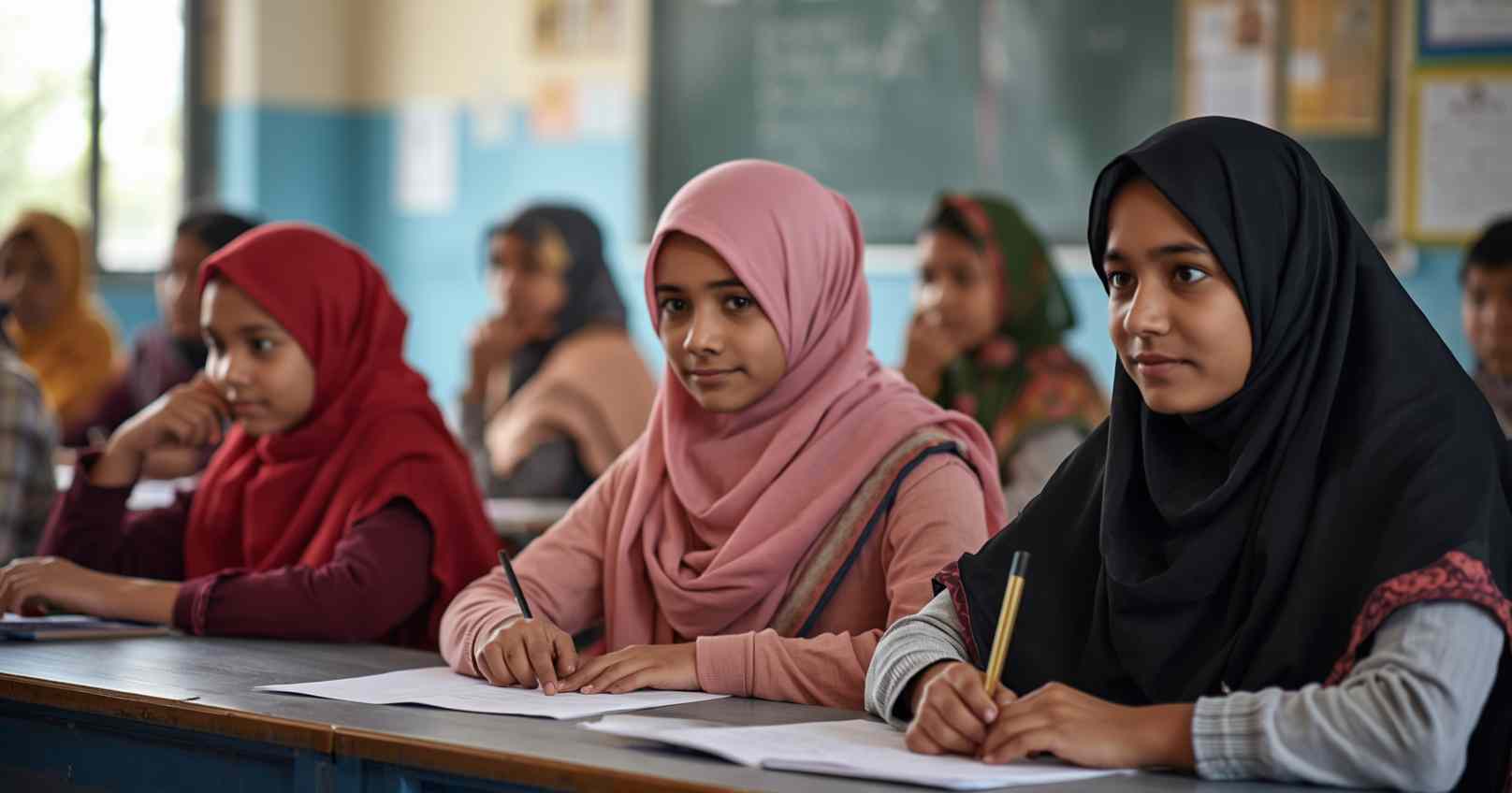
The Government of Karnataka has officially cancelled its February 2022 directive on school uniforms and introduced updated norms that allow students to wear certain traditional and religious identifiers — including the hijab — along with their prescribed uniforms in government, aided, private schools and pre-university colleges.
The earlier order had insisted on strict compliance with uniform rules without the inclusion of visible religious elements — a decision that had ignited widespread debate, particularly around the wearing of the hijab. The revised guidelines now permit select faith-based items, provided they do not interfere with discipline, safety measures, or student identification.
Under the updated framework, institutions must continue enforcing their approved uniforms. However, students may now wear items such as turbans or petas, the sacred thread (janeu), shivadara, rudraksha beads, hijab, or similar symbols traditionally associated with their faith or culture. These additions must blend with the uniform and must not disrupt order, compromise safety, or hinder identification processes.
The government has clarified that no student can be barred from attending classes, examinations, or academic activities solely for wearing these permitted symbols. Equally, students cannot be forced either to adopt or remove such items.
For state and national-level competitive examinations, existing dress regulations will remain applicable. Authorities have directed educational institutions to implement the policy in a secular, neutral, and non-discriminatory manner, consistent with constitutional values such as equality, dignity, fraternity, scientific temper, and the right to education.
Any circulars or internal rules contradicting the new order will stand nullified.
The move has been issued under Sections 7 and 133(2) of the Karnataka Education Act, 1983, which empower the state to regulate educational institutions to ensure proper administration, discipline, and public order.
While reviewing the matter, the government observed that schools and colleges function not just as academic centres but as spaces where constitutional principles and mutual respect must be nurtured. It concluded that discipline can be preserved without imposing a blanket ban on traditional or religious markers, as long as they do not obstruct institutional objectives.
The state also examined uniform policies followed by Kendriya Vidyalaya Sangathan during its reassessment.
Karnataka Education Minister Madhu Bangarappa defended the decision, stating that personal religious practices should not become barriers to a child’s education. He referred to incidents where students were reportedly asked to remove religious accessories, saying such situations had caused distress among families.
Meanwhile, opposition voices have criticised the change. BJP MLA Bharat Shetty termed the move a distraction from governance issues and argued for equal treatment if specific symbols are allowed.
Advocate and Vishva Hindu Parishad leader Girish Bharadwaj also objected, pointing to the earlier High Court ruling on the hijab matter and warning of possible law and order concerns.
The 2022 directive had required strict adherence to uniforms prescribed by respective institutions, emphasising equality and unity. After receiving representations from various communities regarding traditional symbols commonly worn by students, the government revisited the policy.
It ultimately determined that educational discipline and harmony could be maintained without completely prohibiting such expressions of faith, provided they remain within defined limits.

The Delhi High Court reserved its order on AISA president Neha Bora’s challenge to a Rs 10,000 pea
Read More
Bench Sets Aside Attachment Of Pune And Nagpur Properties, Says Transactions Were Lawful And Finds N
Read More
AISA president Neha Bora has moved the Delhi High Court against a police notice requiring her to fur
Read More