The Madras High Court on Monday scrapped the Tamil Nadu government's decision to grant government employment to the families of victims of last year's Karur stampede, holding that the appointments were inconsistent with the constitutional guarantees of equality.
The court said the move violated Articles 14 and 16 of the Constitution, which respectively provide for equality before the law and equal opportunity in matters of public employment. It also cautioned that allowing such appointments could encourage similar demands from others, potentially opening the "floodgates" for government jobs outside established recruitment procedures.
The stampede occurred in September last year during a political gathering organised by Tamilaga Vettri Kazhagam (TVK) and addressed by actor-turned-politician Vijay. The incident claimed 41 lives, including those of children, when a large crowd gathered at the venue.
Police had alleged that Vijay's late arrival contributed to the crowd becoming unmanageable and pointed to shortcomings in arrangements, including the availability of drinking water, food and sanitation facilities. TVK disputed the allegations and instead blamed the police for lapses in crowd management. The party had also alleged a conspiracy involving former DMK minister Senthil Balaji, who rejected the accusation.
The investigation into the tragedy was subsequently moved to the Central Bureau of Investigation (CBI) by the Supreme Court in October 2025. The apex court had stressed the importance of an independent investigation. The probe is examining issues such as crowd-control measures, the timing of Vijay's arrival and the coordination between TVK organisers and government authorities.
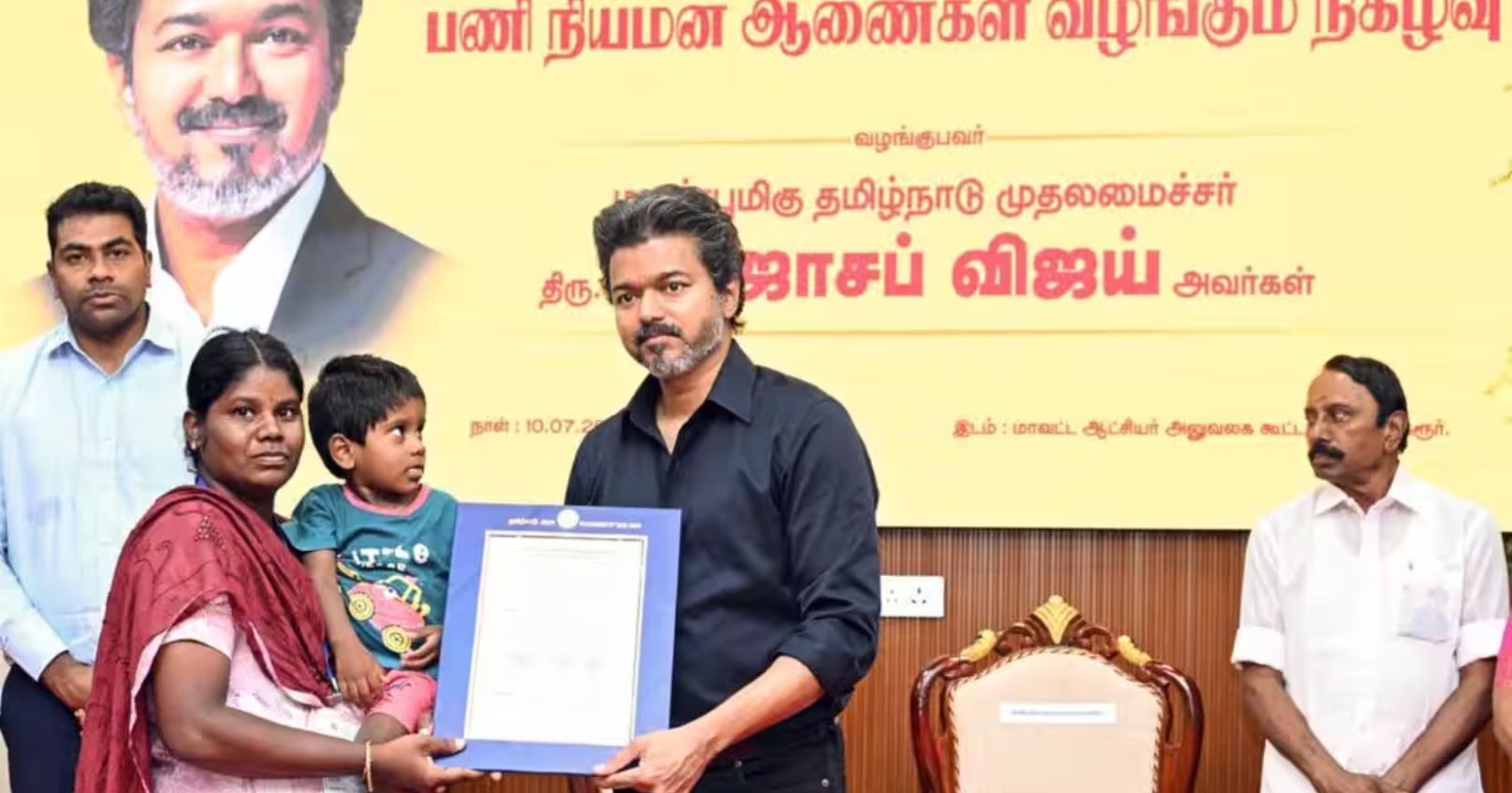
Earlier this month, the Tamil Nadu Chief Minister had distributed compassionate appointment orders to 32 legal heirs of people who died in the tragedy. The government had presented the appointments as part of its broader relief and rehabilitation efforts intended to support the affected families financially.
The decision had faced strong opposition from the AIADMK. Senior party leader RB Udhayakumar had criticised the move, arguing that it undermined the interests of thousands of young people who spend years preparing and competing for government positions.
Udhayakumar had also alleged that the appointments bypassed the state's established recruitment framework. He maintained that government hiring in Tamil Nadu should be carried out through the Tamil Nadu Public Service Commission (TNPSC) in accordance with the applicable rules.
Describing the decision to provide government employment as compensation for political reasons as inappropriate, the AIADMK leader had warned that such a policy could establish a damaging precedent for young job seekers across the state.
The High Court's ruling has now overturned the government's decision, placing the issue of compassionate appointments and constitutional principles governing public employment at the centre of a fresh political and legal debate in Tamil Nadu.