The controversy surrounding the Special Intensive Revision (SIR) of electoral rolls has prompted leaders from within the ruling National Democratic Alliance (NDA) to publicly seek greater clarity from the Election Commission of India.
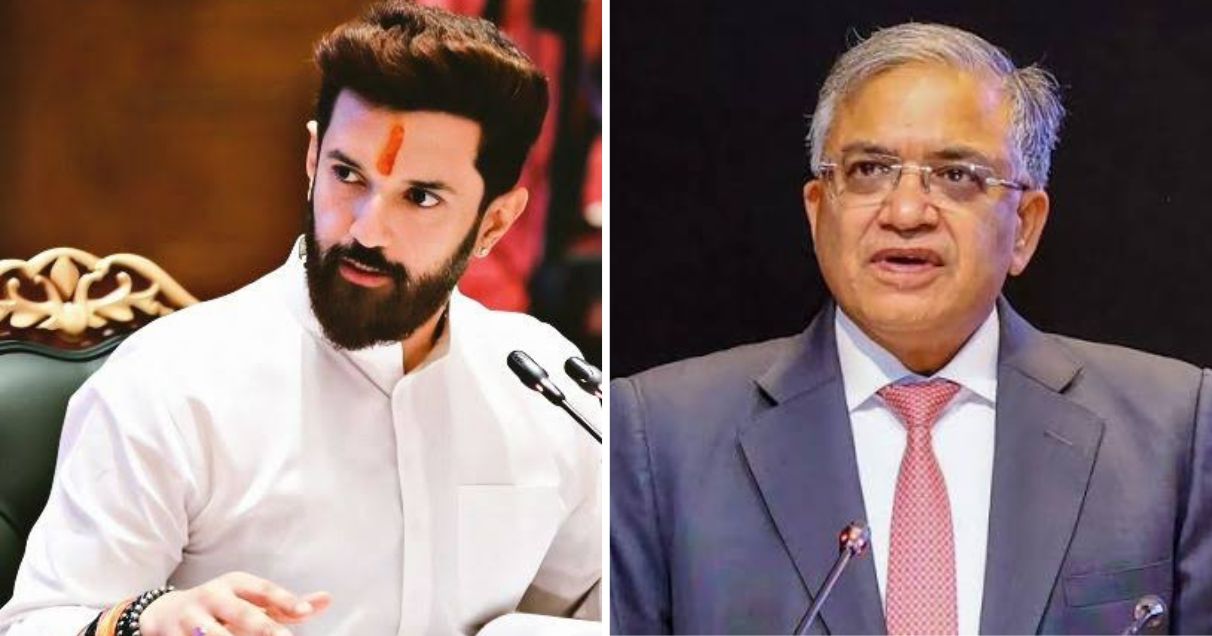
Union Minister Chirag Paswan, Rashtriya Lok Morcha president Upendra Kushwaha and representatives of the Telugu Desam Party (TDP) have called for the poll panel to address questions arising from reports of disagreements among its three members.
Their statements follow an investigation reporting that Election Commissioners Sukhbir Singh Sandhu and Vivek Joshi had repeatedly raised objections concerning decisions and procedures under Chief Election Commissioner Gyanesh Kumar.
Chirag Paswan Calls For Public Reassurance
Speaking to journalists in Patna, Paswan said the Election Commission, as an independent constitutional institution, must explain its position directly to the electorate.
He distinguished between responding to political allegations and addressing concerns that could affect public confidence in elections.
Paswan maintained that he was not speaking as a representative of the government to defend the Commission. He argued that the CEC should communicate clearly with citizens rather than concentrate on answering criticism from Congress leader Rahul Gandhi or other Opposition politicians.
He expressed concern that unresolved questions about the electoral process could create uncertainty among voters.
Upendra Kushwaha And TDP Also Seek Answers
Rashtriya Lok Morcha chief and Rajya Sabha MP Upendra Kushwaha similarly called for the Election Commission to clarify the controversy.
In a Hindi-language post on X, Kushwaha referred to public confusion surrounding electronic voting machines and urged the constitutional body to explain the position without delay.
The TDP, another NDA constituent, also emphasised the importance of institutional transparency.
Its Lok Sabha floor leader, Lavu Srikrishna Devarayalu, reportedly described the SIR exercise in Andhra Pradesh as transparent while maintaining that the Election Commission should address questions about its functioning.
He said appropriate explanations from the poll body would help maintain public confidence in the electoral system.
What Triggered The Controversy?
The political controversy followed an investigation published by The Indian Express, which reported that Election Commissioners Sandhu and Joshi had formally recorded objections on at least 14 occasions over approximately 10 months.
According to the investigation, the concerns involved several aspects of electoral administration, including voter registration, deletion and restoration of names, appeals against electoral-roll decisions and access to electoral databases.
The report raised questions about the Commission's internal decision-making procedures and the extent to which its three members participated in important administrative decisions.
Election Commission Rejects Suggestions Of Internal Division
The Election Commission has disputed the interpretation that the reported objections establish a breakdown in its decision-making process.
In its response, the Commission acknowledged that individual members had raised questions and offered suggestions during internal deliberations.
However, it maintained that such exchanges were part of established administrative procedures and that the Commission's final decisions, including those concerning SIR, had received unanimous approval.
The poll panel also defended the legality of its decisions and the procedures governing electoral-roll revisions.
Opposition Questions SIR Exercise
The controversy has also generated criticism from Opposition parties, which have questioned the implementation of the nationwide electoral-roll revision exercise.
Rahul Gandhi and other Opposition leaders have raised concerns about the possibility of eligible voters being excluded from electoral rolls and have questioned the Commission's handling of the process.
The Election Commission maintains that SIR is intended to improve the accuracy of voter records by identifying ineligible, deceased, duplicate and relocated voters while protecting the rights of eligible electors.
The exercise began in Bihar in June 2025 before being extended to other states and Union Territories.
The reported internal objections have brought additional attention to the procedures governing voter registration, deletion and appeals.
Focus Shifts To Public Confidence
The statements by Paswan, Kushwaha and the TDP introduce another dimension to the controversy, with questions about the Commission's functioning now being raised by political leaders belonging to the ruling alliance as well as the Opposition.
While the Opposition has challenged the conduct of the revision exercise, the NDA leaders have primarily emphasised the need for the Commission to communicate its position and address public uncertainty.
The Commission has already issued a statement defending its internal procedures and asserting that its decisions were unanimous. Whether it will provide further explanations in response to the latest requests remains to be seen.