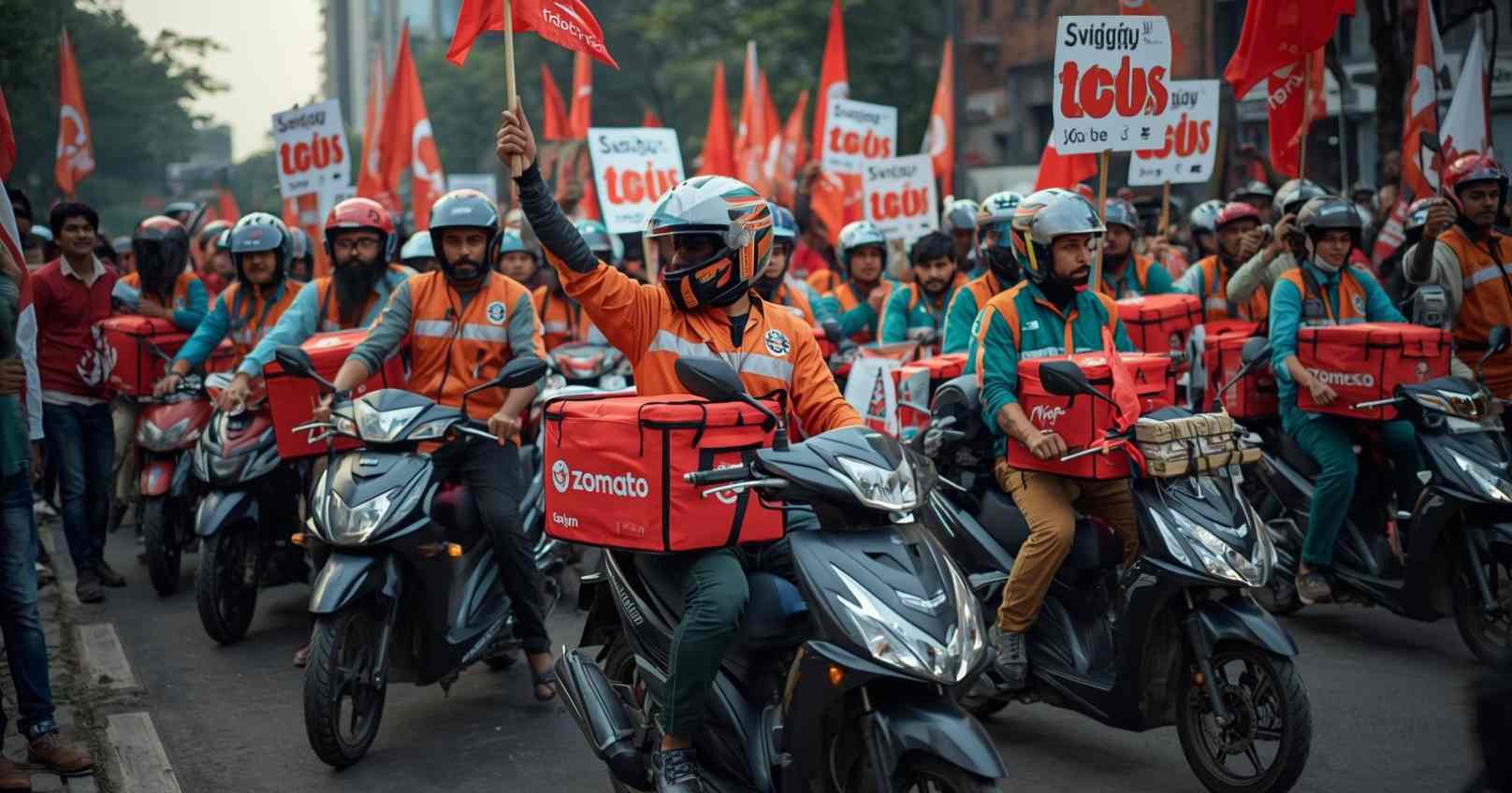
Online food orders, last-minute grocery shopping and quick-commerce deliveries may not run smoothly on December 31, with gig and platform workers calling for a nationwide strike on one of the busiest days for digital commerce in India.
Delivery partners linked to major platforms such as Zomato, Swiggy, Blinkit, Zepto, Amazon and Flipkart are expected to participate, potentially impacting services in metro cities as well as several tier-2 towns. With New Year’s Eve traditionally driving a surge in online demand, the planned protest could pose operational challenges for platforms and retailers reliant on rapid last-mile delivery.
The strike has been jointly announced by the Telangana Gig and Platform Workers Union and the Indian Federation of App-Based Transport Workers (IFAT), with backing from worker collectives in states including Maharashtra, Karnataka, West Bengal, Tamil Nadu and the Delhi-NCR region.
What sparked the protest?
Worker unions argue that delivery executives are being forced to meet aggressive timelines while their earnings continue to shrink. They allege worsening working conditions, lack of employment security, unsafe delivery expectations and minimal access to social protection.
In a communication to Union Labour Minister Mansukh Mandaviya, IFAT claimed it represents nearly 4 lakh app-based transport and delivery workers nationwide. The federation noted that a flash strike held on December 25 had already disrupted services by nearly 50–60% in multiple cities.
According to the unions, instead of opening dialogue after the earlier protest, platform companies allegedly responded with punitive measures such as account suspensions, algorithm-driven penalties and threats, further fuelling worker discontent.
If the December 31 strike goes ahead as planned, consumers may experience order delays, limited availability of delivery partners or outright cancellations, particularly in cities like Bengaluru, Delhi, Hyderabad, Pune and Kolkata.
The workers’ charter of demands includes regulation of platform companies under labour laws, removal of extreme fast-delivery models, transparent wage systems, an end to arbitrary account blocking, and access to benefits such as health insurance, accident cover and pensions. The unions have also sought formal recognition of workers’ right to organise and bargain collectively.
Calling for urgent intervention, IFAT has requested tripartite discussions involving the government, platform firms and worker representatives to address the ongoing issues.