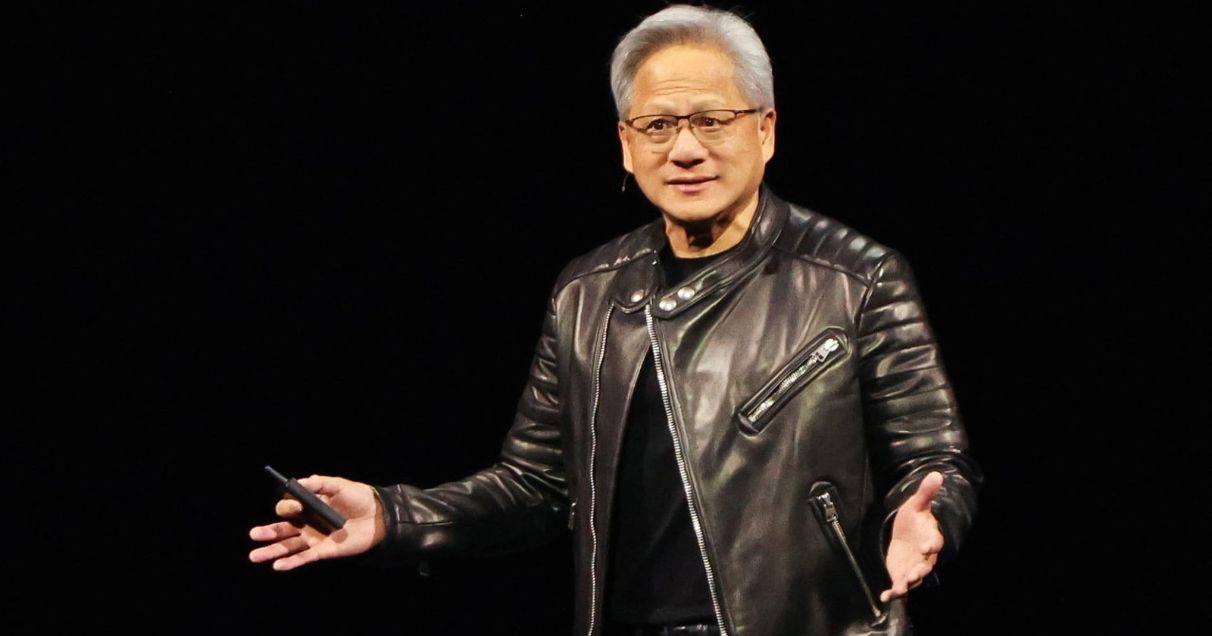
For nearly three decades, Jensen Huang has been the driving force behind Nvidia's transformation from a video-game chipmaker into one of the world's most valuable technology companies. Now, the very leadership structure that helped build the semiconductor giant is facing an extraordinary challenge.
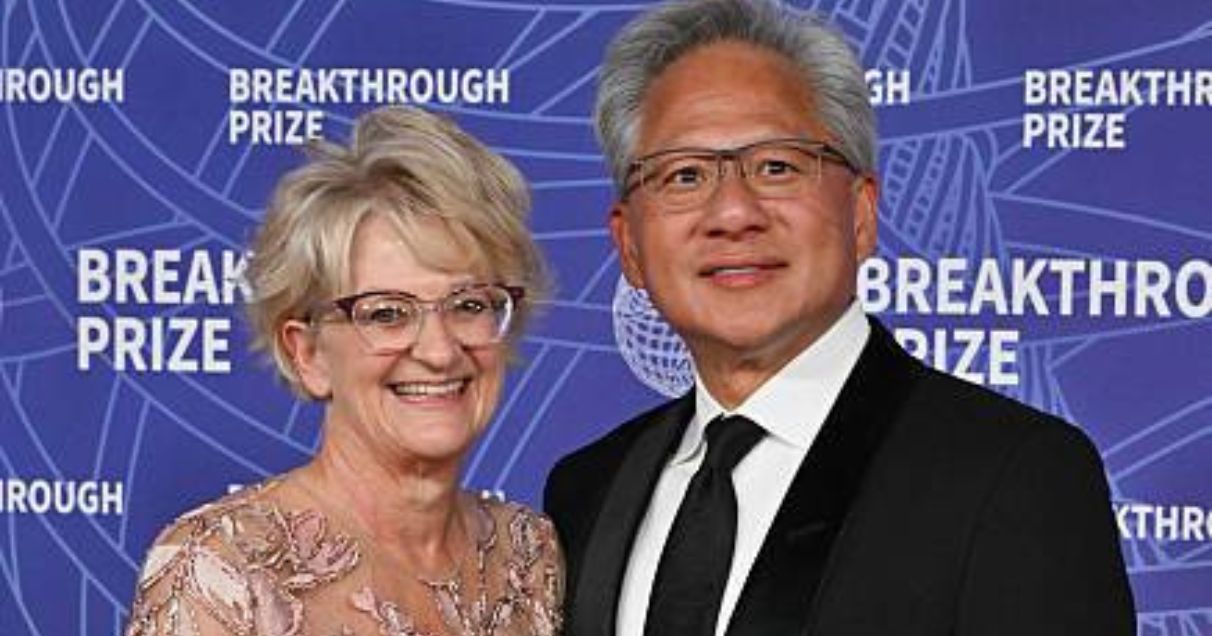
Huang's admission on Sunday that he had an extramarital relationship with a businesswoman identified by US intelligence agencies as a Chinese spy has placed Nvidia's board of directors in a difficult position. The company's 10-member board must oversee an investigation involving a chief executive whose authority and influence have shaped virtually every aspect of its growth.
The controversy has also moved into the legal arena. On Monday, shareholders filed a class-action lawsuit against Nvidia and Huang in the US District Court for the Northern District of California.
The developments have brought renewed attention to how independently Nvidia's board can scrutinise its chief executive, particularly given the longstanding professional and financial relationships many directors share with him.
Long association with CEO raises questions over board independence
Nvidia's board comprises early investors, longtime associates and senior corporate executives. Collectively, its members have accumulated 161 years of boardroom experience.
However, the depth of their association with Huang could complicate their ability to exercise independent oversight.
According to accounts from three former employees cited by The New York Times, Huang has historically viewed the board largely as a formal corporate governance requirement rather than a central participant in the company's strategic decision-making.
His management approach has further concentrated authority around him. Huang reportedly has more than 60 direct reports and favours a relatively flat organisational structure with fewer management layers.
While this arrangement has helped Nvidia make decisions quickly in the competitive artificial intelligence and semiconductor industries, it has also reinforced the company's dependence on its founder and CEO.
The board's immediate responsibility is to appoint independent external legal counsel to examine the matter. A company spokesperson said Huang would not participate in choosing the investigators.
Despite the investigation, Huang is expected to remain in charge of Nvidia's day-to-day operations.
Nvidia's succession dilemma: Who could replace Jensen Huang?
Beyond the immediate controversy, Nvidia faces another long-term governance question: identifying a potential successor to Huang.
At 63, the CEO remains closely involved in the company's operations, and there is no clearly established internal candidate positioned to take over his responsibilities.
Former executives have told The New York Times that succession planning has been discussed within Nvidia over the years, but Huang was reportedly uncomfortable with formally identifying a replacement.
Rene Haas, now CEO of chip-design company Arm Holdings, worked at Nvidia between 2006 and 2013. He recalled that Huang believed naming a successor could create rivalries among senior executives and undermine organisational unity.
Huang has also given little indication that he intends to retire soon. In 2023, he suggested that he could potentially continue leading the company for another 30 to 40 years.
His continued centrality to Nvidia's leadership has therefore left the company facing questions about how it would manage a transition if he were suddenly unable to continue.
Early investors emerge as billionaires from Nvidia's rise
The company's boardroom relationships date back to its early years.
In 1993, when Nvidia was a fledgling business developing graphics chips for video games, venture capital firms Sequoia Capital and Sutter Hill Ventures led a $2 million funding round.
Their representatives, Mark A. Stevens and Tench Coxe, subsequently joined Nvidia's board. More than three decades later, their early investments have become extraordinarily valuable.
Stevens and Coxe are now among Nvidia's largest individual shareholders after Huang. Stevens' holding was valued at approximately $6.22 billion when he last sold shares in September, while Coxe's stake was worth around $5.62 billion when he last gifted shares in November.
Huang himself owns approximately 3.56 per cent of Nvidia, making him its largest individual shareholder.
Other longstanding directors have also accumulated substantial wealth through their association with the company. Harvey C. Jones, formerly the chief executive of Synopsys, and A. Brooke Seawell, its former chief financial officer, joined Nvidia's board during the 1990s.
Their combined Nvidia holdings were valued at approximately $1.86 billion as of June.
The financial interests of these directors add another dimension to questions about the board's ability to independently oversee the company and its leadership.
Huang's children hold senior positions in the company
The concentration of family connections within Nvidia has also attracted attention.
According to five current and former employees cited by The New York Times, three members of Huang's family work in important roles at the semiconductor company.
His son, Spencer Huang, is a director of product management and is involved in Nvidia's robotics business. His daughter, Madison Huang, holds a senior director position in product marketing, with responsibilities spanning robotics, communications and marketing.
His son-in-law, Nico Caprez, works in business development.
Their presence in the organisation has fuelled speculation among some employees that Huang could eventually prepare his children for greater leadership responsibilities.
However, Huang has publicly dismissed the idea that his daughter might succeed him. In an interview last month, when asked whether Madison could eventually take over as CEO, he responded that he would not want her to take on the demanding position.
'There will never be one like me': Huang on his leadership
Huang has previously maintained that Nvidia's board has the authority to hold him accountable, including removing him if directors believe he is failing in his responsibilities.
Speaking in January, he pointed out that a CEO ultimately serves at the discretion of the board and can be dismissed if the directors are dissatisfied with their performance.
At the same time, Huang has repeatedly emphasised the unique relationship he shares with the company he co-founded.
"There will never be one like me," he said, explaining that his identity and leadership style had been shaped by Nvidia itself.
That relationship now presents a significant test for the company. As its board prepares to examine the allegations involving its chief executive, Nvidia must demonstrate that its corporate governance mechanisms can function independently of the individual who has dominated its rise to global prominence.