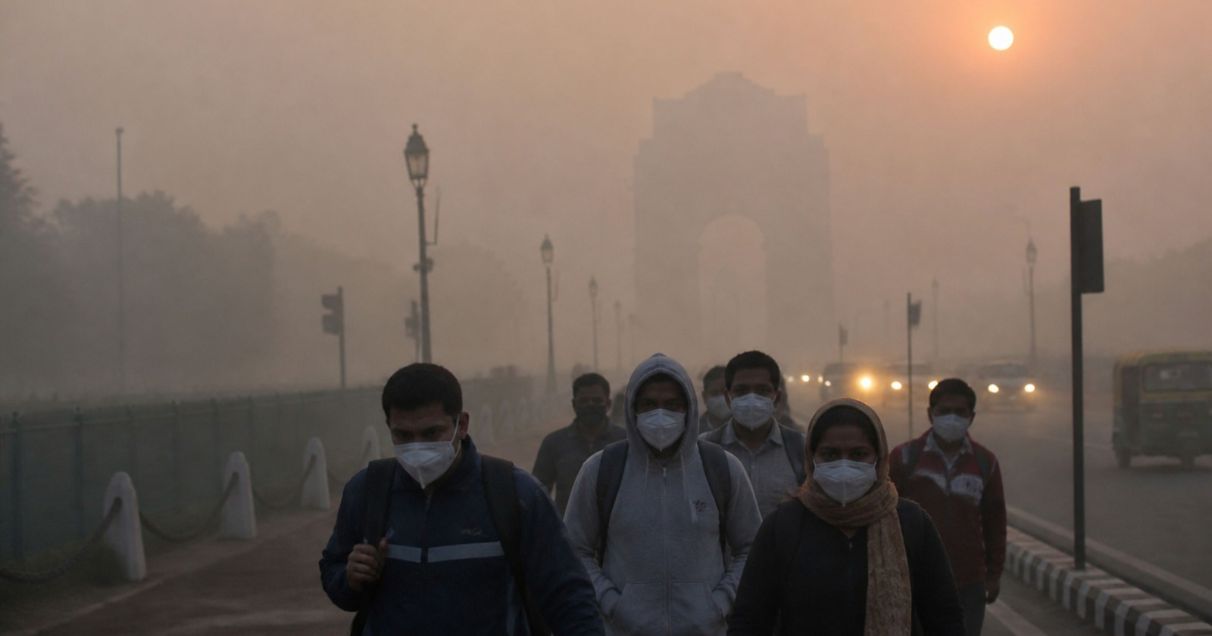
Lahore emerged as the world’s most polluted major city for the second day in a row on Tuesday, with an Air Quality Index (AQI) of 263, placing it in the ‘very unhealthy’ category, according to Swiss air quality monitoring organisation IQAir.
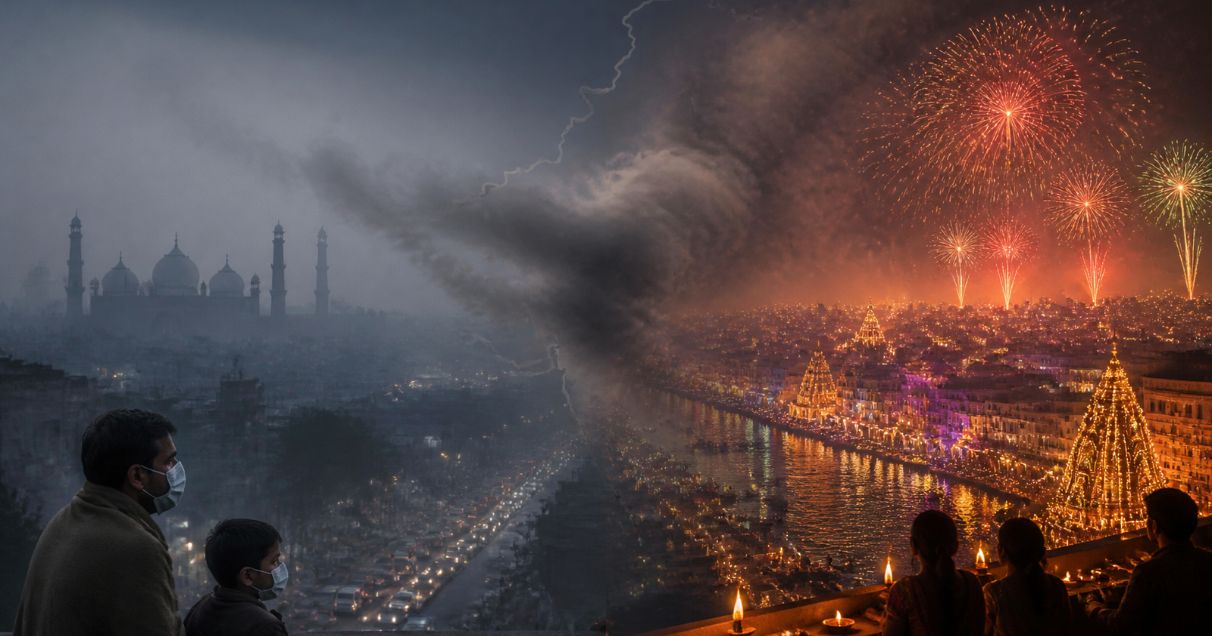
Pakistan’s Punjab Environment Protection Minister Marriyum Aurangzeb linked the deterioration to emissions from firecrackers used during Diwali celebrations in India. She said light winds and prevailing atmospheric currents had carried pollutants into Punjab, aggravating the situation in Lahore.
Aurangzeb indicated that conditions could begin improving from early afternoon as changing weather patterns and a shift in wind direction helped disperse the polluted air.
The claim has brought cross-border pollution back into focus, with India and Pakistan both facing severe air quality challenges. India’s Ministry of External Affairs had not issued a response to the allegations at the time of publication.
Lahore’s pollution levels far exceed WHO guidelines
The scale of pollution in Lahore was also reflected in its PM2.5 concentration. According to IQAir, levels of these microscopic airborne particles were 37.2 times above the World Health Organisation’s annual recommended limit.
PM2.5 particles are particularly dangerous because their small size allows them to travel deep into the respiratory system, increasing the risk of serious health complications.
Delhi, meanwhile, occupied the second position in IQAir’s global ranking on Tuesday, registering an AQI of 188. Indian government figures had separately indicated that firecracker emissions contributed close to 55 per cent of the PM2.5 pollution measured in the national capital a day earlier.
Multiple sources driving winter pollution
While firecracker emissions have become a point of contention, they represent only one part of a much wider pollution problem confronting the two countries.
Exhaust from vehicles, dust generated by construction activity and the burning of agricultural residue are among the major contributors to deteriorating air quality across northern India and Pakistan.
These sources become particularly significant during winter, when unfavourable weather conditions can trap pollutants close to the ground, allowing concentrations of harmful particles to build up.
Previous India-Pakistan dispute over pollution
The latest allegations are not the first instance of Pakistan attributing its pollution problem to emissions originating in India.
A similar disagreement surfaced in 2024, when Pakistani authorities blamed stubble burning in Indian Punjab for worsening the smog in their region. Indian meteorological officials contested the explanation, arguing that prevailing wind patterns at the time suggested air movement in the opposite direction — from Pakistan towards India.
Air pollution has also emerged as a political issue within India. The Bharatiya Janata Party (BJP), led by Prime Minister Narendra Modi, has accused the Aam Aadmi Party (AAP)-governed Punjab of failing to adequately control farm fires contributing to Delhi’s pollution.
Media reports pointed to a sevenfold rise in reported farm-fire incidents in Punjab on Sunday, coinciding with Diwali. The state government, however, has maintained that crop-residue burning has decreased compared with previous years.
With Lahore and Delhi both featuring prominently in global pollution rankings, the latest exchange of allegations highlights the difficulty of tackling an environmental crisis that extends beyond administrative and national boundaries. The movement of polluted air across borders has made regional cooperation and coordinated measures increasingly important to addressing South Asia’s worsening winter smog.