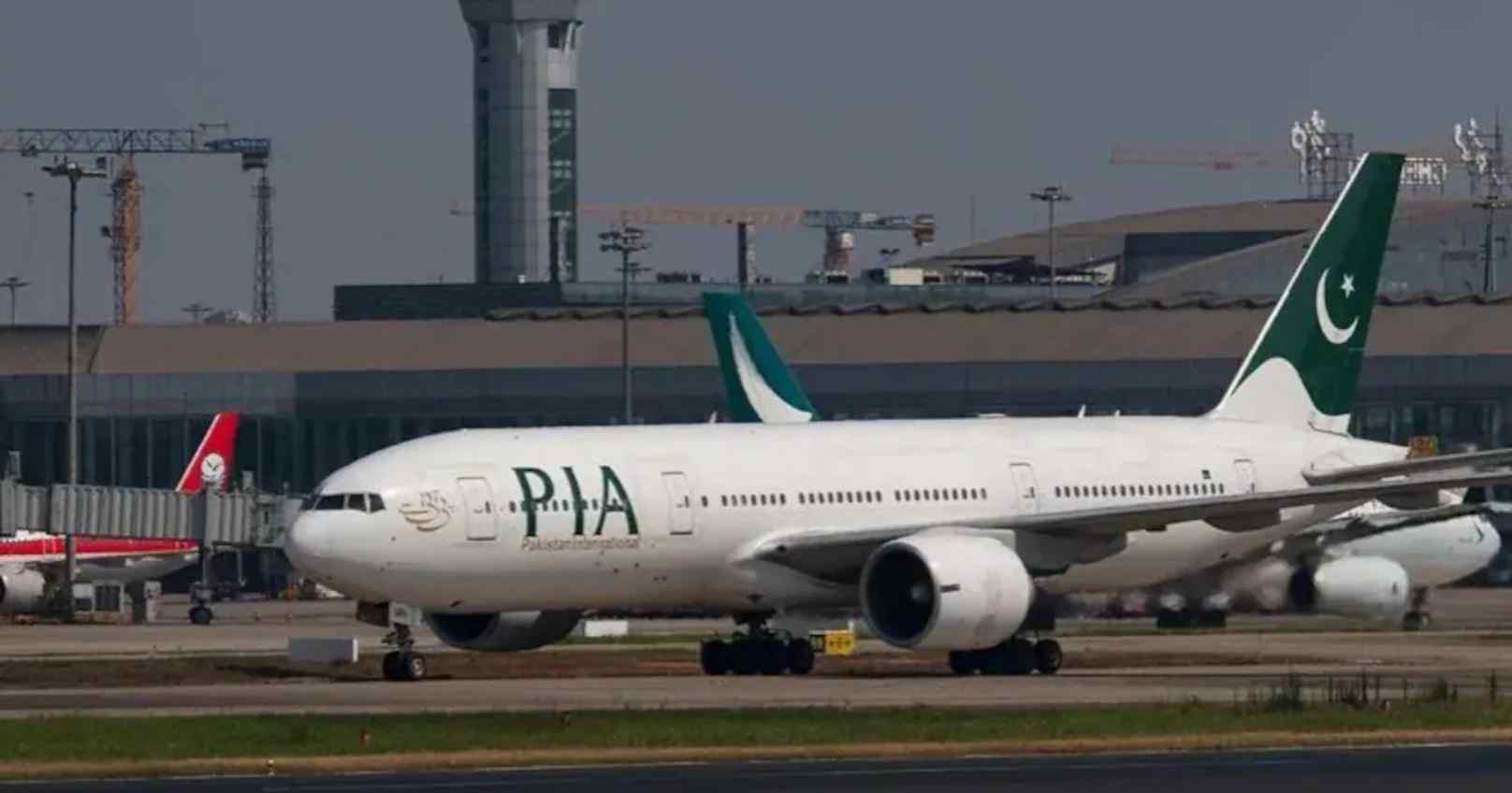
Pakistan Shuts Down Entire Airspace After Indian Strikes on Terror Camps
Pakistan has closed its skies to all flights following India’s precision strikes on terror hubs in Pakistan and Pakistan-occupied Kashmir under Operation Sindoor
07-05-2025

Pakistan has shut down its entire airspace following targeted Indian military strikes on terror facilities located in Pakistan-occupied Kashmir (PoK) and within Pakistani territory. The decision, announced by Islamabad after the early Wednesday morning operation, reflects growing alarm within the country’s military and political leadership.
Until now, Pakistan’s airspace restrictions had applied only to aircraft operated or owned by Indian carriers. But in the aftermath of India’s precision attacks under Operation Sindoor, Pakistan's Civil Aviation Authority imposed a complete airspace lockdown, banning all civilian and international flights—including its own domestic services—for at least 48 hours. Only critical or emergency flights are being allowed to operate, sources said.
The sudden directive forced multiple flights headed to Islamabad and Lahore to be rerouted to Karachi, creating operational strain at the airport. The shutdown, which Pakistan claims is a "precautionary" measure, has raised global concern over a possible escalation between the two nuclear-armed neighbours.
India's military action was carried out in response to the April 22 terror attack in Jammu and Kashmir’s Pahalgam region, which claimed 26 civilian lives. Intelligence reports have attributed the attack to terrorist networks supported from within Pakistan. The incident came soon after a controversial and inflammatory speech by Pakistan Army chief General Asim Munir, heightening tensions in the region.
Following the strikes, military analysts in New Delhi noted that any counterattack by Pakistan at this stage would be classified as an act of escalation, not retaliation, as India’s strikes were in direct response to an earlier act of terror.
Pakistan’s Prime Minister Shehbaz Sharif convened an emergency meeting of the National Security Council to discuss possible options in the face of India’s cross-border assault. So far, no formal decision has been announced.
In anticipation of potential Pakistani moves, India has also scaled back civilian air operations in several airports near the western border, with New Delhi cautioning that any provocation will be met with firm and decisive action.
Operation Sindoor, launched jointly by India’s Army, Navy and Air Force, targeted nine locations linked to terror outfits like Jaish-e-Mohammed, Lashkar-e-Taiba, and Hizbul Mujahideen. Indian officials have emphasized the strikes were focused, proportional, and meant to dismantle infrastructure used to plan and launch attacks against India.


Donald Trump has again claimed that threats of 250 per cent tariffs helped stop the 2025 India-Pakis
Read More
The BJP has alleged a rift between Rahul Gandhi and Priyanka Gandhi Vadra over the removal of photog
Read More
Sonia Gandhi has joined X with a memory of meeting Rajiv Gandhi in Cambridge, introducing her upcomi
Read More