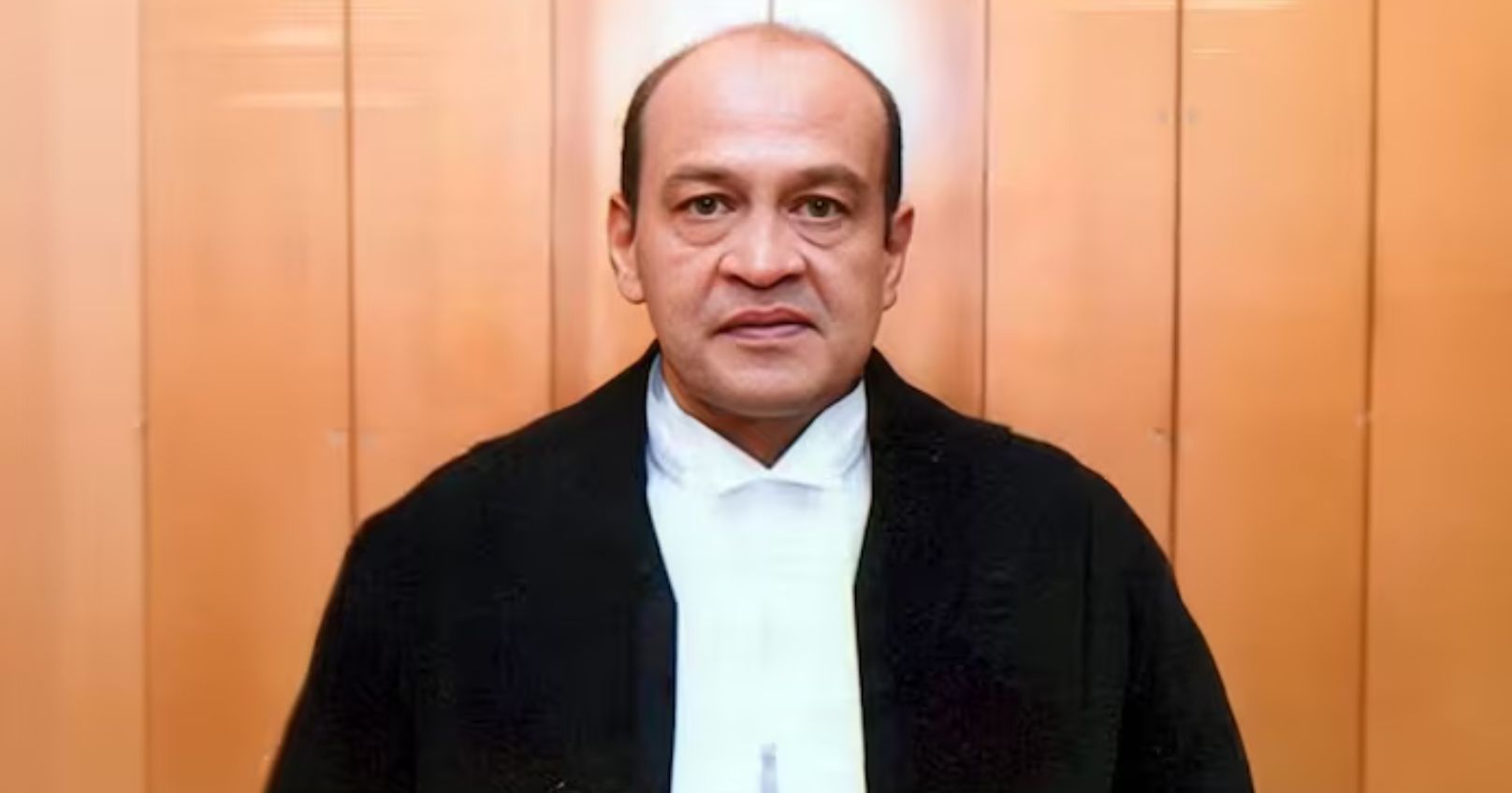
A parliamentary committee investigating former Delhi High Court judge Justice Yashwant Varma has concluded that all three charges framed against him were established.
The inquiry stemmed from the discovery of a large quantity of currency at his official residence in Delhi following a fire in March 2025. The panel found that substantial amounts of Rs 500 notes were present in a storeroom at the property, that the material found there was not adequately preserved as evidence and that Justice Varma's responses to key questions surrounding the incident were inadequate.
The committee's findings, however, do not amount to a criminal verdict establishing that Justice Varma owned the money. Instead, the panel concluded that unexplained currency was found at premises under his control and that he failed to provide a satisfactory account of its presence, source or ownership.
What the committee found
Large quantity of cash found after fire
The first charge concerned the currency discovered in a storeroom at Justice Varma's official residence at 30 Tughlak Crescent on March 14, 2025.
After examining the evidence, the committee concluded that the cash was present in considerable quantities. The material before the panel indicated bundles and piles of Rs 500 notes rather than isolated or accidentally misplaced currency.
Justice Varma was unable to give what the committee considered a convincing explanation for how the money came to be there, who it belonged to or why it was stored at the residence.
The panel also disagreed with the argument that the storeroom was beyond Justice Varma's control. It held that the room was part of his official residential premises and therefore fell within his institutional sphere of control.
Evidence not properly secured
The second allegation dealt with the handling of the scene following the fire.
According to the committee's findings, the affected area was not sealed immediately. Cleaning activity took place after the emergency response, and the currency was no longer present when a subsequent formal inspection was conducted.
The panel therefore determined that important physical evidence had not been adequately protected or preserved.
It examined the presence of Justice Varma's Private Secretary Rajinder Singh Karki and household staff member Mohd Rahil during the cleaning process. However, the committee did not find that Justice Varma personally removed the money from the premises.
Panel rejects Justice Varma's explanations
The third charge related to the explanations provided by Justice Varma during the inquiry.
The committee found that his responses did not resolve fundamental questions surrounding the currency, including its origin, ownership and presence at the residence. It also found his account of the events following the fire insufficient.
The panel characterised his explanations as lacking the openness and clarity expected from a judge in such circumstances.
Why was the exact amount never established?
The inquiry could not put a precise figure on the cash because the currency was never officially taken into custody at the scene.
There was no formal counting, inventory or seizure of the money before it disappeared from the location. Consequently, the committee could establish that a substantial quantity of Rs 500 notes had been present but could not determine the exact total value.
What was Justice Varma's defence?
Justice Varma rejected the allegations and maintained that no cash had been recovered from his residence.
He argued that he was away when the fire occurred and was not among the people who initially reached the premises. His position was that control of the location at the relevant time rested with officials and others responding to the incident.
His defence also raised several possibilities, including the planting of currency, the use of counterfeit notes and the removal of money by people who were present at the scene.
The committee found that these theories were not backed by evidence presented by the defence. It also noted that no defence witnesses or affidavits had been produced to substantiate the claims.
Justice Varma eventually stopped participating in the proceedings after the presenting side completed its evidence and cross-examination.
How did the case begin?
The controversy began on March 14, 2025, when a fire broke out at Justice Varma's official Delhi residence.
During the emergency response, firefighters and others reportedly came across stacks of currency in a storeroom. The discovery led to questions about the source and ownership of the money and prompted an in-house inquiry ordered by then Chief Justice of India Sanjiv Khanna.
Justice Varma was later moved from the Delhi High Court to the Allahabad High Court, while his judicial responsibilities were withdrawn pending the investigation.
How did the parliamentary inquiry unfold?
The parliamentary process began after a motion seeking Justice Varma's removal was admitted by the Lok Sabha Speaker. A Joint Inquiry Committee was constituted in September 2025.
The committee met for the first time on September 17 and formally settled the charges on November 26.
Justice Varma challenged the panel's constitution before the Supreme Court. The court rejected his challenge on January 16, 2026.
The committee subsequently began examining evidence and witnesses. Justice Varma's side sought access to various records and electronic material, while the panel directed the Delhi Police, CRPF and fire services to provide relevant documents.
Several first responders and other officials gave evidence between March 13 and March 17. The presenting side concluded its evidence on March 17.
After reviewing witness statements, documents and other material, the committee determined that each of the three charges had been proved.
What happens next?
The inquiry's findings have major constitutional significance, but the parliamentary removal process itself has effectively lost its purpose because Justice Varma resigned from the judiciary while facing the possibility of removal.
People familiar with the constitutional procedure said that once a judge tenders resignation to the President and the resignation is made public, the judge is considered to have resigned in accordance with the relevant Supreme Court interpretation.
The President subsequently formally acknowledges the resignation, after which the Union Law Ministry's Department of Justice issues the notification.
The committee's conclusion therefore establishes its findings for the parliamentary inquiry but should not be treated as a criminal conviction or as a finding that Justice Varma personally owned the cash.