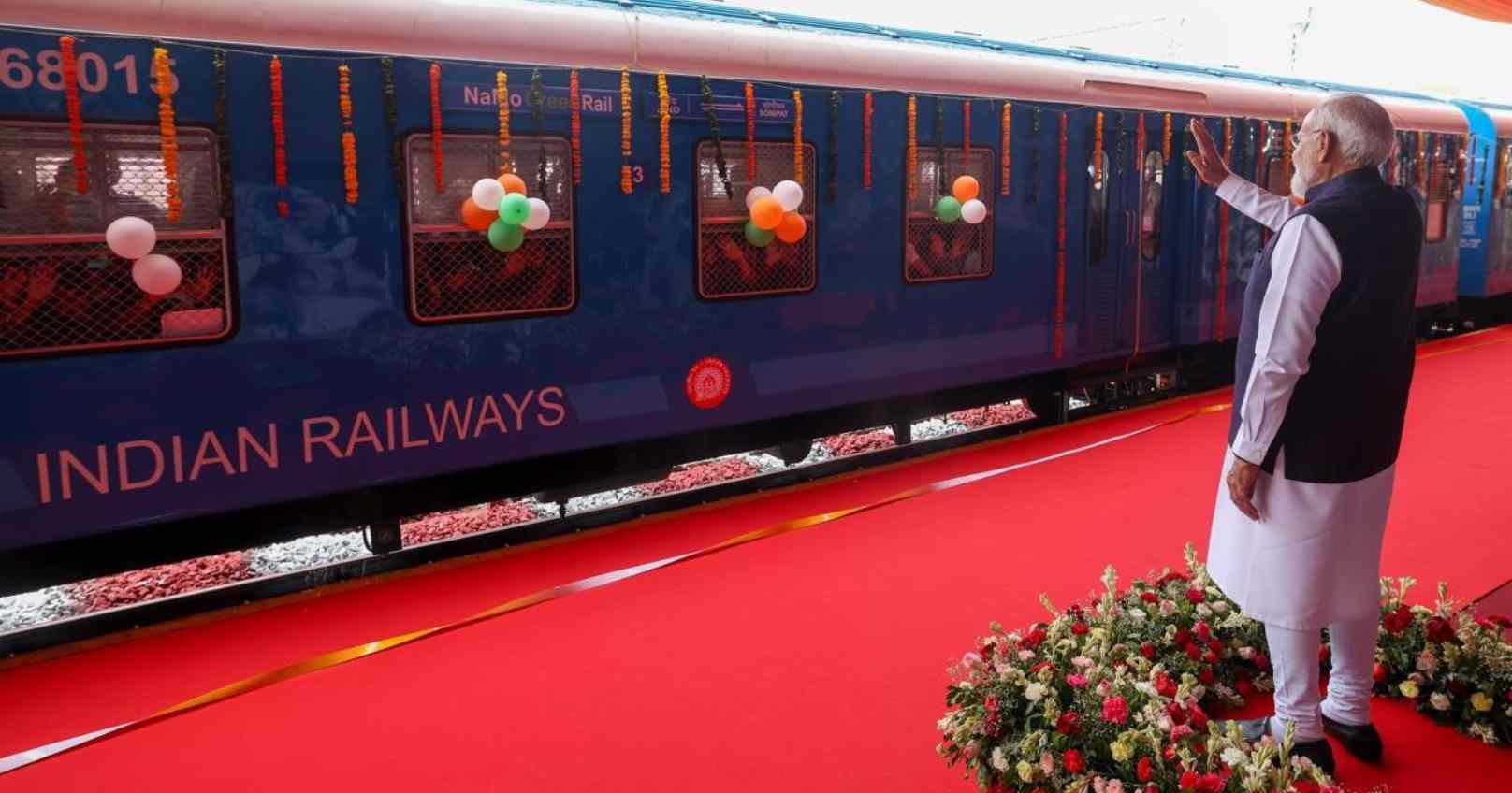
Prime Minister Narendra Modi on Saturday inaugurated India's first indigenously developed hydrogen fuel cell train, describing it as the world's longest and most powerful hydrogen-powered train. The launch marks a significant step in India's transition towards environmentally friendly rail transport and advanced indigenous technology.
The newly introduced 10-coach train will operate on the 89-kilometre Jind-Sonipat route in Haryana. Built by the Integral Coach Factory (ICF), Chennai, the train is capable of reaching speeds of up to 75 kmph and is powered by hydrogen fuel cells producing around 3,200 horsepower.
Unlike conventional diesel trains, the hydrogen-powered train generates water vapour as its only emission, making it a cleaner alternative for routes that are yet to be electrified.
Speaking at the launch, Prime Minister Modi said the project reflects India's growing capabilities in developing cutting-edge green technologies. He noted that the country has now joined a select group of nations, including Germany and China, that have successfully introduced hydrogen-powered rail systems.
The Prime Minister also said the train is a testament to the vision of Aatmanirbhar Bharat, highlighting the efforts of Indian Railways engineers and scientists in developing advanced transport technology within the country.
Designed to provide affordable travel, ticket prices on the route are expected to range from Rs 5 to Rs 25, making the service accessible while promoting sustainable mobility.
The hydrogen train is part of the government's broader National Green Hydrogen Mission, which aims to reduce carbon emissions, promote clean energy and gradually introduce hydrogen-powered transport across more non-electrified railway routes in the future.
The launch is being viewed as a major milestone in India's efforts to modernise its railway network while reducing dependence on fossil fuels and strengthening its position in the global clean-energy transportation sector.