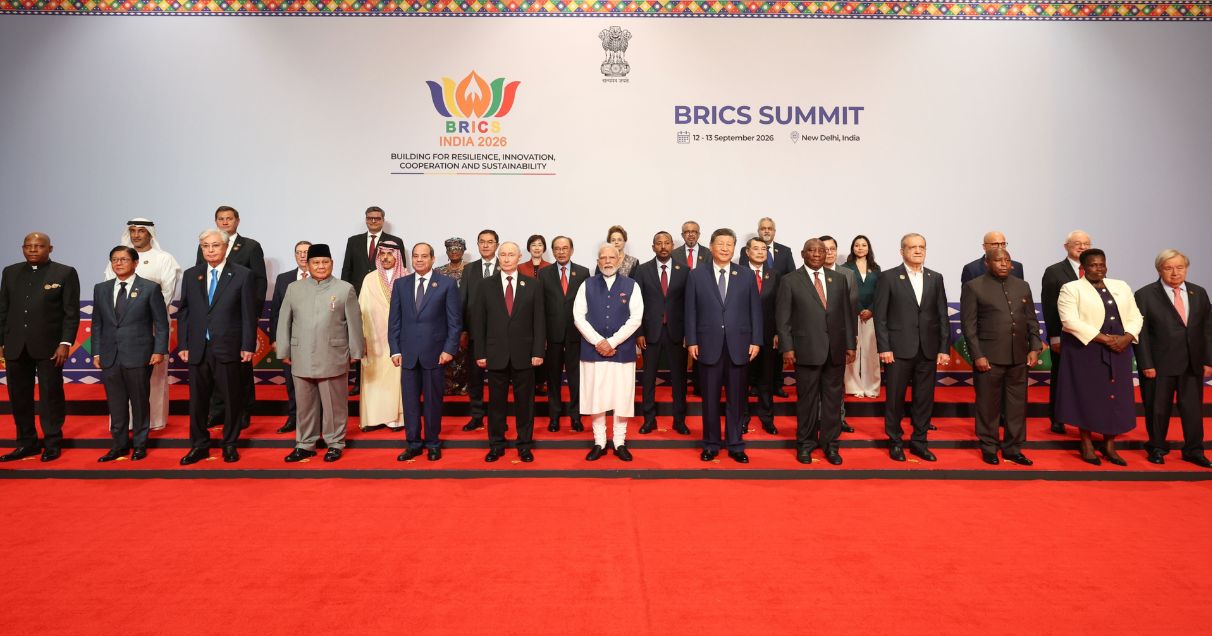
Prime Minister Narendra Modi held 15 formal bilateral meetings with foreign leaders during the three-day diplomatic engagements surrounding the 18th BRICS Summit in New Delhi, the Ministry of External Affairs said on Sunday.
The Prime Minister also held several informal interactions with visiting leaders and representatives of international organisations as India hosted the BRICS summit at Bharat Mandapam on September 12 and 13.
The summit brought 13 heads of state and government and 17 delegations to New Delhi under India’s theme of “Building Resilience, Innovation, Cooperation and Sustainability”.
Modi-Putin talks focus on defence and trade
Modi’s engagements began with Russian President Vladimir Putin, whom he met for the second time in less than a month following their meeting at the Shanghai Cooperation Organisation summit in Bishkek on August 31.
The two leaders reviewed cooperation in defence, energy, nuclear power and critical minerals. They also discussed efforts to take bilateral trade towards the $100-billion target by 2030.
Defence cooperation featured prominently, including the planned delivery of the fifth S-400 air defence regiment and possible upgrades to the BrahMos missile system. The two sides also discussed potential cooperation involving Russia’s RVV-BD long-range air-to-air missile.
Moscow reiterated that it remained committed to meeting its defence obligations to India despite the continuing conflict in Ukraine and pressure on its defence sector.
Economic issues were also discussed, with both sides looking at ways to reduce the trade imbalance and expand opportunities for skilled Indian workers in Russia. Cooperation in fertilisers, steel and railway supply chains also featured in the talks.
Iran talks amid West Asia tensions
Modi also met Iranian President Masoud Pezeshkian during the summit. It was Pezeshkian’s first visit to India and came against the backdrop of the continuing conflict involving Iran and heightened concerns over the security of the Strait of Hormuz.
India reiterated its preference for dialogue and diplomacy to resolve conflicts. The discussions also covered the Chabahar port, regional connectivity, trade and energy security.
The Prime Minister separately met UN Secretary-General Antonio Guterres. Their discussions included ongoing global conflicts, reform of multilateral institutions and issues concerning developing nations.
Modi-Xi meeting draws global attention
One of the most closely watched meetings came on Saturday evening, when Modi held talks with Chinese President Xi Jinping.
Xi’s visit marked his return to India after nearly seven years. His previous visit was in October 2019, when he met Modi for an informal summit in Mamallapuram.
The meeting followed recent diplomatic efforts to stabilise India-China relations, including talks between National Security Adviser Ajit Doval and Chinese Foreign Minister Wang Yi on August 25. The discussions produced an eight-point understanding concerning the boundary issue and the broader bilateral relationship.
According to the MEA, Modi and Xi acknowledged the improvement in ties and agreed that India and China should view each other as partners rather than rivals.
Modi nevertheless emphasised that maintaining peace and stability along the border was crucial for further progress in bilateral relations.
The two leaders also discussed trade, market access, supply chains and people-to-people movement. Beijing favoured advancing the boundary dialogue alongside the wider relationship, while New Delhi continued to underline the importance of stability along the Line of Actual Control.
Engagement with Global South
Modi’s diplomatic outreach continued with meetings involving leaders from Ethiopia, Malaysia, the UAE and Vietnam, among others.
On Sunday, he met Kazakhstan President Kassym-Jomart Tokayev and held discussions with representatives and leaders from the Philippines, Egypt, South Africa, Burundi, Nigeria and Uganda.
His meetings with Egyptian President Abdel Fattah El-Sisi and South African President Cyril Ramaphosa focused on bilateral cooperation and issues relevant to developing countries.
Brazilian President Luiz Inacio Lula da Silva and Saudi Arabia’s leadership did not attend the summit, with both countries represented by their foreign ministers.
Bilateral diplomacy alongside BRICS agenda
Beyond scheduled bilateral meetings, Modi also held informal interactions with other visiting leaders and representatives of international institutions. He engaged with officials from the New Development Bank and participants at the BRICS Business Forum.
India used its BRICS presidency to push issues including resilient supply chains, greater use of national currencies for trade and reforms to global institutions to increase the representation of developing countries.
The summit also provided New Delhi an opportunity to discuss its position on the wars in Ukraine and West Asia, with India continuing to advocate de-escalation and diplomatic solutions.
The scale of Modi’s engagements during the summit highlighted India’s effort to use its BRICS presidency not only for multilateral diplomacy but also to advance specific bilateral priorities with major partners across regions.