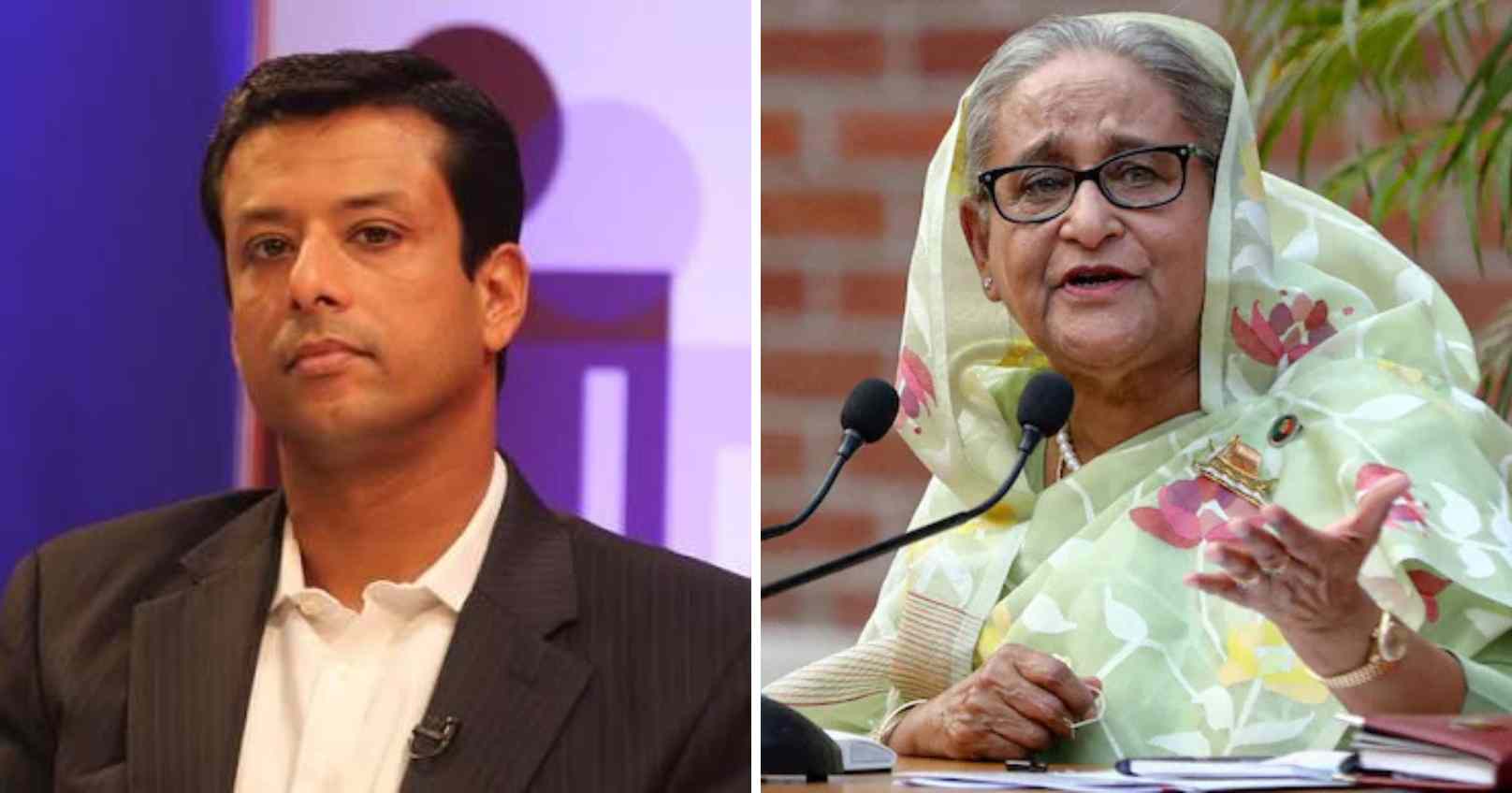
Sajeeb Wazed Joy, senior Awami League leader and son of former Bangladesh prime minister Sheikh Hasina, has expressed grave concerns about the political and security situation in Bangladesh, claiming that the country is moving towards instability and could emerge as a source of regional insecurity if urgent corrective measures are not taken.
Speaking virtually from Maryland at an event hosted by the Foreign Correspondents' Club in New Delhi on Wednesday, Joy alleged that Bangladesh's internal institutions have weakened significantly since the change in government in 2024. He claimed that foreign intelligence agencies, particularly Pakistan's Inter-Services Intelligence (ISI), have gained considerable influence in the country.
According to Joy, several individuals previously convicted on terrorism-related charges during the Awami League's tenure have been released from prison. He further alleged that organisations banned in the past are now openly active and that extremist elements have been able to address public gatherings.
Describing the situation as a security challenge for the region, Joy claimed that Bangladesh risks becoming another source of instability in South Asia. He urged the Indian media to continue focusing on developments in Bangladesh and warned that the consequences could extend beyond the country's borders.
His remarks come months after parliamentary elections brought the Bangladesh Nationalist Party (BNP) to power following the end of Muhammad Yunus's interim administration. The Awami League, which had been barred from participating in the elections, remains outside the formal political process.
Joy questioned the credibility of the political transition, arguing that the absence of the Awami League from the electoral contest prevented the polls from reflecting the full political spectrum of the country.
He also raised concerns about the death toll during the protests of July and August 2024 that led to Sheikh Hasina's removal from office. Referring to differences between official figures and estimates published by international organisations, Joy claimed that requests seeking clarification on the numbers had gone unanswered.
Criticising legislation introduced during the interim administration and later approved by the new government, Joy alleged that the law grants broad legal protection to protesters while leaving unresolved cases involving the deaths of police personnel, civilians and Awami League supporters.
The Awami League leader further claimed that numerous party workers and former officials continue to remain in custody without timely trials or bail, while some have allegedly died in detention. He also accused authorities of targeting journalists and media organisations perceived to be sympathetic to his party.
Expressing concerns about Bangladesh's economy, Joy warned that continued political instability and economic mismanagement could further worsen the country's financial situation and affect future democratic processes.
The allegations made by Joy represent the Awami League's position on developments following Sheikh Hasina's ouster in August 2024 and have not been independently verified. The BNP government and Bangladeshi authorities have repeatedly rejected the Awami League's characterisation of the current political situation.