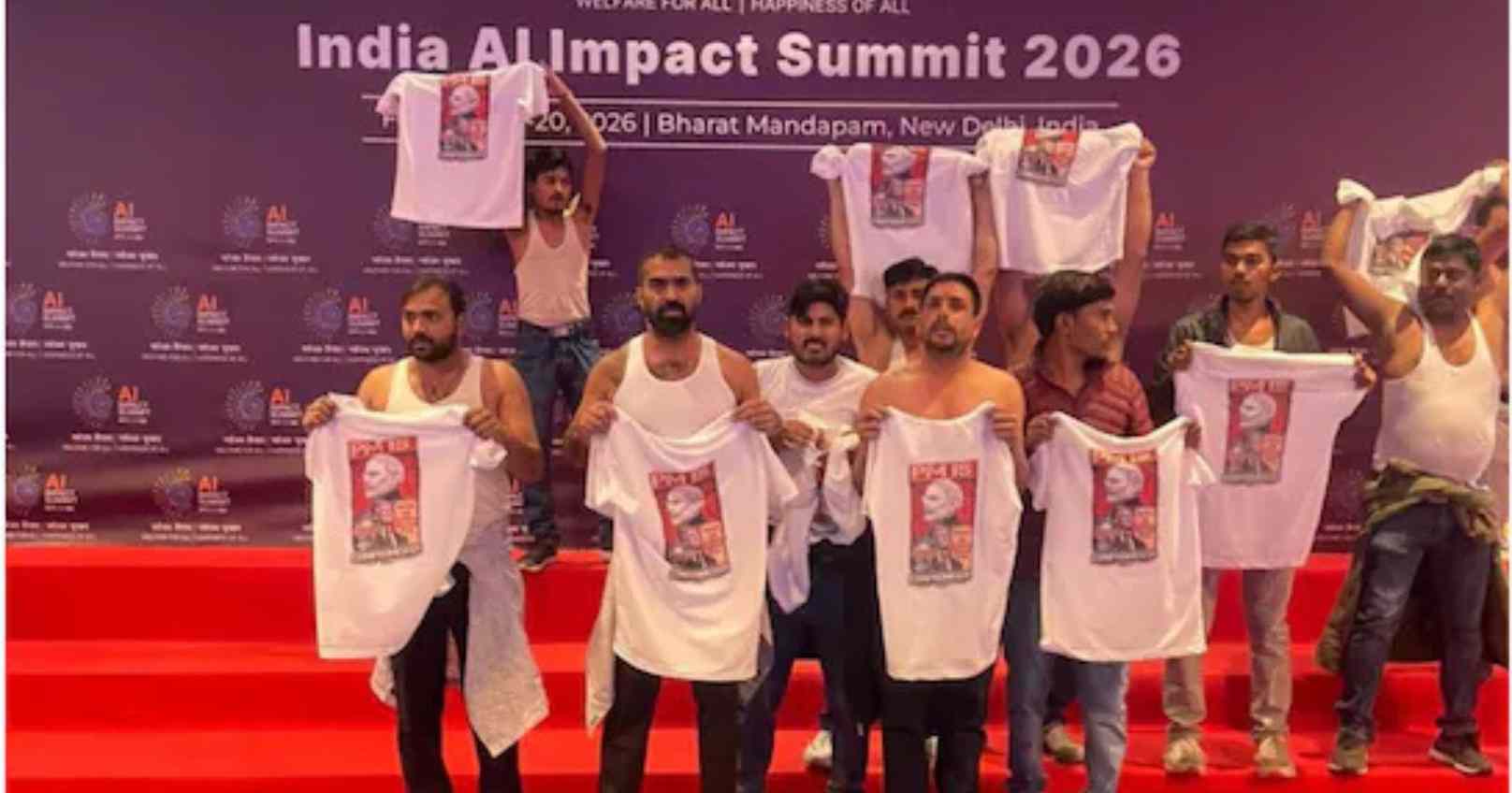
The India AI Impact Summit — a high-profile gathering of global technology leaders — was briefly overshadowed by political turmoil when a group of Youth Congress activists staged a dramatic protest outside the venue.
Attendees inside one of the halls reported hearing loud slogans from outside. Moments later, several shirtless men entered the premises, chanting against the recently announced India–US trade framework while holding their removed T-shirts aloft. The demonstrators were identified as members of the Youth Congress.
Police sources said at least four individuals were detained: Krishna Hari (national secretary), Kundan Yadav (Bihar state secretary), Ajay Kumar (Uttar Pradesh vice president), and Narasimha Yadav (national coordinator). Officials indicated they would be produced in court and could face serious charges, including allegations of scuffling with police personnel.
Investigators believe the disruption was pre-planned. According to sources, the protesters allegedly obtained QR codes that allowed them to access the high-security venue. Authorities are reviewing surveillance footage and using facial recognition tools to identify others involved. There are also claims that the group initially intended to use black umbrellas with printed stickers to bypass checks but later switched tactics by placing printed material on T-shirts. Police are probing how the materials were sourced.
Political Fallout
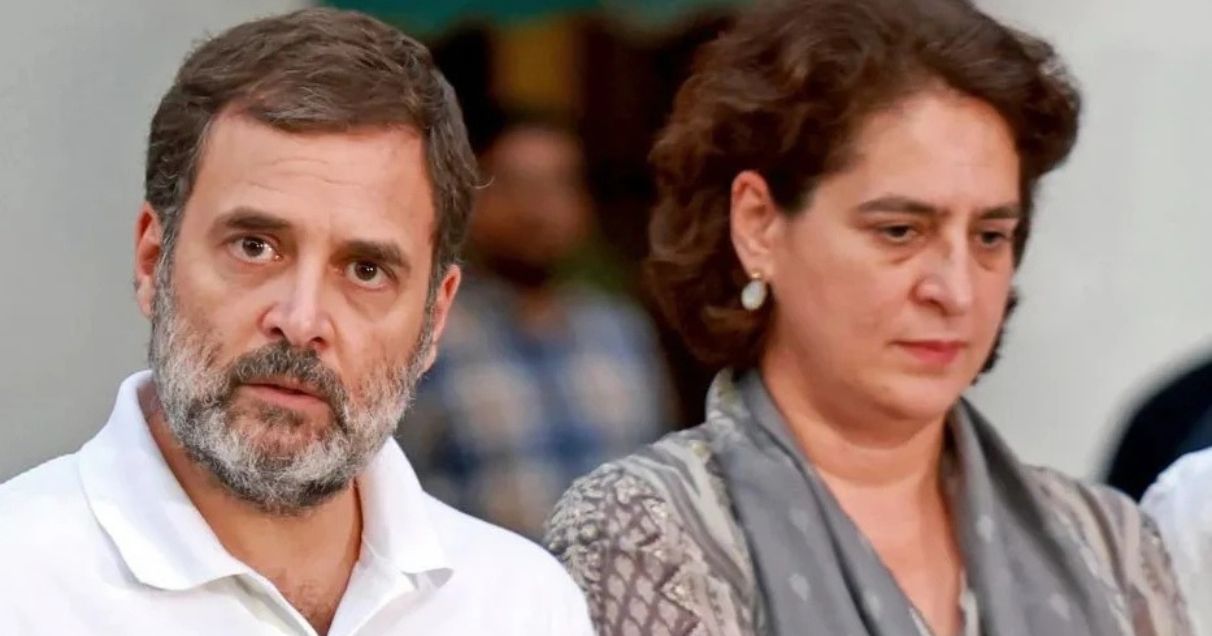
The protest quickly escalated into a broader political confrontation. Members of the BJP’s youth wing organised a counter-demonstration outside the Delhi residence of Congress MP Rahul Gandhi, accusing the opposition of undermining India’s global standing during a major international event.
Union Minister Bhupender Yadav criticised the disruption, calling it an attempt to embarrass the country at a time when India is positioning itself as a technology leader. BJP spokesperson Nalin Kohli described the protest as politically motivated, alleging it stemmed from resentment over India’s economic progress.
The Congress party has consistently argued that the new trade arrangement with the United States does not adequately protect India’s interests, claiming the benefits are uneven.
What the Trade Framework Entails
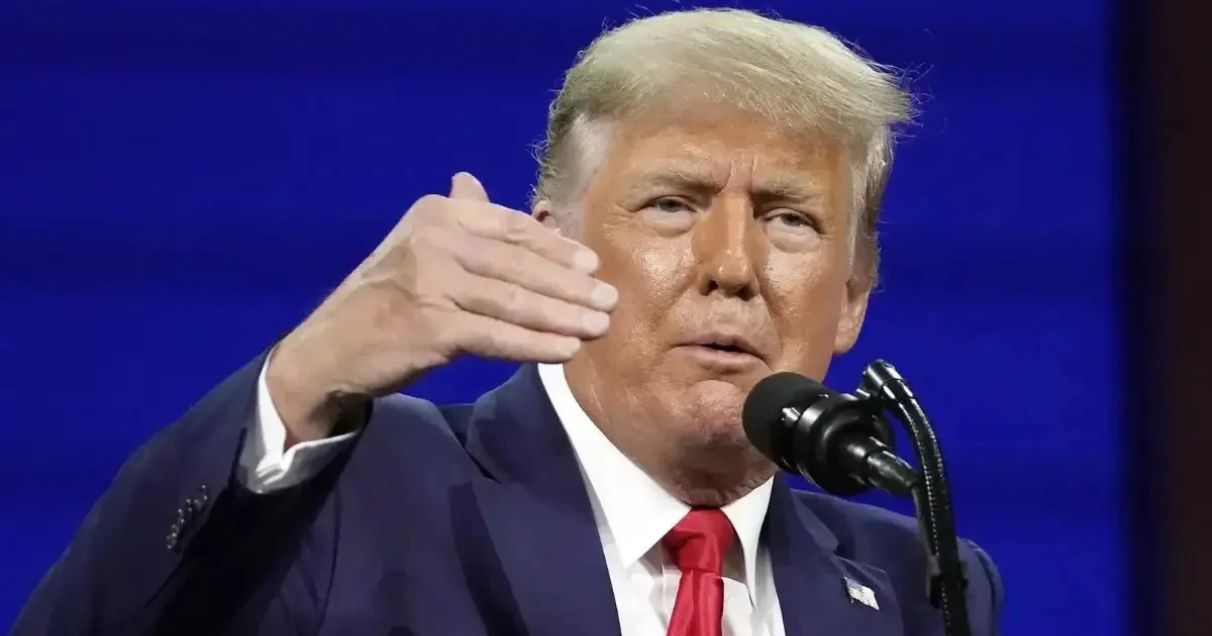
Under the agreement, India will phase out or reduce tariffs on a range of American industrial and agricultural goods, including certain grains, edible oils, processed foods, and beverages. In exchange, the United States will impose an 18% reciprocal tariff on specific Indian exports, including textiles, leather goods, plastics, chemicals, home décor items, and selected machinery components.
The framework has sparked debate over its long-term economic implications, particularly for domestic manufacturers and exporters.
Union Minister Ashwini Vaishnaw urged citizens to rally behind the government’s efforts to strengthen India’s global economic footprint and condemned attempts to disrupt international forums.
Sam Altman Calls for Global AI Oversight
Despite the controversy, the summit featured major discussions on artificial intelligence governance. Among the prominent speakers was Sam Altman, chief executive of OpenAI.
Altman emphasised the urgent need for international cooperation to regulate rapidly advancing AI systems. Drawing a parallel with the International Atomic Energy Agency, he suggested the creation of a similar global body to coordinate oversight and ensure responsible AI development.
He stressed that broad access to AI technologies would benefit humanity but cautioned against excessive centralisation of power in a single corporation or country. According to Altman, safeguards and regulatory mechanisms must evolve as quickly as the technology itself.
While the summit showcased India’s ambitions in artificial intelligence and digital innovation, the unexpected protest underscored how domestic political tensions can spill onto global platforms.