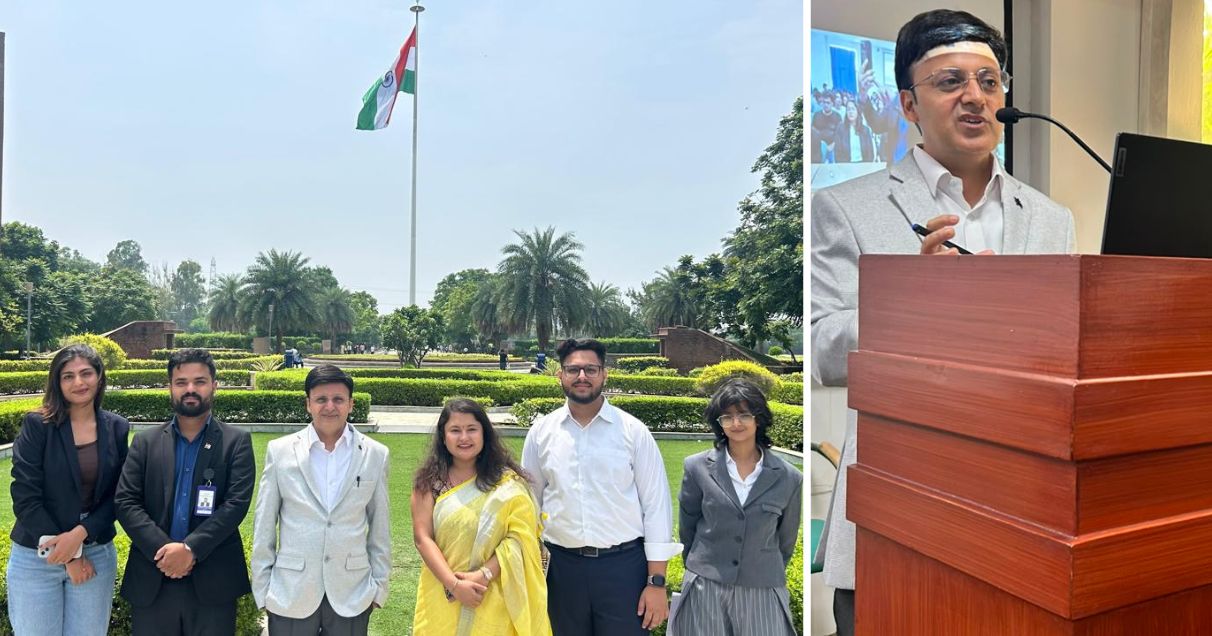
Amity Law School, Noida, hosted an engaging guest lecture by Sh. Nar Hari Singh, Advocate-on-Record, Supreme Court of India and Senior Standing Counsel to the Central Government, on 20 August 2026. The session, titled “Understanding Core Legal Careers – Litigation and Trial Practice,” was organised by the Corporate Resource Centre, Amity Law School, Amity University Uttar Pradesh, and provided students with a practitioner’s perspective on building a meaningful and sustainable career at the Bar.
Addressing aspiring lawyers, Sh. Nar Hari Singh sought to take students beyond the conventional perception of litigation as being centred merely around courtroom arguments. His address emphasised that effective advocacy rests upon painstaking preparation, command over facts, sound legal research, precise drafting, strategic thinking, professional ethics and an ability to understand both the client and the court.
The central theme was particularly relevant for students considering litigation as a career: the transition from studying law to practising it requires patience, discipline and continuous learning.
Litigation, Sh. Singh explained, is not courtroom theatre but the disciplined representation of a client’s cause through facts, law, procedure, evidence and careful preparation.
He highlighted the diverse opportunities within litigation and trial practice while stressing drafting, research, evidence, cross-examination, preparation and courtroom observation as indispensable skills for young advocates. Above all, he urged students to become prepared, competent and ethical lawyers who understand their facts, know their law and recognise their responsibility both to the client and to the court.
A significant part of the interaction was devoted to explaining what the early years of litigation actually look like. Sh. Singh spoke about chamber practice as an apprenticeship in which young advocates learn through research, drafting, preparation of briefs, observation of proceedings and close engagement with the everyday functioning of courts. His message to students was that there are no meaningful shortcuts to acquiring the judgment and professional instincts required of a capable litigator. The lecture also explored trial practice, including examination and cross-examination of witnesses, documentary and oral evidence, and the importance of knowing precisely what each question in a trial is intended to establish.
The session was further enriched by the participation and contribution of leading advocates from Sh. Nar Hari Singh’s Chamber, including Adv. Vasudev Sharan Swain (Principal Junior to Sh. Nar Hari Singh); Adv. Bhavya Sanwal; Adv. Maanasee Hatkar; and Adv. Aditi Midha. Their presence brought additional practical insight to the interaction and gave students an opportunity to engage with advocates actively working within litigation practice. Their contributions helped bridge the gap between classroom legal education and the professional realities of chamber and court practice.
Sh. Singh also encouraged students to experience litigation first-hand rather than forming career choices solely from textbooks or popular representations of the profession. His advice was practical: visit courts, observe proceedings, read complete judgments, strengthen procedural foundations, improve drafting, participate in moot and trial advocacy exercises, and undertake internships with practising lawyers. The address reinforced the idea that litigation is a long-term profession in which credibility, expertise and reputation are built progressively through consistent work.
The academic interaction was followed by an important career-oriented initiative. Sh. Nar Hari Singh, together with leading advocates from his Chamber, conducted walk-in interviews of several students from the BA LL.B. and LL.B. batches of Amity Law School. The interviews offered participating students a valuable opportunity for direct professional interaction with practising advocates and complemented the lecture’s emphasis on internships, chamber exposure and practical training.
The programme reflected Amity Law School’s continuing effort to connect legal education with the realities of professional practice. Special appreciation is due to Mrs. Jasmeet Kaur, Head – Corporate Resource Center / Placement & Internship Cell, Amity Law School, and Dr. Tanvi Sharma, Assistant Professor of Law, Amity Law School, for organising and facilitating the guest lecture and creating an opportunity for students to interact directly with experienced members of the Bar.
The lecture concluded on a message that resonated strongly with aspiring litigators: a career in litigation may demand patience and perseverance, but it also offers the distinctive privilege of representing another person’s cause before a court of law. As the speech memorably described it, law is “a marathon, not a sprint”—a profession in which sustained effort, resilience and the willingness to keep learning ultimately matter more than shortcuts to early success.
Through the lecture, interaction with chamber advocates and subsequent student interviews, the visit of Sh. Nar Hari Singh and his Chamber to Amity Law School, Noida, became more than a conventional academic engagement. It provided young law students with a close view of the discipline, responsibility and opportunities that define litigation—and a practical invitation to prepare themselves for life at the Bar.