A 16-year-old arbitration battle involving Reliance Industries, Shell-owned BG Exploration & Production India and the Government of India is heading into another crucial round, with as much as $3.86 billion — approximately ₹36,747 crore at current exchange rates — at stake.
The Supreme Court, in proceedings before a Bench led by Chief Justice of India Surya Kant, on Friday declined to halt proceedings before the Delhi High Court in the Centre’s appeal seeking enforcement of the 2016 Final Partial Award (FPA) arising from the Panna-Mukta and Tapti oil and gas fields dispute.
The Supreme Court’s order is significant, but it is not a final victory for the government. Crucially, the Court did not decide Reliance Industries’ objection to the maintainability of the Centre’s appeal. Instead, it left the issue open, allowing RIL to raise the maintainability question again after the Delhi High Court delivers its final order.
In other words, RIL has failed to stop the High Court from proceeding with the case, but its threshold legal objection has been preserved rather than extinguished. The Delhi High Court Division Bench of Justices Navin Chawla and Madhu Jain is now scheduled to hear the appeal on merits on August 13, 2026.
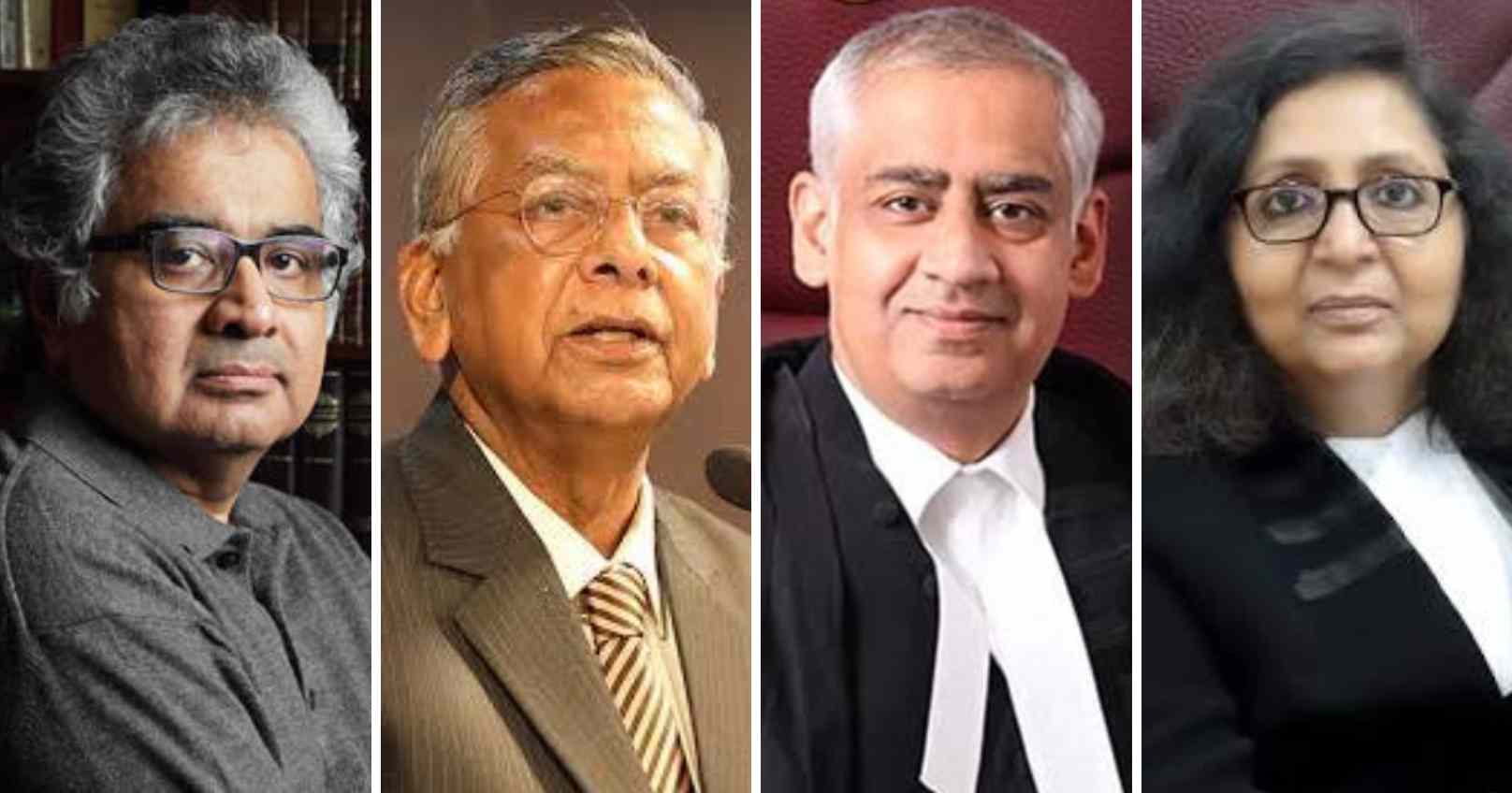
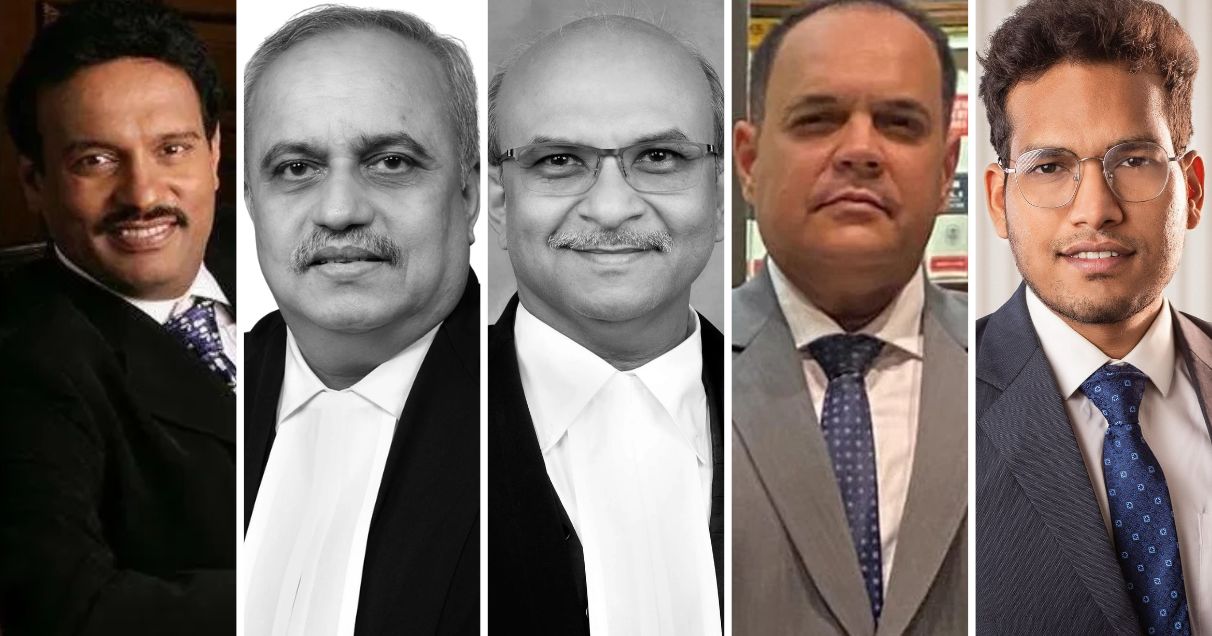
Attorney General R. Venkataramani appeared for the Union of India, while Senior Advocate Harish Salve, along with Sameer Parekh, appeared for Reliance. At the heart of the dispute is the Petroleum Ministry’s contention that the two private contractors are withholding substantial amounts of public money payable under the 2016 FPA. The government describes that award as “final and conclusive” on the parties’ rights and obligations.
RIL’s case is fundamentally different. It argues that allowing the Centre to recover its claimed amount at the enforcement stage would contradict the structure of the FPA itself because the tribunal deliberately left the actual quantification for subsequent stages.
A DISPUTE GOING BACK TO 1994
The origins of the controversy go back more than three decades. In 1994, Production Sharing Contracts were signed by the Government of India, through ONGC, with Reliance Industries and Enron Oil & Gas India for the Tapti and Panna-Mukta fields. In 2004, BG Exploration & Production India stepped into Enron’s position. BGEPIL subsequently became Shell-owned.
By December 2010, disputes over cost recovery, computation of profit petroleum and statutory dues including royalty had escalated to the point that RIL and BGEPIL invoked arbitration. The arbitration was seated under English law. On October 12, 2016, the three-member arbitral tribunal delivered its Final Partial Award.
The FPA made declaratory findings on several important principles but did not finally quantify the amounts payable. Quantification, including determination of the cost-recovery limit, was left for later stages. That distinction has since become the central legal issue in the litigation.
The Union filed an enforcement petition before a single judge of the Delhi High Court in 2019. In June/July 2023, Justice C. Hari Shankar dismissed the petition as “premature and not maintainable”, holding that the FPA was “not an executable arbitral award”. Importantly, the government was given liberty to seek execution at an appropriate stage. The matter then went before the Division Bench.
In February 2026, Justices Navin Chawla and Madhu Jain rejected the preliminary objection raised by RIL and BGEPIL and held the Centre’s appeal maintainable under Section 50(1)(b) of the Arbitration and Conciliation Act. The Bench directed that the matter proceed to a hearing on merits.
RIL approached the Supreme Court, but the Supreme Court has now declined to stop that process. The result is that the High Court can proceed on August 13, while RIL retains the right to challenge maintainability after the final judgment.
HOW $3.86 BILLION BECOMES ₹36,747 CRORE
The numbers involved are enormous. Using an exchange rate of approximately ₹95.2 to the US dollar as of August 8, 2026, the Centre’s headline enforcement claim of $3.86 billion translates into approximately ₹36,747 crore.
The commonly reported rounded figure of $3.8 billion works out to approximately ₹36,176 crore. When the government filed its enforcement petition in 2019, the principal sum pleaded was approximately $2.31 billion, equivalent at the present conversion rate to about ₹21,991 crore.
The difference between $2.31 billion and the present headline figure of $3.86 billion is approximately $1.55 billion, or about ₹14,756 crore. That represents the implied interest and accretion component over roughly seven years. The tribunal also upheld cost recovery of approximately $545 million for Tapti, presently equivalent to about ₹5,188 crore, and $577.5 million for Panna-Mukta, or approximately ₹5,498 crore.
Together, the cost recovery upheld for the two fields amounted to approximately $1.1225 billion, or ₹10,686 crore. The contractors had additionally sought cost provisions of $365 million for Tapti and $62.5 million for Panna-Mukta. Those additional provisions — totalling $427.5 million, or roughly ₹4,070 crore — were rejected.
THE 17-PERCENTAGE-POINT TAX QUESTION BEHIND BILLIONS OF DOLLARS
One of the most consequential findings concerns what, at first sight, appears to be an accounting issue. The tribunal held that profit petroleum should be calculated after deducting the then-prevailing 33% tax rate, rather than the earlier 50% rate.
That difference of 17 percentage points, when applied over the producing life of two major hydrocarbon fields, produces an economic impact running into billions of dollars. It is this finding that helps explain how a seemingly technical disagreement over tax treatment can ultimately generate the Centre’s multi-billion-dollar claim.
EVERY ₹1 MOVEMENT IN THE DOLLAR MATTERS
Because the PSC balances and awards are dollar-denominated, the rupee value of the dispute moves substantially with the exchange rate. For every ₹1 movement in the USD/INR rate, the rupee value of a $3.86 billion exposure changes by approximately ₹386 crore. At ₹87 to the dollar, $3.86 billion would be worth about ₹33,582 crore. At ₹95.2, it becomes approximately ₹36,747 crore. At ₹100 to the dollar, the figure reaches approximately ₹38,600 crore.
Rupee depreciation therefore mechanically increases both the contractors’ potential rupee liability and the Centre’s potential rupee recovery. Interest is another major variable. The approximately ₹14,756 crore difference between the 2019 principal claim and the current $3.86 billion headline figure demonstrates that delay itself has become a substantial component of the dispute.
If the Centre ultimately succeeds on its case, prolonged litigation could therefore prove expensive for the contractors.
HOW MUCH COULD RIL AND SHELL EACH FACE?
The PMT consortium structure is:
ONGC — 40%
Reliance Industries — 30%
BGEPIL — 30%.
ONGC, despite being the 40% consortium partner, is the government’s own nominee and is not a respondent to the enforcement claim. The liability being asserted therefore falls against the two private contractors.
If the private contractor exposure is analytically divided equally between RIL and BGEPIL, a conventional 50:50 division of the contractor share, but not a court-determined apportionment, each would face a headline exposure of approximately: $1.93 billion, or ₹18,374 crore.
On the original $2.31 billion principal figure, each contractor’s estimated share would be approximately:₹10,996 crore. The Union of India, meanwhile, is seeking recovery of the entire ₹36,747 crore headline amount.
WHAT IT MEANS FOR RELIANCE INDUSTRIES
For Reliance Industries, the most immediate consequence is that a contingent exposure estimated at roughly ₹18,000-19,000 crore remains alive through at least the Delhi High Court’s final decision and any consequential proceedings before the Supreme Court.
The number is undeniably large in absolute terms, although it remains a low-single-digit percentage of RIL’s annual consolidated profit run-rate and only a fraction of a percent of its balance sheet.
It is therefore more likely to remain a disclosure and market-sentiment issue than a solvency issue. Procedurally, RIL did not obtain what it wanted from the Supreme Court: the High Court proceedings have not been stopped. But an important substantive shield remains intact.
Because the Supreme Court has preserved the maintainability objection, even an adverse Delhi High Court decision on merits would not necessarily conclude the controversy. RIL would retain an independent threshold argument before the Supreme Court. That optionality, however, has become more expensive.
RIL must now litigate the merits before it can potentially return to the Supreme Court on maintainability. Legal costs, management attention and headline risk therefore arrive first; the procedural escape route comes later. There is also potential read-across to other Production Sharing Contract disputes.
RIL and BP have had a parallel history of disputes with the Petroleum Ministry involving issues such as KG-D6 cost recovery and gas migration. If courts ultimately hold that a declaratory partial award can itself be enforced, it could weaken the broader defence that “no quantification means no execution” in other disputes.
The immediate stock-market reaction, however, should be relatively modest. Investors have known about this contingency since 2019. The Supreme Court’s intervention changes the probability trajectory of the litigation rather than the underlying headline quantum.
Volatility could nevertheless increase around the August 13 hearing and again when judgment is delivered.
WHAT IT MEANS FOR SHELL
BG Exploration & Production India’s estimated exposure broadly mirrors RIL’s at approximately ₹18,000-19,000 crore, assuming an equal division between the private contractors. Its position, however, has a different commercial dimension.
The PMT fields have been in cessation/decommissioning for years, leaving BGEPIL with relatively limited continuing Indian upstream cash flows against which such a payment could be absorbed or offset.
The case is therefore also likely to be watched internationally as a datapoint in the debate over investor confidence and enforcement of Indian Production Sharing Contracts, alongside tax and decommissioning disputes involving foreign energy companies. Settlement dynamics may also differ between the two respondents.
Reliance maintains a substantial continuing relationship with the Petroleum Ministry across the Indian energy sector. Shell’s PMT exposure, by contrast, is largely connected with a legacy asset winding down.
WHAT IT MEANS FOR THE GOVERNMENT
For the Union Government and the Ministry of Petroleum and Natural Gas, a potential recovery of approximately ₹36,747 crore has now moved back into serious contention after the setback before the single judge in 2023.
Were the Centre ultimately to recover anything approaching the headline amount, it would constitute a significant one-off non-tax receipt. But the Supreme Court order represents enforcement momentum, not an enforcement victory.
The Centre must still convince the Delhi High Court that a declaratory partial award which deliberately deferred final quantification can nevertheless be executed. That is precisely the proposition that Justice C. Hari Shankar rejected in 2023.
A government victory could, however, have consequences far beyond PMT by strengthening the Centre’s position in other PSC and revenue-sharing arbitrations. Findings that conclusively determine principles could potentially become enforceable without waiting for every downstream calculation to be completed.
AND WHAT ABOUT ONGC?
ONGC is not a respondent to the enforcement proceedings and therefore faces no direct ₹36,747 crore liability from the present order. Nevertheless, as the 40% consortium partner and the contracting vehicle under the original 1994 PSCs, findings concerning cost recovery and profit petroleum can affect its historical PMT economics as well as any residual sharing of decommissioning costs.
For ONGC, therefore, the consequences are principally indirect rather than an immediate profit-and-loss event.
THE BIG LEGAL QUESTION: CAN A DECLARATORY AWARD BE EXECUTED?
This is ultimately what the case is about. The 2016 FPA determined important principles including tax treatment and cost-recovery ceilings but left actual quantification to subsequent partial awards and ultimately a final award.
The single judge’s reasoning was straightforward: if an award does not itself direct payment of a quantified sum, it cannot yet be executed as a money award. The government’s answer is that the FPA is nevertheless unequivocally and unambiguously final and conclusive regarding the rights and obligations that it actually decided.
The dispute consequently raises an important question concerning foreign arbitral awards under Part II of the Arbitration and Conciliation Act. The Division Bench has already held that an order refusing enforcement under Section 48 is appealable under Section 50(1)(b).
If that interpretation survives further challenge, it could widen the appellate route available in foreign-award enforcement cases more generally. The Supreme Court’s decision to defer the maintainability question is itself notable.
Ordinarily, a challenge to the very maintainability of proceedings would be expected to be decided before the merits. Here, a complete High Court merits determination could potentially take place only for the threshold question to return to the Supreme Court afterwards.
That may be judicially efficient in one sense, but it creates a sequencing risk: an elaborate judgment on merits could theoretically later be unwound on maintainability. There is also a broader question for India’s arbitration regime.
Treating declaratory partial awards as enforceable can be described as pro-enforcement because courts give immediate effect to determinations already made by tribunals. But for award debtors, it raises the opposite concern: enforcement proceedings could begin even before the precise monetary consequence has been finally quantified.
THE ₹36,747 CRORE FIGURE COMES WITH MAJOR CAVEATS
The headline number should not be mistaken for an amount already awarded by a court or tribunal. The $3.86 billion figure is the Centre’s computation, not a tribunal-ordered quantified payment. RIL has consistently argued that a 2018 award materially reduced the government’s claim and that the Centre’s calculations rely upon an interpretation that does not appear in the arbitral awards themselves.
The amount actually recoverable, or ultimately negotiated in a settlement, could therefore be substantially below the headline figure. Interest remains another major unresolved issue.
Whether interest should run from 2016, from some subsequent quantification date, or whether interest can run at all on a declaratory award remains contestable. Approximately ₹14,756 crore of the current headline amount is attributable to the difference between the original $2.31 billion principal and the present $3.86 billion figure.
Similarly, the assumed 50:50 division between RIL and Shell is only an analytical estimate. The ultimate allocation would depend upon the PSC and any inter-se arrangements between the contractors that are not publicly available.
All rupee figures are also illustrative conversions at approximately ₹95.2 per dollar. Any actual payment would depend upon the applicable exchange rate at the relevant time. And there remains the question of time. Even if the Centre succeeds before the Delhi High Court after the August 13 hearing, a further challenge before the Supreme Court is highly likely. Execution proceedings could follow thereafter. Actual cash realisation could therefore still be years away.
AUGUST 13 IS NOW THE DATE TO WATCH
The immediate focus shifts to the Delhi High Court on August 13, 2026. One key question will be whether the Division Bench itself decides the executability of the Final Partial Award or adopts another procedural route. Another issue to watch is whether Reliance revises the quantum of the contingent liability disclosed in its next quarterly filing following the Supreme Court proceedings.
And despite 16 years of litigation, settlement cannot be ruled out. The arbitration was invoked in 2010, the parties remain billions of dollars apart in their calculations, and the underlying oil and gas fields have reached the end of their productive lives. Those factors provide powerful commercial reasons for negotiating a resolution rather than continuing through another complete cycle of adjudication.
But unless that happens, the next battle is now firmly before the Delhi High Court. For the Centre, as much as ₹36,747 crore is potentially in play. For Reliance and Shell, the immediate victory is narrower but important: they have lost their attempt to stop the High Court hearing, but they have not lost their right to argue that the Centre’s appeal should never have been maintainable in the first place.