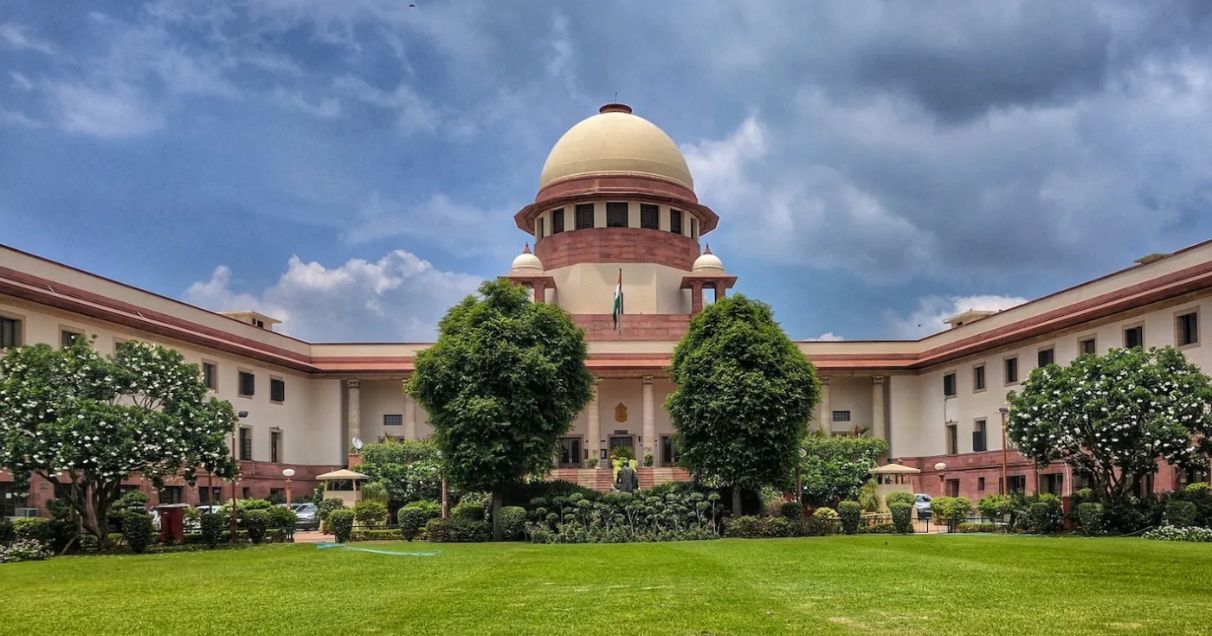
The Supreme Court is confronted with a potentially far-reaching challenge to its landmark 2022 judgment in Vijay Madanlal Choudhary v. Union of India, which upheld some of the Enforcement Directorate’s most consequential powers under the Prevention of Money Laundering Act, 2002 (PMLA).
A three-judge Bench comprising Justice Surya Kant, Justice Ujjal Bhuyan and Justice Nongmeikapam Kotiswar Singh decided on July 31, 2025 that it would first determine whether the review petitions themselves are maintainable before examining the substantive questions sought to be reopened. The lead matter is Karti P. Chidambaram v. Directorate of Enforcement, arising from the July 27, 2022 judgment in Vijay Madanlal Choudhary.
ED Raises Three Preliminary Objections
The Directorate of Enforcement placed three preliminary issues before the Court, going fundamentally to the maintainability and permissible scope of the review.
The first is whether the petitioners have demonstrated an “error apparent on the face of the record”, the stringent threshold ordinarily required for review.
The second is whether the petitions are effectively attempting to convert a review into an appeal, seeking reconsideration of conclusions already reached by the Supreme Court.
The third concerns the permissible scope of the proceedings: whether, in view of the Supreme Court’s August 25, 2022 order, the review can extend beyond the two questions concerning non-supply of the ECIR and the reverse burden of proof under Section 24 of the PMLA.
Petitioners Put 13 Questions Before Supreme Court
Against these objections, the review petitioners have proposed 13 questions which, if ultimately entertained, could require the Court to revisit several foundational conclusions of Vijay Madanlal.
The questions include:
- Money Bill amendments: Whether the Court ought first to have determined the constitutional validity of amendments to crucial PMLA provisions enacted through Money Bills.
- Meaning of Section 3: Whether the Court erroneously interpreted the conjunction “and” concerning “projecting or claiming” proceeds of crime.
- Continuing offence: Whether treating money laundering as a continuing offence can operate retrospectively in violation of Articles 20 and 21.
- PMLA as sui generis: Whether treating the statute as sui generis, rather than conventional penal legislation, constituted an error of law.
- Section 50 statements: Whether treating ED proceedings as an “inquiry” rather than an “investigation”, thereby permitting compelled testimony under Section 50, violates Articles 19, 20(3) and 21.
- Are ED officers police officers? Whether the Court erred in holding that Enforcement Directorate officials are not police officers.
- CrPC safeguards: Whether provisions of the Code of Criminal Procedure ought to apply to PMLA proceedings through Section 65.
- ECIR disclosure: Whether treating the Enforcement Case Information Report as merely an internal ED document which need not be supplied to the accused violates Article 21 and fundamental principles of criminal law.
- Section 45 twin conditions: Whether Vijay Madanlal wrongly reinstated the stringent twin conditions governing bail despite the 2018 amendment allegedly not expressly reviving them.
- Constitutionality of Section 45: Whether the twin conditions themselves continue to violate Articles 14, 19 and 21.
- Attachment under Section 5: Whether the Court correctly upheld an expanded attachment power capable of operating even without registration of a scheduled offence.
- Reverse burden: Whether upholding the reverse burden of proof constitutes a manifest error causing irreparable injustice.
- Scheduled offence versus PMLA trial: Whether the interpretation of Explanation (i) to Section 44(1)(d), effectively separating the PMLA trial from the outcome of proceedings concerning the scheduled offence, was legally erroneous.
Court Draws A Clear Line: Maintainability First
Crucially, the Supreme Court has not yet accepted these 13 questions for reconsideration on merits. The July 31 order records that the ED proposed three preliminary issues concerning maintainability while the review petitioners proposed 13 questions. The Bench directed that maintainability would be heard first.
Only if the Court concludes that the review petitions are maintainable will it proceed to determine which of the questions proposed by the petitioners actually arise for consideration. That distinction is significant: the present proceedings are not yet a rehearing of Vijay Madanlal on merits. The gateway question is whether such a rehearing through the limited jurisdiction of review is legally permissible at all.
Why Vijay Madanlal Matters
The 2022 judgment gave judicial approval to a formidable range of ED powers under the PMLA, including powers concerning arrest, attachment of property, search and seizure.
It also held that ED officers are not police officers and treated their proceedings as part of a sui generis statutory framework. The judgment sustained the stringent bail regime under Section 45 and dealt with the contentious issue of disclosure of the ECIR.
The review proceedings therefore strike at questions lying at the heart of India’s anti-money-laundering regime: When can the ED arrest? What must it disclose to an accused? What protections apply during questioning? How difficult can Parliament make bail? Who carries the burden of proof? And how closely must a money-laundering prosecution remain tied to the underlying scheduled offence?
Appearances
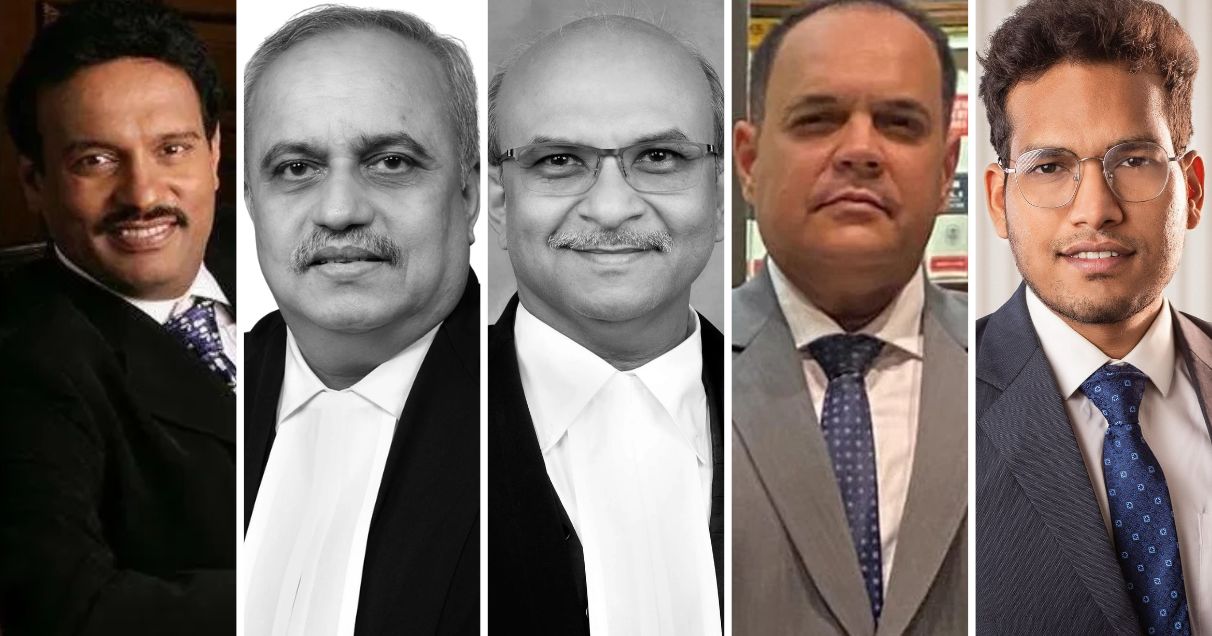
The July 31 proceedings saw an unusually formidable array of senior counsel. For the petitioner/review petitioners and connected parties: Senior Advocates Vikram Chaudhri, Kapil Sibal and Abhishek Manu Singhvi, along with Advocates Arshdeep Singh Khurana, Keshavam Chaudhri, Rishi Sehgal, Hargun Sandhu, Muskaan Khurana, Nikita Gill, Ishaan Sahai, Adit Pujari, Akshat Gupta, Harsh Srivastava, Rupali Samuel and others.
For the Directorate of Enforcement: Additional Solicitor General S.V. Raju, assisted by Zoheb Hussain, Kanu Agrawal, Arkaj Kumar, Gaurang Bhushan, Astha Singh, Annam Venkatesh, Prakhar Bharadwaj, Ritika Nigam, Sidharth Kuhar and other counsel.
The record of proceedings also lists appearances by Senior Advocates Shadan Farasat, Rakesh Dwivedi and Dr. Menaka Guruswamy, besides Kapil Sibal in connected matters, along with their respective teams.
The eventual determination of maintainability could decide whether one of the Supreme Court’s most consequential criminal-law judgments of recent years remains substantially closed—or whether the constitutional debate over the ED’s powers under the PMLA is reopened before the country’s highest court.