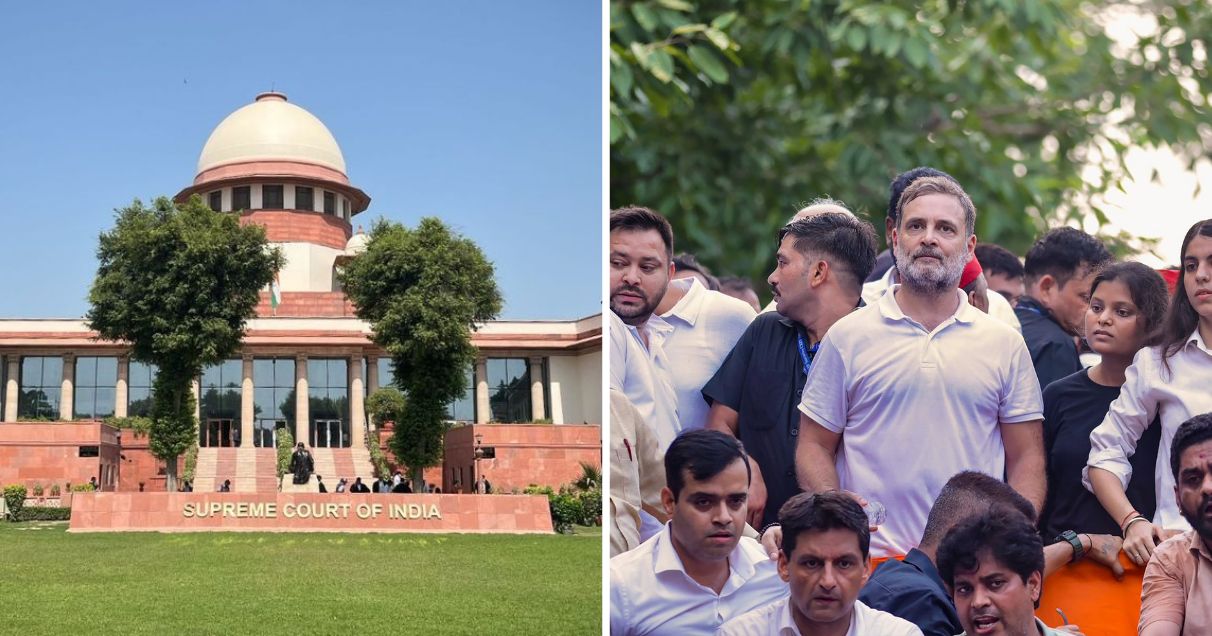
The Supreme Court on Thursday questioned Congress leader Rahul Gandhi over his participation in a march to the court on October 12, warning that demonstrations must not be used to pressure the judiciary.
Chief Justice of India Surya Kant made the remarks while hearing petitions related to the Special Intensive Revision (SIR) of electoral rolls and the removal of Jantar Mantar from Delhi's list of designated protest venues.
The court issued notices to the Congress, Rahul Gandhi and other INDIA bloc leaders on a plea filed by four lawyers concerning the march. It also sought responses from the Election Commission of India (ECI) and Chief Election Commissioner Gyanesh Kumar on separate petitions challenging aspects of the SIR exercise.
Clarifying that the issuance of notices did not amount to a finding against the respondents, the CJI told senior advocate Kapil Sibal, who appeared for Rahul Gandhi, that the court wanted the Congress leader to explain his conduct at the next hearing.
The issue was raised after Solicitor General Tushar Mehta and senior advocate Gaurav Bhatia drew the court's attention to the opposition march and the commotion that followed.
Bhatia objected to the political procession reaching the court premises, prompting the CJI to state that no one could intimidate the judiciary. The Chief Justice added that the court was aware of developments outside its immediate proceedings.
Why Rahul Gandhi Led The March
Rahul Gandhi and other INDIA bloc leaders marched towards the Supreme Court on October 12 as part of their campaign against the SIR process and their demand for action against Chief Election Commissioner Gyanesh Kumar.
Rahul subsequently sought to submit a joint petition challenging the Election Commission's decisions concerning the voter-roll revision. However, the petition was ultimately filed through lawyers as the court registry was nearing its closing time.
The opposition's plea sought disclosure of records, including files, meeting agendas, minutes and objections associated with the SIR exercise. It also referred to concerns about the role of Election Commissioners Sukhbir Singh Sandhu and Vivek Joshi in the process.
The controversy follows opposition allegations that the revision could exclude eligible voters. The SIR exercise has become a major political flashpoint, with opposition parties demanding greater transparency in the preparation of electoral rolls.
The march took place after the CJI declined the opposition's request for a meeting and advised its leaders to pursue the matter through legal channels.
Supreme Court Seeks Centre's Response On Jantar Mantar
In a separate matter, the Supreme Court sought responses from the Centre and Delhi Police on petitions challenging the withdrawal of Jantar Mantar's status as a designated protest site.
The CJI said the court would examine whether the authorities had properly considered the implications of the decision before implementing it.
The petitions challenge the move to redirect demonstrations to Ramlila Maidan, Burari Ground and CBD Ground. The change followed protests by the Cockroach Janta Party (CJP) against the Chief Election Commissioner, which resulted in large-scale detentions.
During the hearing, senior advocate Mukta Gupta argued that a designated protest venue should allow demonstrators to effectively communicate their concerns. Senior advocate Gopal Sankaranarayanan also urged the court to restore Jantar Mantar's status.
Solicitor General Tushar Mehta defended the administration's decision, telling the court that it was based on a report prepared by a committee constituted before the latest controversy.
The court sought the authorities' replies before deciding how to proceed.
Delhi Police Commissioner Apologises In Contempt Case
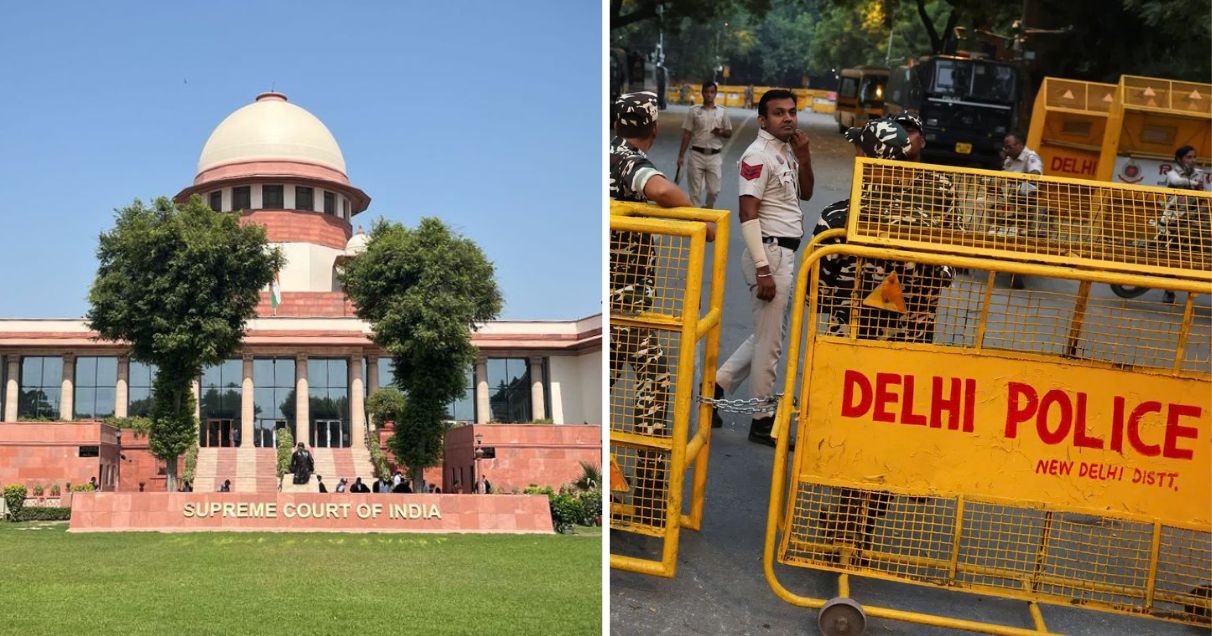
Delhi Police Commissioner Anurag Kumar also tendered an apology before the Supreme Court in a contempt matter concerning security restrictions imposed during the October 10 CJP protest in central Delhi.
Security arrangements for the demonstration involved the deployment of approximately 23,000 personnel. Authorities also restricted access at 45 metro station gates, triggering criticism over the scale of the measures.
The contempt petition alleged that the restrictions violated the Supreme Court's direction against imposing blanket curbs on travel.
In an affidavit submitted to the court, the police commissioner said internet services had continued uninterrupted. He also stated that people detained during the operation were held at temporary facilities, provided fresh meals and released within two to six hours.
The court proceedings brought together three contentious issues: the opposition's challenge to the voter-roll revision, the restrictions on designated protest venues and the legality of the security measures adopted during demonstrations in the capital.