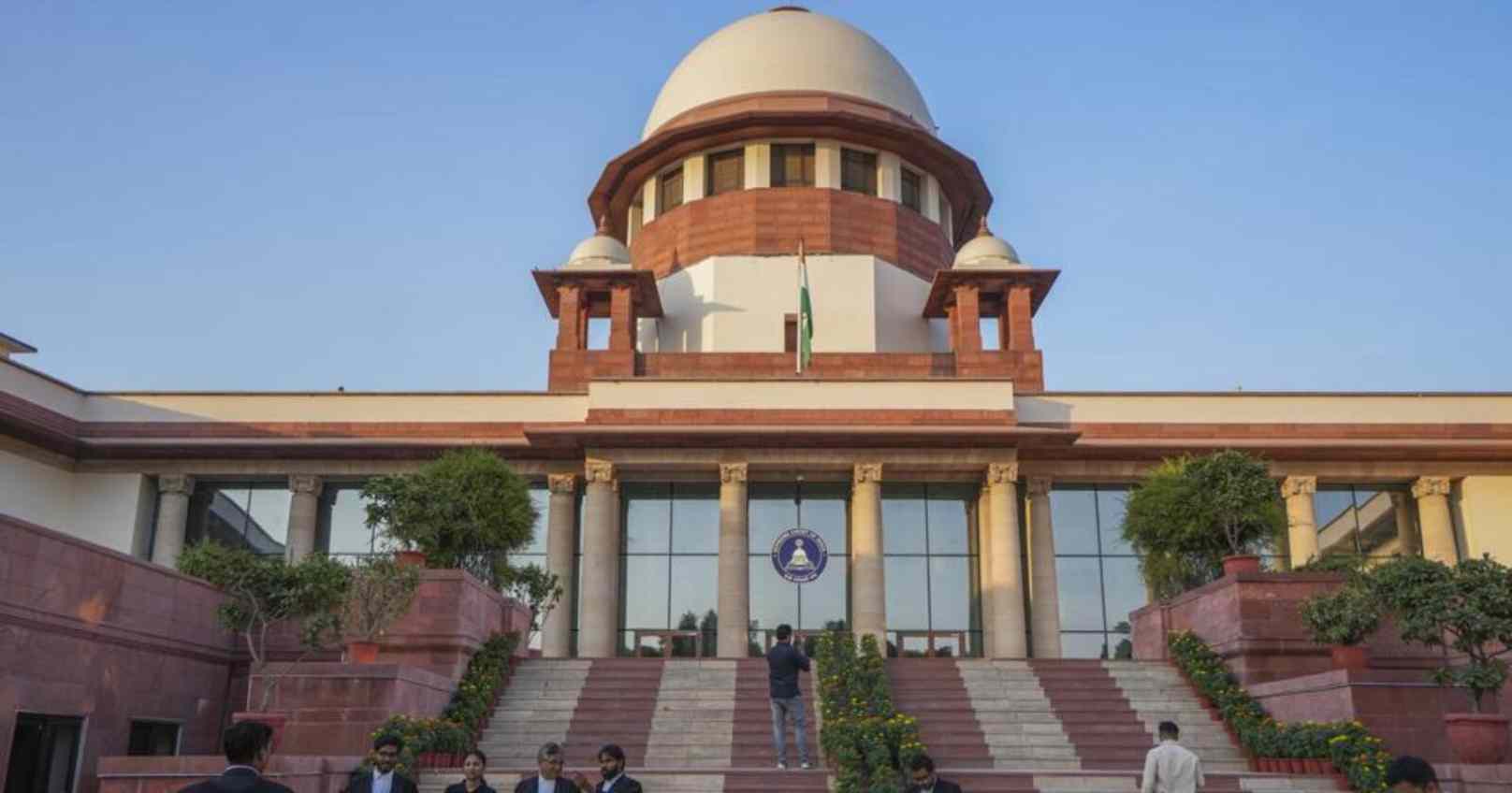
The Supreme Court on Friday voiced concern over whether families that have already achieved significant social, educational, and economic progress through reservation policies should continue receiving OBC quota advantages for the next generation.
During a hearing linked to Karnataka’s creamy layer rules, Justice B.V. Nagarathna observed that reservation was intended to uplift backward communities, but repeated benefits for families that are now well-established could defeat the purpose of the system.
The court remarked that once parents attain higher education, secure prestigious government jobs, and achieve financial stability, their children may no longer face the same level of social disadvantage. Justice Nagarathna pointed out that social mobility naturally follows educational and economic advancement, questioning whether reservation should continue indefinitely within such families.
The observations came while the bench of Justices B.V. Nagarathna and Ujjal Bhuyan heard a plea challenging a Karnataka High Court verdict that denied reservation benefits to a candidate classified under the creamy layer category.
The petitioner belonged to the Kuruba community, listed among Karnataka’s backward classes, and had secured selection as an assistant engineer in Karnataka Power Transmission Corporation Limited under the reserved category. However, authorities later refused to grant caste validity certification after determining that the candidate’s family income exceeded the creamy layer limit.
Officials noted that both of the candidate’s parents were government employees and that the family earned nearly ₹19.5 lakh annually.
During arguments, the petitioner’s counsel contended that salary earned by government employees should not automatically be considered while deciding creamy layer status. The lawyer argued that the classification depends more on the official rank and service category of the parents rather than total salary income.
The counsel further maintained that if salary income alone became the deciding factor, even lower-level government employees could lose reservation benefits, which would blur the distinction between OBC reservations and the Economically Weaker Sections (EWS) category.
Justice Nagarathna, however, stressed that reservation policies must account for changing social realities. She observed that families benefiting from reservation and subsequently achieving higher social standing should eventually move beyond the quota framework so that opportunities can reach genuinely disadvantaged groups.
The case stems from a Karnataka High Court judgment which ruled that the candidate’s family income crossed the prescribed creamy layer threshold under the state’s reservation policy. The High Court had clarified that exemptions related to salary income applied only to central government reservation rules and not necessarily to Karnataka’s state framework.
The Supreme Court has not delivered a final ruling yet, but the hearing has once again reignited the national debate around creamy layer rules, generational benefits under reservation, and the evolving interpretation of social justice policies in India.