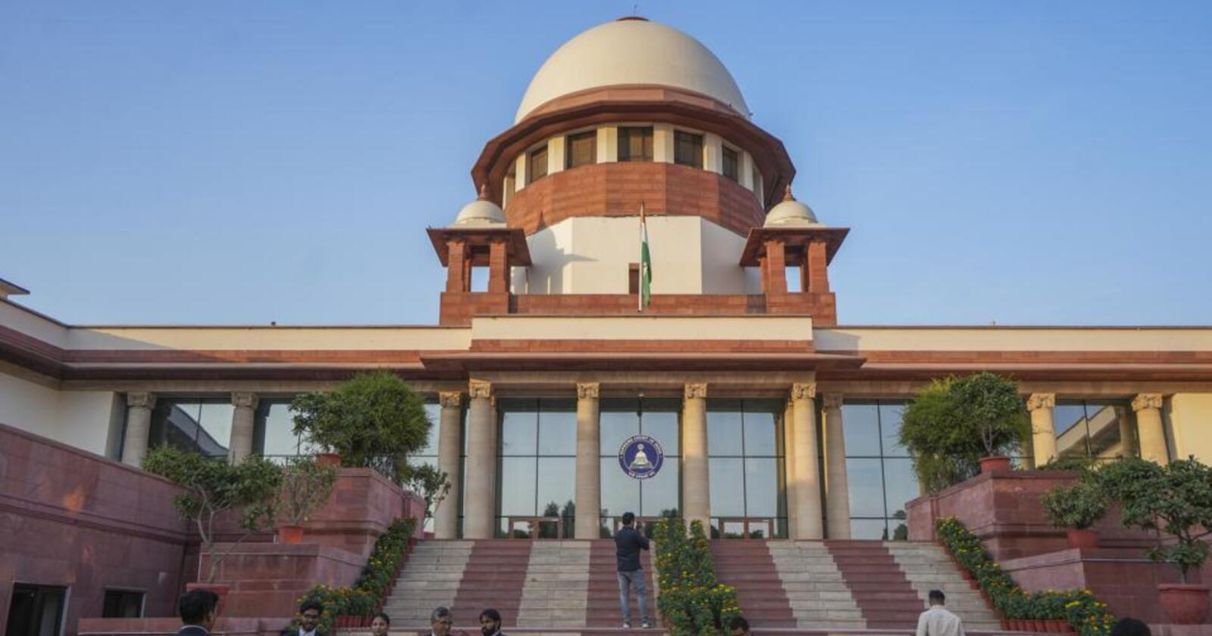
In unusually sharp observations against one of India’s largest corporations, the Supreme Court has imposed ₹10 lakh in costs on Reliance Industries Limited (RIL) after concluding that repeated litigation and objections had obstructed the progress of a commercial suit filed by state-owned NTPC, a case which began in 2005 and, two decades later, remains at the evidence stage.
A Bench of Justice P.S. Narasimha and Justice Alok Aradhe dismissed RIL’s latest appeal and used language that puts the spotlight not merely on the individual dispute, but on a larger problem confronting the Indian justice system: whether litigants with enormous financial resources can use successive procedural challenges to keep a commercial dispute alive almost indefinitely.
The Court observed that the facts demonstrated that RIL’s power to “litigate and obstruct progress of the suit seems unlimited”, while noting the company’s abundance of financial resources. The costs are to be deposited with the Supreme Court Advocates-on-Record Association within five weeks.
A 2005 Suit That Is Still Recording Evidence
The extraordinary procedural history originates in a gas-supply dispute between two corporate giants, NTPC Limited and Reliance Industries. NTPC had invited bids for supply of natural gas to its power stations. RIL submitted its financial proposal and NTPC issued a Letter of Intent in June 2004.
NTPC subsequently approached the Bombay High Court seeking a declaration that a binding contract existed under which RIL was required to supply 132 trillion British thermal units of natural gas over 17 years. The suit was instituted in 2005.
Twenty-one years later, the underlying dispute has still not crossed the evidence stage. That fact appears to have particularly troubled the Supreme Court. The Bench described the litigation as having “multiple seasons laden with many episodes”, an unusually evocative description of how a commercial suit can become consumed by litigation within litigation.
Four Years On Discovery, More Litigation Over Documents
The chronology recorded by the Court illustrates how the original commercial dispute became engulfed by procedural battles. Proceedings concerning discovery and inspection alone took approximately four years. Production of internal documents consumed more than another year. Litigation concerning redaction of allegedly inadmissible material began in 2016 and continued until a Supreme Court judgment in February 2019.
The dispute had travelled to the Supreme Court before. In February 2019, the apex court ruled that RIL could not use oral testimony to introduce the contents of internal documents that had already been excluded from evidence.
Significantly, the Supreme Court then wanted the underlying trial completed within nine months. Seven years have passed since that direction. The trial remains unfinished.
What Brought Reliance Back To Supreme Court
The latest round arose from affidavits filed by RIL witness B.K. Ganguly. NTPC objected to portions referring to internal emails, meetings and communications on matters that had already been held irrelevant to deciding whether a concluded contract existed.
The Bombay High Court ultimately ordered portions of the affidavits to be redacted while retaining material that could legitimately reflect the witness’s own perception and relevant correspondence between the two companies. RIL challenged that decision before the Supreme Court and sought to rely upon Section 60 of the Indian Evidence Act, 1872, dealing with oral evidence.
The Supreme Court was unimpressed. It found that essentially the same argument had already been advanced when the Court considered the controversy in 2019 and declined to reopen its earlier ruling. The appeal was dismissed.
‘At Every Stage There Has Been Obstruction’
It was while examining the extraordinary history of the proceedings that the Supreme Court delivered its strongest criticism. The Bench recorded that “at every stage there has been obstruction” and noted that, despite two decades of litigation, NTPC’s suit had made little progress.
The Court’s concern went beyond Reliance. It observed that allowing a litigant to prolong proceedings in this fashion represented “a sad reflection of the way courts conduct their proceedings.”
That observation is perhaps the most important institutional message emerging from the judgment. The Court was simultaneously confronting litigation strategy and judicial case management.
A litigant has every right to pursue remedies available under law. But when interlocutory disputes repeatedly travel through different judicial levels while the original suit remains undecided for decades, the process itself risks overwhelming the substantive dispute.
₹10 Lakh Cost: But The Message Is Far Bigger
For a corporation the size of Reliance Industries, ₹10 lakh is financially insignificant. That is precisely why the importance of the judgment lies elsewhere. The sanction is the Supreme Court’s recorded judicial disapproval of the manner in which the litigation progressed.
The judgment raises a difficult question for India’s commercial justice system: Can access to virtually unlimited litigation resources itself become a strategic advantage? A party capable of financing repeated applications, appeals and Special Leave Petitions can continue fighting procedural questions in a manner that a smaller litigant may simply be incapable of matching.
Procedural rights cannot be denied merely because a litigant is wealthy. Equally, however, the judicial process cannot permit procedural remedies to become instruments for preventing the underlying dispute from ever reaching judgment. That tension lies at the heart of the Supreme Court’s observations.
The Case Must Now Finally Move
The Supreme Court has once again asked the Bombay High Court to dispose of the NTPC suit as expeditiously as possible. The underlying commercial controversy remains to be adjudicated, and the Supreme Court’s dismissal of this appeal should not be read as deciding the ultimate contractual claims between NTPC and RIL.
But on one issue, the Court has spoken with remarkable clarity. A commercial suit instituted in 2005 cannot still be fighting its way through evidence in 2026 without raising serious questions about how litigation is being conducted and controlled.
For Reliance Industries, the immediate consequence is ₹10 lakh. For India’s judicial system, the judgment carries a much larger warning: The right to litigate is fundamental to justice. The ability to keep litigation alive indefinitely cannot become a substitute for justice itself.
Case: Reliance Industries Limited v. NTPC Limited | Supreme Court of India | Bench: Justice P.S. Narasimha and Justice Alok Aradhe