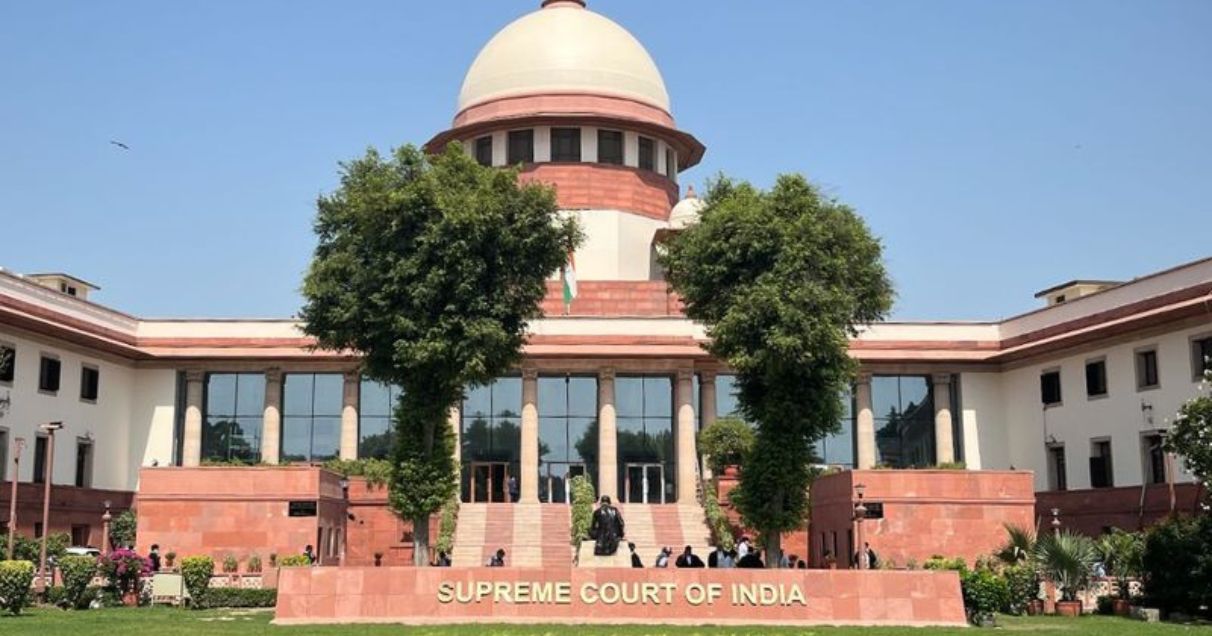
The Supreme Court has warned that its judges could stage a sit-in outside the Delhi High Court if authorities fail to improve footpaths and pedestrian crossings near the complex before the next hearing.
A bench of Justices JB Pardiwala and KV Vinod Chandran expressed displeasure over the lack of basic pedestrian facilities, stressing that committees and assurances would not substitute for on-ground action.
Addressing Additional Solicitor General Vikramjit Banerjee, the bench said it would remain at the High Court's main gate until the work was completed. The remark was delivered in a lighter vein, but the judges warned that continued inaction could prompt the Delhi government's chief secretary to be summoned in person.
Supreme Court Links Pedestrian Safety to Fundamental Rights
The court said access to safe pedestrian infrastructure engages constitutional protections under Article 21, which guarantees the right to life, and Article 19(1)(d), which protects the right to move freely throughout India.
In its broader directions on pedestrian safety, the Supreme Court has called on states and Union Territories to provide safe, clearly marked footpaths and prevent encroachments that force people to walk on roads.
The court has stressed that pedestrian safety must take precedence over motorised traffic, placing responsibility on public authorities to ensure that road infrastructure accommodates people on foot.
Governments Told to Ensure Accessible Footpaths
The court has directed governments and local authorities to construct and maintain footpaths as an essential component of road infrastructure. Obstructions such as unauthorised stalls, improperly placed electricity poles, garbage and illegal parking must be addressed to keep pedestrian routes clear.
It has also asked the Centre to establish or designate a central authority to monitor compliance and proposed a pilot project to improve footpaths in five cities.
Safety Standards and Accountability Measures
The Supreme Court has called for adherence to Indian Roads Congress guidelines, including IRC 103:2022, covering footpath design and accessibility features such as non-slip surfaces, ramps and wheelchair access.
Its directions also call for regular safety audits of footpaths and pedestrian crossings in major cities and on national highways under the National Highways Authority of India's jurisdiction.
To strengthen accountability, the court has sought a public grievance mechanism, including an online portal for reporting encroachments and poorly maintained footpaths. It has also directed states and Union Territories to frame stricter rules under the Motor Vehicles Act concerning pedestrian movement and non-motorised transport, including bicycles.
The proceedings place the focus on whether authorities are implementing pedestrian-safety requirements on the ground, rather than relying on administrative assurances.