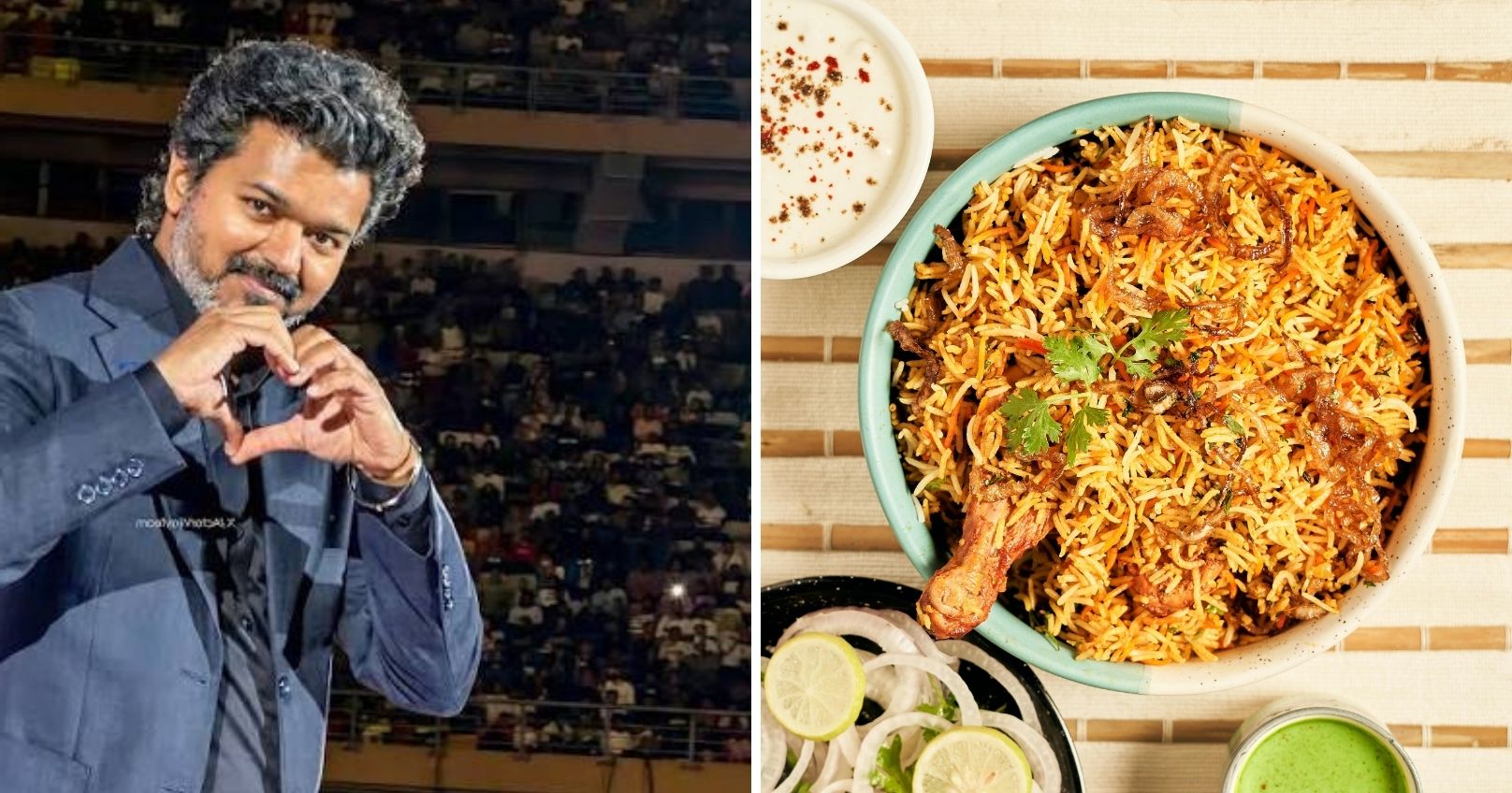
The Tamil Nadu government is evaluating a proposal to introduce chicken biryani once every week as part of the Mid-Day Meal Scheme in government schools. School Education Minister Rajmohan has placed the suggestion before Chief Minister C. Joseph Vijay, and discussions are currently underway.
Explaining the idea, the minister said successive governments in the state have consistently strengthened the school nutrition programme by adding new components over the years. He pointed out that former Chief Minister K. Kamaraj laid the foundation of the mid-day meal initiative, M. Karunanidhi included eggs in the menu, M.G. Ramachandran expanded it into a comprehensive nutritious meal programme, and J. Jayalalithaa increased egg distribution across the week.
Rajmohan said he hopes to continue that legacy by introducing chicken biryani as a weekly meal for students studying in government schools.
Officials familiar with the matter said the proposal is still being examined by the Chief Minister's office and no final approval has been granted so far.
Tamil Nadu has been at the forefront of school nutrition programmes for decades. The state's mid-day meal initiative, launched in the 1950s under K. Kamaraj, later evolved into one of India's most recognised welfare schemes, with successive administrations improving both the quality and nutritional value of meals served to children.
In 2022, the then state government also rolled out a breakfast programme for primary school students, later renamed the Perunthalaivar Kamarajar Breakfast Scheme. The initiative complements the Mid-Day Meal Scheme by ensuring eligible children receive nutritious food in both the morning and afternoon during school hours.
If approved, the proposal to serve chicken biryani would represent one of the most notable additions to the school meal menu in recent years and further expand Tamil Nadu's long-standing focus on child nutrition and classroom attendance.
The School Education Minister also revealed plans to overhaul the breakfast menu. With around ₹15 currently allocated per student, the government is looking at replacing frequently served dishes such as wheat and rava upma with more nutritious and appealing alternatives to improve both dietary quality and student acceptance.