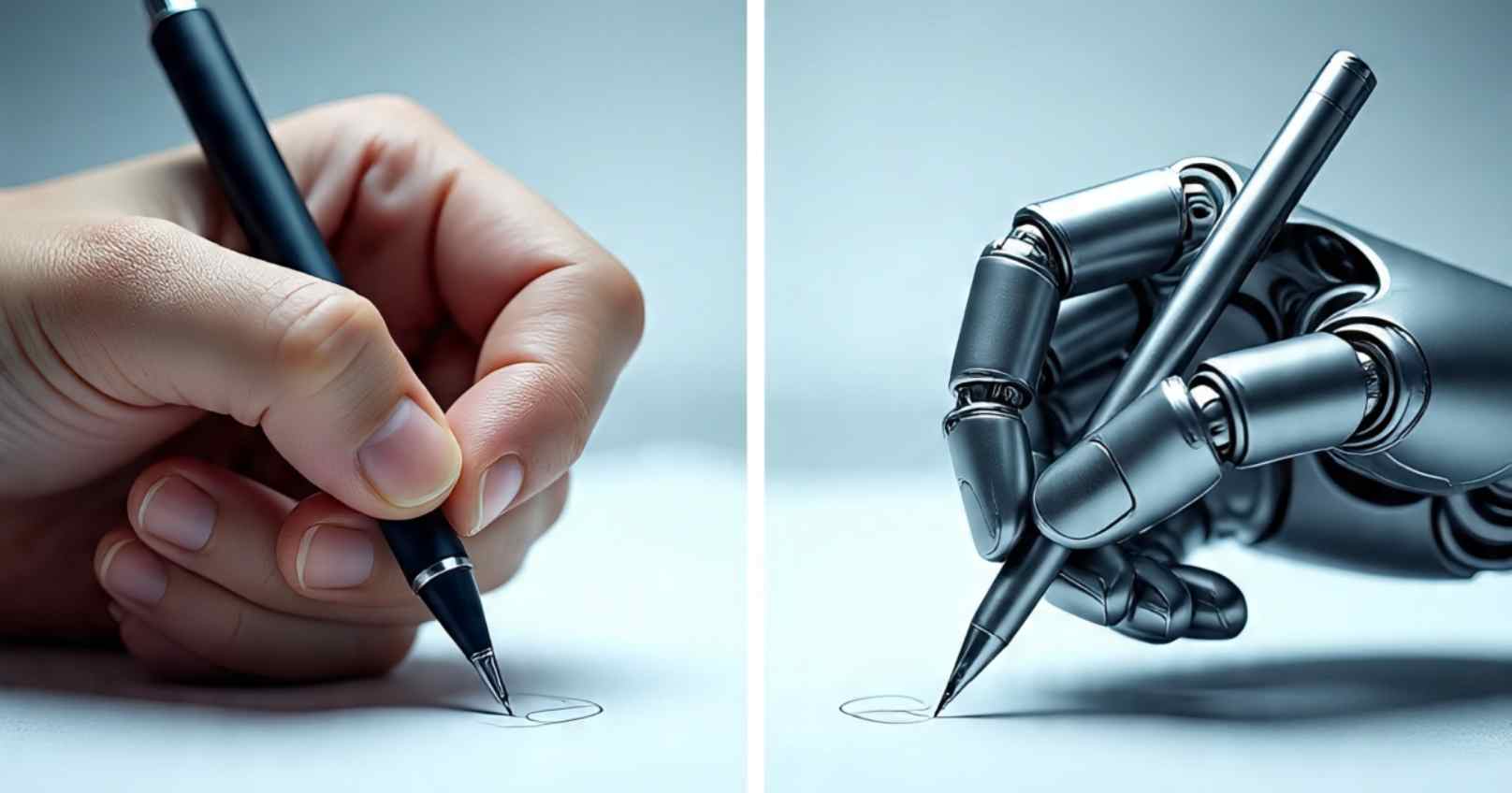
The Creator Conundrum: AI and the Redefinition of Intellectual Property
As AI-generated content blurs the boundaries of authorship and originality, legal systems worldwide grapple with redefining intellectual property frameworks
16-07-2025

As AI-generated content blurs the boundaries of authorship and originality, legal systems worldwide grapple with redefining intellectual property frameworks
16-07-2025In an era where technological capabilities evolve faster than legal frameworks can adapt, the intersection of Artificial Intelligence (AI) and Intellectual Property Rights (IPR) has emerged as one of the most complex and pressing legal conundrums. This article delves into how the rapid rise of generative AI is disrupting foundational principles of intellectual property law and challenging existing doctrines surrounding authorship, ownership, and originality.
Understanding the Intellectual Property Framework
Intellectual Property Rights (IPR) serve as legal protections for creations of the human intellect. Contrary to the common misconception of a unified "IPR law," intellectual property is governed by a range of specialised legislations that address different categories of intangible assets. The core components of IPR include:
Copyright protects the author’s original works, including literary, artistic, musical, and dramatic ones. This includes books, pictures, songs, and movies. Copyright gives creators the exclusive right to reproduce, distribute, perform, and display their work.
Patents protect inventions, giving the inventor the exclusive right to prevent others from making, using, selling, or importing the invention for a limited period, usually 20 years. To qualify for a patent, an invention must be novel, non-obvious, and useful.
Trademarks: These protect symbols, names, logos, slogans that distinguish goods and services from others. Trademark rights allow the owner to prevent others from using a confusingly similar mark in commerce, thereby protecting the reputation and goodwill associated with the mark.
Trade Secrets: They protect confidential information that gives a business a competitive advantage. This may include formulas, processes, techniques, or other information that is generally unknown or readily identifiable to others and is subject to reasonable efforts to maintain confidentiality.
Industrial Designs: These maintain the visual appearance of decorative features of the product. There is nothing known as ‘IPR Law’ as many would assume. Certain specific acts/legislations deal with these elements of intellectual property. They include:
1. The Patents Act, 1970
2. The Designs Act, 2000
3. The Trademarks Act, 1999
4. The Copyright Act, 1957
The Legal Quandary: AI and Copyright Infringement
A Dentons Article frames the heart of the question the law is currently asking with regards to the clash of IPR and AI. “Whether the use of copyright-protected materials to train AI models infringes copyright.” At the heart of this argument is something known as the ‘fair use doctrine’. It is a legal principle in copyright law that allows limited use of copyrighted material without permission from the copyright holder. What makes the application of this doctrine extremely hard to define is that every jurisdiction has a different understanding of it, leading to the ‘conflict of laws.
A landmark case that brought this issue into sharp relief is Getty Images v. Stability AI. Getty Images alleged that Stability AI unlawfully scraped and stored vast quantities of its copyrighted images to train AI models without permission. The core question was not merely about data collection but about the use of protected intellectual property as input to create new, potentially derivative, outputs. While this may be framed as technological progress, it cannot ignore the foundational principle that the underlying material was someone else’s creation.
The Human Requirement in Copyright and Patents
A case like this would then question the following: IP laws, if one notices, are designed to protect human creations after all. Most copyright and patent laws, not just Indian legislations but international as well, do not yet explicitly address AI’s role in authorship or inventorship, leaving a legal void. Traditional IP frameworks were built around the assumption that a human being is the creative force behind every protected work. The Getty case, however, raises the possibility of AI generating content autonomously. In such instances, the fundamental question arises: Who owns the copyright for works created by AI?
A Denton’s article reads about: Copyright laws often over a general scale require that there should be a natural person to whom the copyright can be attributed, and many jurisdictions do not provide ‘computer-generated’ works and predictions where no human author was involved. This then creates a gap in the protection of AI-generated works, which are typically produced autonomously with little or no human intervention.
This limited recognition leads to a significant legal vacuum. Most AI-generated content, especially that produced with minimal or no human intervention, exists in a grey area. For instance, no jurisprudence or statutory provision addresses prompt engineering—the crafting of specific inputs to guide AI outputs, which is arguably a creative exercise. Does this satisfy the legal threshold of “sufficient effort” or originality, as required by copyright laws?
Similar issues pervade patent law. The Indian Patents Act, 1970, like many global counterparts, requires the inventor to be a natural person. This automatically disqualifies AI systems as inventors, even when they contribute significantly—or exclusively—to the development of a novel product or process. This has both adverse and positive implications.
While it avoids the legal chaos of recognising machines as rights holders, it also potentially deters innovation that leverages AI in a primary role.
Global Legislative Comparisons: A Mixed Bag
A Bar and Bench article comments on the same: The current industrial market does not provide for any explicit and clear ownership of IP concerning automated works. Hence, the ownership takes utmost precedence. The question to ask then is where this ‘ownership’ and its definition in entirety can be extended to a non-human counterpart, such as software and its algorithms, which have contributed to the development of a product. The current IP law doesn’t provide recognition, let alone ownership. Bar and Bench points out the exception to this, which is already quite limited. The exception is found under the Copyright Act of 1957, which “recognises a person who causes the computer-generated work to be created as the author of the work. However, the non-human counterpart, i.e., the software/AI system per se, cannot be assigned authorship of the work”, stated in Section 2(d).
The article further articulates a comparison. “On comparison of the Indian legislations with foreign legislations, it is noted that even the UK expressly provides for copyright protection of computer-generated works that do not have a human creator per se. Section 9(3) of the Copyright, Designs and Patents Act (“CDPA”) states that “In the case of a literary, dramatic, musical or artistic work which is computer-generated, the author shall be taken to be the person by whom the arrangements necessary for the creation of the work are undertaken.” Section 178 of the CDPA defines a computer-generated work as one that “is generated by computer in circumstances such that there is no human author of the work.” Legislation of countries such as New Zealand and Ireland has also been inspired by the CDPA and has adopted similar legislative provisions.
As briefly pointed out above, the current legal framework in India, encompassing the Patents Act of 1970 and the Copyright Act of 1957 and other legislations, does not adequately lend itself or rather address the intricacies of inventorship, authorship, and ownership with regards to works created and or innovated independently by Artificial Intelligence or Generative AI.
Dissecting the AI Architecture
To understand the legal dilemma, it is essential to grasp the components of AI technology:
1. Machine Learning (ML): A subset of AI that uses algorithms to analyse data, learn patterns, and make predictions or decisions. Examples include recommendation systems and predictive analytics.
2. Deep Learning: A further subset of ML involving neural networks with multiple layers. It excels in image recognition, speech synthesis, and natural language understanding. Tools like ChatGPT are powered by deep learning frameworks.
3. Natural Language Processing (NLP): Enables AI systems to interpret, understand, and generate human language, facilitating chatbot interactions, sentiment analysis, and translation services.
These technologies often overlap and are used collectively in modern generative AI models. Their outputs—text, images, music, and even simulated voices—are often indistinguishable from human creations. For example, AI can now replicate a singer’s voice with stunning accuracy to create entirely new songs. This poses a troubling question: Who holds the copyright in such a creation? The original artist whose voice was mimicked, or the individual who used AI tools to synthesise the result?
The intersection of AI and IPR is not merely a legal puzzle but a philosophical challenge to the very notion of creativity and innovation. As machines begin to mirror, mimic, and sometimes surpass human creativity, the law must rethink its assumptions. Ownership, authorship, and originality—once cornerstones of IPR—are now concepts in flux. The time is ripe for lawmakers, jurists, and technologists to collaboratively forge a framework that accommodates innovation without compromising the rights of human creators. The creator conundrum is not just about who owns what—it is about reimagining the future of intellectual property in a world where machines, too, can create.

From the power and insolvency appeal courts to debt and military tribunals, chairs and member seats
Read More
An estimate of Yes Bank’s liability and capital impact after the Supreme Court’s ruling in Yes B
Read More
When the state wields a sledgehammer against citizens seeking accountability, the Supreme Court’s
Read More