The Middleman and the Hospital - A three-part investigation
How a man arrested in India's biggest bribes-for-loans case came to hold seventeen acres super prime land of Mumbai and who is standing behind him
01-09-2026

How a man arrested in India's biggest bribes-for-loans case came to hold seventeen acres super prime land of Mumbai and who is standing behind him
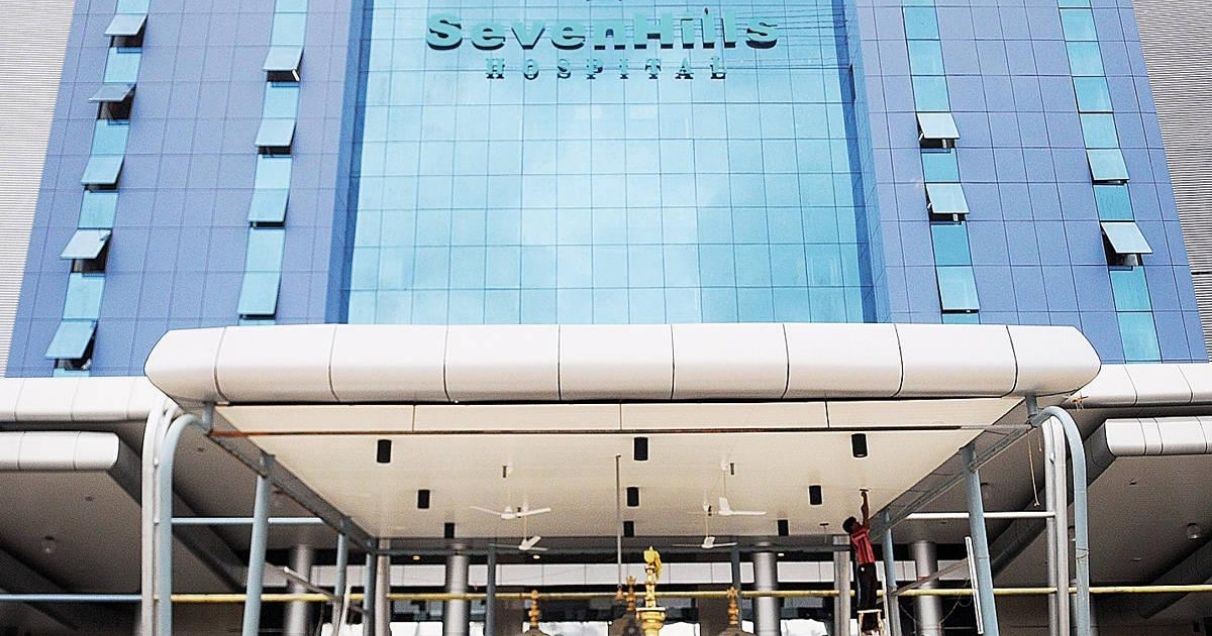
01-09-2026In July 2010, on seventeen acres of municipal land in Marol, Andheri East, a hospital opened. It was, by design, the largest in the country on a single site: two million square feet of built-up space, 1,500 beds, a stone's throw from the international airport.
It had been a long time coming. Talks between the SevenHills group and the Brihanmumbai Municipal Corporation began in 2002. The agreement that emerged, signed in 2005, was a public-private partnership of a particular kind. The BMC granted a sixty-year lease on the plot. In exchange, SevenHills undertook to reserve 300 of its 1,500 beds, twenty per cent, for low-income patients referred through the civic health system, and to charge them at the same rates as a public hospital.
The city gave land. The promoter gave beds. That was the bargain, and it is the thread that runs through everything that follows.
Four months later, on 24 November 2010, the Central Bureau of Investigation made eight arrests in Mumbai.
Those arrested were Ramachandran R. Nair, chief executive of LIC Housing Finance; Naresh Chopra, secretary for investments at the Life Insurance Corporation of India; R.N. Tayal, general manager at Bank of India; Maninder Singh Johar, a director at Central Bank of India; Venkoba Gujjal, deputy general manager at Punjab National Bank; and three men from a Mumbai financial services firm called Money Matters, its chairman and managing director Rajesh Sharma, along with Sanjay Sharma and Suresh Gattani.
The CBI's case, as the agency put it at the time, was that Money Matters had been bribing senior officials of public sector banks and financial institutions in order to facilitate large-scale corporate loans. The allegations went further than money. The agency alleged that bank officers were supplying confidential information about companies and their competitors to Sharma's clients, and that Sharma pressed officials not to accommodate companies that did not route their business through him.
The arrests landed in a market already jittery. Shares in LIC Housing Finance closed down a record eighteen per cent. Money Matters fell by its twenty per cent limit.
The government moved quickly to contain the frame. The Minister of State for Finance said it was an individual case of bribery rather than a large-scale scam, and that the banking system was sound.
Custody did not last. On the accused being produced before the court, special CBI judge S.P. Tavade granted bail on a surety of two lakh rupees each, holding that further custody was not required, and directed them not to tamper with evidence or leave the country. The CBI had registered five separate cases; Rajesh Sharma was shown as arrested in two of them.
And there the public record goes quiet. What became of those five cases, whether charges were framed, whether the matter went to trial, whether anyone was convicted, acquitted or discharged, is not established in any source available for this account. Sixteen years is a long time in a CBI special court, and in India it is not unusual for such matters to remain pending. It must be said plainly: Rajesh Sharma has not been shown by anything in this record to have been convicted of any offence, and the allegations of 2010 remain allegations. No part of what follows should be read as suggesting otherwise. Establishing the disposition of those cases is the first obligation of anyone taking this story further.
It is worth understanding what the firm actually did, because the business model is the story.
Money Matters was a debt syndicator. It stood between large corporate borrowers and the state-owned banks and institutions that lend to them, and it was paid for arranging the introduction. The company traced a lineage through three earlier names , incorporated in 1994 as Daiwa Securities, renamed Dover Securities in 1999, and acquired by Rajesh Sharma, a chartered accountant with a background in corporate finance and merchant banking, in 2007-08. In April 2007 Sharma and Money Matters (India) Pvt Ltd took the majority stake through a share purchase agreement.
The scale it reached in three years was considerable. By the time of the arrests it had facilitated some ₹32,000 crore of debt and counted more than a hundred clients, reportedly including the Adani Group, the Tata Group, Reliance ADAG, Jindal, Jaypee, HCC, Indiabulls, Suzlon and DB Realty.
One of those clients defended the arrangement in public while the arrests were still fresh. HCC's Ajit Gulabchand said that using a firm like Money Matters was a well-accepted industry practice, and that it had secured around ₹200 crore of HCC's ₹800 crore of long-term debt.
That is the defence, and it is a real one. Debt syndication is a legitimate business. The CBI's allegation was not that Money Matters syndicated debt; it was about what allegedly changed hands to make the syndication work.
In 2013, the company changed its name for the fourth time in nineteen years. The Registrar of Companies issued a fresh certificate of registration in the name Capri Global Capital Limited on 24 July 2013.
Daiwa. Dover. Money Matters. Capri Global. The last change came two years and eight months after the arrests.
Whatever else it was, it worked. Capri Global today has more than 900 branches, lending across home loans, construction finance, gold loans and small-business credit, with Sharma holding a majority stake and running the company.
And the institutions came back.
The hospital did not honour its side of the 2005 bargain. It became embroiled in controversy after failing to comply with the BMC's terms, including the reservation of twenty per cent of beds for civic patients. A dispute with the corporation over lease terms and unpaid dues set in, and it did not go away.
SevenHills Healthcare entered insolvency in March 2018, after loan defaults exceeding ₹737 crore, with Axis Bank taking the company to the National Company Law Tribunal. The dispute with the municipal corporation over land lease terms worsened the position considerably, and stretched the resolution process out to nearly a decade.
Eight years is an extraordinary length of time for a corporate insolvency intended by statute to conclude within 330 days. Attempts to resolve it failed one after another. An earlier ₹1,000-crore plan from Dr B.R. Shetty's New Medical Centre was approved by the NCLT, challenged by the MCGM before the appellate tribunal, and survived, the NCLAT rejected the civic body's petition, but did not complete. By February 2023, eleven parties had filed expressions of interest, including Max Healthcare, Princeton Healthcare, Jupiter, KIMS, Virinchi, Bommidala Enterprises, Alpha Alternatives, MGM's M.K. Rajagopalan, Capri Global, and JM Financial Asset Reconstruction Company.
The Visakhapatnam hospital was cut loose and sold separately. A plan from MGM Healthcare for the Vizag facility was approved on 10 June 2024, for ₹171 crore.
That left Mumbai. Seventeen acres, near the airport, in a city where land is the only asset that matters.
Here is the fact around which this entire story turns, and it has been sitting in a public filing on the insolvency regulator's website.
The resolution professional's list of creditors, as of 16 June 2025, records the composition of the committee that would decide the hospital's fate. At the top sits JMFARC–Alphahealth 2018–Trust, holding debt originally owed to Axis Bank, Canara Bank and Bank of Maharashtra. It claimed ₹859.54 crore, of which ₹736.08 crore was admitted, giving it a voting share of 65.60 per cent. Union Bank of India held 7.49 per cent. State Bank of India held 6.25 per cent.
Two-thirds of the committee of creditors, in one trust, controlled by one asset reconstruction company.
Under the Insolvency and Bankruptcy Code, a resolution plan requires the approval of creditors holding sixty-six per cent of voting share. JM Financial ARC's trust held 65.60. It could not pass a plan alone, but almost nothing could pass over it. In practical terms, the identity of the eventual owner of the SevenHills campus was determined in that room, by that holding.
Note also, from the 2023 list: JM Financial ARC was simultaneously the largest creditor and a party that had filed an expression of interest to acquire the asset itself.
And here is the number that has never been published. When Axis, Canara and Bank of Maharashtra sold that ₹736 crore of admitted debt to the JMFARC trust, they were paid something less than face value, that is the entire economic logic of an asset reconstruction company. What they were paid is recorded in the assignment deeds. It is not in the public domain. The gap between that figure and what the trust ultimately received is the return on the transaction, and it is the single most important unpublished fact in this story.
JM Financial ARC has not been asked to comment on that figure for this account, and must be before publication.
By the end of 2025 the field had narrowed to two.
Jupiter Hospital and NK Holdings, a company backed by Reliance Industries, both bid around ₹450 crore. The difference was in the terms: Jupiter proposed to pay the whole amount upfront within thirty days of the bankruptcy court's approval, while NK Holdings offered the same sum spread over five years.
Set those two offers beside each other. Same headline price. One pays now; one pays over half a decade. On any ordinary reading of time value, the upfront offer is worth materially more to creditors who had already been waiting eight years.
The committee did not take it.
On 19 January 2026, the National Company Law Tribunal's Amaravati Special Bench, Member (Judicial) Kishore Vemulapalli, approved a resolution plan of ₹456 crore submitted by Capri Global Holdings Private Limited, backed by the Reliance Group as equity support provider. The order was made available on 28 January. The committee of creditors had approved it unanimously, with a hundred per cent voting share.
Unanimously. Not 66 per cent, everyone.
The distribution: secured creditors receive ₹449 crore, about forty per cent of their admitted claims. The municipal corporation receives a settlement of ₹223.4 crore. Employees and other operational creditors receive ₹6 crore. Costs of the insolvency process itself came to roughly ₹205.34 crore.
Read those figures against each other. The professionals and costs of running the eight-year process took ₹205 crore. The workers of a hospital that employed thousands took ₹6 crore.
The mechanism of the takeover deserves to be read slowly. Under the scheme of arrangement, on the effective date Capri Global and Reliance subscribe to ten million new shares for ₹10 crore, securing full ownership, after which all existing shares are cancelled for zero consideration. Both partners are expected to hold equal stakes.
Ten crore rupees of fresh subscription, and the original promoter's holding extinguished at nil. This is entirely lawful; it is how the Code is designed to work. It is also worth stating plainly, because the ₹456 crore headline obscures it.
The Registrar of Companies was directed to issue a fresh certificate of incorporation reflecting the new structure — a company limited by guarantee, which is to say, not-for-profit. The resolution professional has since confirmed that the plan has been implemented and payments to creditors completed.
Fifty-fifty. Capri Global Holdings, Rajesh Sharma's company, and Reliance.
For the first half of 2026 this was reported as "equity support from the Reliance Group," a formulation that says little. The Economic Times described the backer as the Mukesh Ambani-owned Reliance Group.
Then Reliance said it itself, at its own annual general meeting.
On 19 June 2026, at Reliance Industries' 49th AGM, Reliance Foundation chairperson Nita Ambani set out plans to turn SevenHills into Mumbai's largest hospital, positioning it as the cornerstone of the group's healthcare ambitions and a future integrated medical hub. She spoke of moving forward with a vision of a transformative medical city and medical college in Mumbai. The 1,500-bed facility, she said, would focus on clinical research, cancer care, emergency and trauma services, organ transplantation, and neurodegenerative disorders including Alzheimer's and Parkinson's.
She returned to it a fortnight later. Accepting the American Association of Physicians of Indian Origin humanitarian award in July 2026, she said work on modernising the hospital would begin this year, and that of its 1,500 planned beds, more than 450 would be dedicated to serving economically weaker sections.
She called it, in that speech, "our new SevenHills Hospital."
Reliance Foundation was founded in 2010 by Mukesh Ambani and is wholly owned by Reliance Industries Limited. It is led by founder chairperson Nita M. Ambani. She sits as chairperson and founder of the Foundation, having stepped down from the RIL board in August 2023 while retaining that role.
So the chain is complete, and every link in it is on the record rather than inferred:
Rajesh Sharma → Capri Global Holdings → fifty per cent of the resolution vehicle → the other fifty per cent held by Reliance → Reliance Foundation, wholly owned by RIL, founded by Mukesh Ambani, chaired by Nita Ambani, which has publicly claimed the hospital as its own project.
There is one grace note in Nita Ambani's July statement worth marking. The lease requires 300 subsidised beds. She promised more than 450. That is fifty per cent above the contractual floor, offered voluntarily, in public, on the record. It is the strongest commitment anyone has made to the public interest in this asset in twenty years, and it is the sentence that should be quoted back to the Foundation in five years' time.
The insolvency court can transfer a company. It cannot transfer a municipal lease. For that, the BMC had to agree.
It did not agree easily.
On 27 May 2026 the Improvement Committee referred the proposal back to the administration, after a point of order from the opposition and a demand that the corporation retain full control of the hospital. Committee members including Congress's Ashraf Azmi and Shiv Sena (UBT)'s Vishakha Raut raised questions about the haste with which a no-objection certificate had been granted by former Municipal Commissioner Bhushan Gagrani, on the eve of the Model Code of Conduct taking effect for the 2026 BMC elections. They alleged favouritism.
That timing deserves attention. The BMC elections were held on 15 January 2026, so the Model Code of Conduct would have come into force in the preceding weeks, meaning the NOC was granted in the narrow window before an elected body existed to scrutinise it, by an administrator running the city in the absence of a general body.
Two months later the proposal came back, and passed.
On 28 July 2026 the Improvement Committee approved the transfer of the campus to Capri Global Ventures Pvt Ltd. Shiv Sena (UBT) and Congress corporators challenged the move, alleging procedural lapses and questioning the need for private participation. Committee Chairperson Sandhya Doshi approved it without further discussion, maintaining that Shiv Sena (UBT) could not oppose the proposal having remained silent when the original contract was approved.
Opposition members alleged that work at the hospital had already begun before the proposal received statutory approval. That allegation, if it can be documented, is the most serious made in the entire proceeding, and it is checkable: site records, contractor invoices, municipal inspection reports.
The terms of what the city gave: a fresh thirty-year lease, extendable by another thirty, over 66,688 square metres of BMC-owned land in Marol, Andheri East. The facility is to operate as a 1,500-bed not-for-profit tertiary care hospital, reserving twenty per cent of beds, 300, and twenty per cent of outpatient services for civic-referred patients, with treatment, medication and diagnostics at municipal rates.
Sixty years, on the same land, on materially the same terms as 2005.
The objections, from those who made them: Vishakha Raut said the corporation had sufficient funds to run the hospital itself, and that it had been managed efficiently by the civic body during the pandemic. Congress MLA Amin Patel said handing over a 1,500-bed super-speciality hospital under a revised PPP model amounted to giving away a valuable public asset built on prime municipal land.
There is a structural fact about who now runs the corporation that belongs in this account, not as an allegation but as a question of public administration.
Ashwini Bhide, IAS, has been Municipal Commissioner of the BMC since 31 March 2026 , which is to say, the administration that brought the proposal back to the committee in July, and which will execute the lease, is hers. Her predecessor Gagrani, who granted the NOC, had held the post since March 2024.
Bhide holds the office of Additional Chief Secretary in the Chief Minister's Office concurrently with the commissionership, both assumed on 31 March 2026. She had earlier been appointed Principal Secretary to Chief Minister Devendra Fadnavis, in December 2024.
The same officer sits in the Chief Minister's secretariat and at the head of the civic administration that signs sixty-year leases over municipal land. Nothing in the record suggests this had any bearing on the SevenHills decision, and no one has alleged that it did. But it is a question the state government can be asked on the record, without a single anonymous source: what is the separation, in practice, between the city's administration and the Chief Minister's office when the same person occupies both?
Nothing in the record attributes the SevenHills approval personally to Bhide. The committee approval was Sandhya Doshi's. The executed lease deed will show which officer signed for the corporation. That document should be obtained before anyone writes a word about who approved what.
One last fact, and it is the one that says most about how India's financial system metabolises a scandal.
In November 2010, LIC's secretary for investments was arrested alongside Rajesh Sharma in a case built on allegations of improper inducements flowing to institutional lenders.
In 2022, LIC raised its stake in Capri Global to over seven per cent from five, investing more than ₹221 crore.
And in September 2025, the wider market followed. Capri Global raised roughly ₹2,000 crore in its first qualified institutional placement in a decade, issuing about 136.5 million shares at ₹146.5 apiece. Quant Mutual Fund alone put in around ₹540 crore. The book also included an alternative investment fund of Tata Capital, BlackRock, Think Investments, Allspring Global Investments, Société Générale, and five insurers, ICICI Prudential Life, HDFC Life, ICICI Lombard, SBI General and HDFC Ergo.
Global asset managers with published governance screens. State-owned insurers. A mutual fund putting in more than half a thousand crore.
Each of them ran diligence. Each of them reached a view on the 2010 case. Each of them concluded it did not price.
They should be asked what that view was. Their answers, or their silences, are as much a part of this story as anything in the NCLT order.
It is worth being explicit, because the shape of these facts invites a conclusion the evidence does not support.
There is no evidence in this record that the SevenHills outcome was procured improperly. There is no evidence that anyone at Reliance, Capri Global, JM Financial or the BMC did anything unlawful. The creditors' vote was unanimous and the tribunal's approval was reasoned. The allegations of procedural lapse come from opposition corporators in a contested civic chamber and remain untested. The 2010 criminal cases are, so far as this record shows, undisposed, and an arrest is not a charge, and a charge is not a conviction.
What the record does say is this. A hospital built on public land on the promise of 300 subsidised beds failed to deliver them, collapsed into debt, and has now been transferred, after eight years, through a process controlled by a single asset reconstruction company, for ten crore rupees of fresh equity, to a partnership between the Reliance Foundation and a company whose founder was arrested in 2010 in the largest bribes-for-loans investigation the CBI had then mounted against public sector banks. The city has renewed, for another sixty years, a bargain it could not enforce the first time.
That is enough. It does not need to be more than it is.

India has secured a place on TasteAtlas' list of the world's best and most iconic butters, with Amul
Read More
Everest has come under the food regulator’s lens after its hing was classified as misbranded and b
Read More
Claims objecting creditors account for ₹3,992 crore, ₹620 crore already settled and borrower ent
Read More