As the confrontation between Washington and Tehran intensifies, Pakistan has emerged once again as a possible diplomatic channel between the two adversaries.
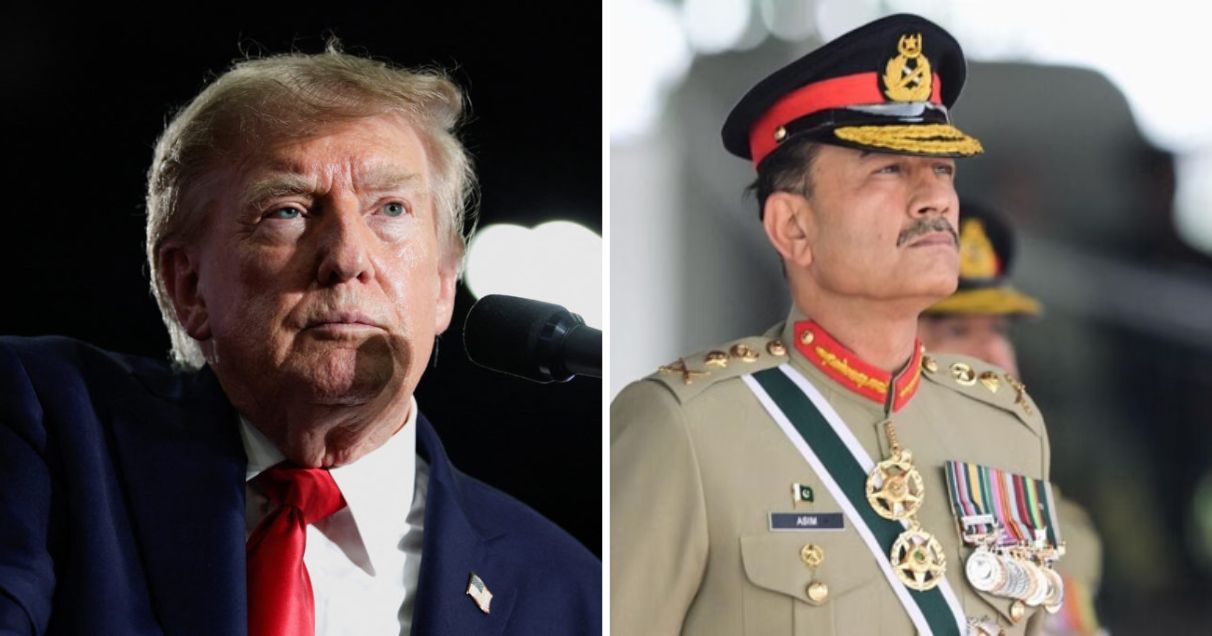
According to a Reuters report citing three Pakistani sources, US President Donald Trump spoke with Pakistan Army chief Field Marshal Asim Munir shortly before the latter travelled to Iran. The conversation reportedly took place last week and was initiated by Trump.
One of the sources said the US President wanted Pakistan to use its contacts with Tehran to persuade Iran to resume negotiations with Washington. However, the precise details of the exchange between Trump and Munir have not been made public.
The reported conversation came at a particularly sensitive moment. Trump has warned other countries against extending economic support to Iran, describing such assistance as a potential lifeline for Tehran. Iran, meanwhile, has warned that a further escalation could put oil shipments from the Gulf at risk.
ASIM MUNIR'S TEHRAN VISIT IN FOCUS
Munir reached Tehran on Monday along with Pakistan's Interior Minister Mohsin Naqvi. The Pakistani military said the visit formed part of Islamabad's broader efforts to support peace and stability in the region.
Reuters reported that Munir was expected to hold discussions with senior Iranian figures, including individuals close to Iran's Supreme Leader, Ayatollah Mojtaba Khamenei.
A Pakistani source told the news agency that deep mistrust between Washington and Tehran remains one of the biggest obstacles to diplomacy. Pakistan, according to the source, hopes to use its ability to maintain communication with both sides to help narrow that divide.
Iran, however, has pushed back against suggestions that Munir's trip is primarily an attempt to mediate the dispute with the United States.
Iranian Foreign Ministry spokesperson Esmaeil Baghaei said the Pakistani army chief's visit was taking place within the larger framework of bilateral engagement between the two neighbouring countries. He stressed that ties between Iran and Pakistan were currently expanding across multiple areas.
Baghaei also dismissed attempts to connect Munir's visit with the scheduled arrival of Omani Foreign Minister Badr bin Hamad Al Busaidi in Tehran. The two visits, he said, merely happened to overlap.
The Omani foreign minister is expected to discuss bilateral matters as well as regional security concerns, including developments around the Strait of Hormuz and the safety of maritime traffic.
PAKISTAN'S ROLE AS A POSSIBLE GO-BETWEEN
Islamabad has previously tried to facilitate communication between the US and Iran. Pakistan was involved in diplomatic efforts that contributed to an interim understanding between the two sides in June, although that arrangement later broke down amid renewed hostilities.
Pakistan's position gives it access that few regional players enjoy. Islamabad maintains working relations with Iran while also sharing close ties with Washington, Saudi Arabia and other Gulf partners.
This balancing act could make Pakistan useful in preventing the current crisis from spiralling into a wider regional conflict. But it also puts Islamabad in a delicate position, particularly as tensions between Iran and Saudi Arabia's allies continue to shape regional politics.
A Pakistani government source told Reuters that Munir's discussions in Tehran could extend beyond the immediate US-Iran dispute. The agenda may also include recent attacks by Iran-backed Houthi fighters against Saudi Arabia and the recently signed defence arrangement involving Pakistan, Saudi Arabia and Turkey.
A DELICATE DIPLOMATIC BALANCE
Munir's trip comes less than three weeks after Pakistan, Saudi Arabia and Turkey signed the Mecca Joint Defence Agreement on August 7, adding another layer of complexity to Islamabad's engagement with Tehran.
Pakistan cannot afford to ignore Iran, with which it shares a border and a long history of political and security engagement. At the same time, its strategic relationships with Saudi Arabia, Turkey and the United States require Islamabad to carefully manage its position.
The reported Trump-Munir call has therefore added greater significance to the army chief's Tehran visit. Whether Pakistan can help reopen a channel for dialogue remains uncertain, especially with the trust gap between Washington and Tehran continuing to widen.
For Islamabad, the immediate challenge is to remain a credible interlocutor for both sides — encouraging diplomacy and de-escalation without being seen as aligning itself too closely with either Washington or Tehran.