Tamil Nadu Chief Minister and TVK leader Vijay used his first appearance at the Southern Zonal Council meeting to raise two issues that have become central to the state’s political debate: NEET exemption for Tamil Nadu and safeguards for the South’s representation in Parliament.
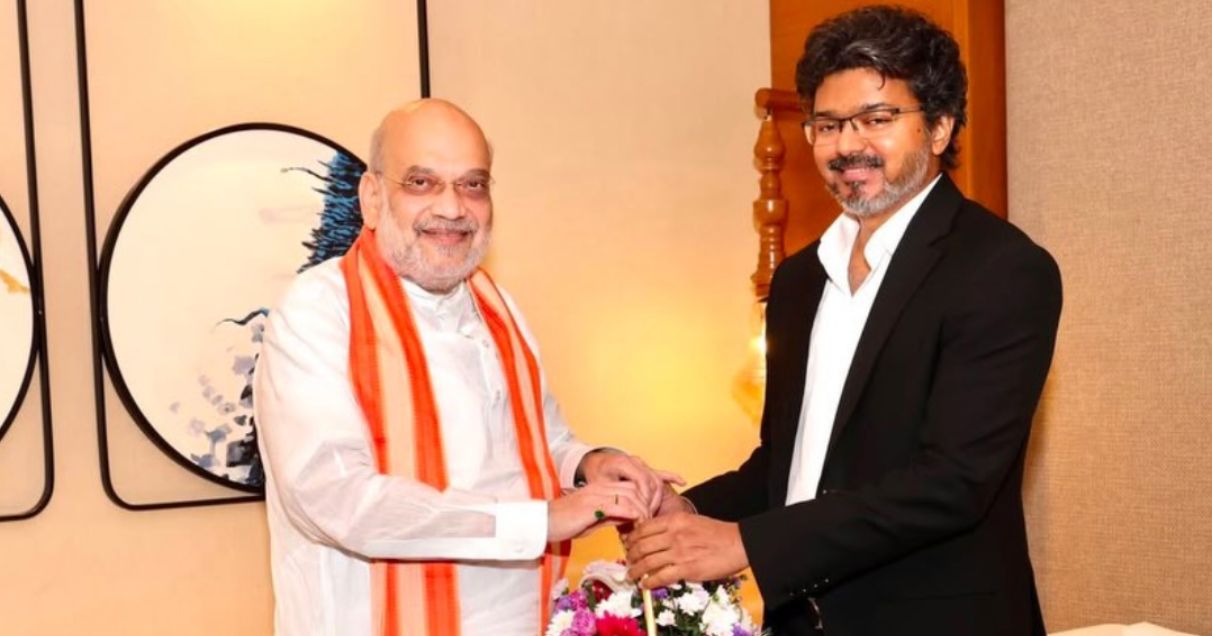
During his meeting with Union Home Minister Amit Shah on Thursday, Vijay also called for stronger coordination among southern states on concerns including drug abuse, coastal security and the blue economy.
Vijay seeks return to Class 12-based medical admissions
A major part of Vijay’s intervention focused on NEET, which Tamil Nadu governments have opposed for several years.
The chief minister argued that the national medical entrance examination places students from rural and economically weaker backgrounds at a disadvantage. He urged the Centre to permit Tamil Nadu to admit students to MBBS, BDS and AYUSH programmes using their Class 12 performance rather than NEET scores, according to sources.
The TVK government’s position effectively seeks a return to the earlier admission model, under which higher-secondary marks played the central role in selecting students for medical courses.
Vijay told Shah that Tamil Nadu wanted to preserve what it sees as an equitable, school-based pathway to medical education and protect opportunities for students across different socioeconomic backgrounds.
The chief minister has been a vocal critic of NEET since entering electoral politics. The TVK has also previously argued that education should be moved from the Concurrent List back to the State List, giving states greater control over education-related decisions.
Delimitation: Vijay voices South’s representation concerns
The second major issue raised by Vijay was the proposed delimitation of parliamentary constituencies.
The exercise is linked by the Centre to the implementation of the 33% reservation for women in the Lok Sabha. Southern states, however, have expressed concern that a population-based redistribution of seats could alter the balance of political representation between the North and South.
Vijay told the meeting that the concern was not limited to Tamil Nadu and reflected a broader issue shared by several southern states.
His argument was that states that successfully implemented population-control measures, invested in human development and contributed significantly to economic growth should not subsequently lose political representation because of those achievements.
Demand for legal protection
Vijay sought a legislative guarantee that the proportion of parliamentary representation available to any state would not decline simply because it had succeeded in stabilising its population.
The concern stems from the possibility that a delimitation based on population figures could increase the relative representation of states with larger and faster-growing populations.
According to Vijay, national policies should not create a situation where states that met demographic goals are effectively penalised for doing so.
He stressed that population stabilisation and improvements in development indicators were outcomes that successive governments had actively encouraged and should therefore not result in diminished political influence.
Broader cooperation among southern states
Beyond NEET and delimitation, Vijay called for closer cooperation between southern states on issues that cross state boundaries.
Drug abuse, coastal security and the blue economy were among the areas he highlighted, with an emphasis on coordinated action and greater interstate collaboration.
The meeting gave Vijay an opportunity to place the TVK government’s key political concerns directly before the Centre, with NEET and delimitation emerging as the two dominant issues.
For Tamil Nadu, the questions go beyond individual policies: the NEET debate centres on how medical education admissions should be structured, while the delimitation dispute concerns how the state’s political voice will be protected in future Lok Sabha elections.