As per media reports (Read), more than 70 British MPs have written a letter on 21 August 2026 to the ‘United Nations Secretary-General António Guterres to step up international engagement over the worsening situation in Pakistan-occupied Kashmir (PoK), calling for an end to bloodshed, restoration of communications, humanitarian access and accountability over deaths and injuries’. The letter reportedly ‘goes beyond the immediate unrest in PoK and links the present crisis to the wider Kashmir dispute. The parliamentarians referred to the UN’s longstanding involvement in Kashmir, including Security Council Resolution 47 and subsequent resolutions’, and ‘called for renewed efforts towards what they described as a peaceful and lasting resolution in accordance with international law and relevant UN resolutions’.
In my view, the letter is simply misdirected. I prefer the course of action that I had suggested in my evidence before the Foreign Affairs Committee, House of Commons, UK Parliament (oral evidence on 10 January 2023 followed by written evidence on 22 January 2023) about what the UK Parliament could, and should, do to help resolve the Kashmir issue.
My evidence in the UK Parliament referred to my book, Unravelling the Kashmir Knot, which documents that the stand of successive UK governments since 1947 has not been consistent with the statutes enacted by the UK Parliament itself, namely the Indian Independence Act of 1947, and the modified Government of India Act of 1935. In light of declassified British archives, it is beyond doubt that the partition of the Indian sub-continent, and indeed the Kashmir conflict, was scripted by the British to serve their own geo-strategic and defence interests in the then ongoing Great Game with Soviet Russia. The partition of the Indian sub-continent was the same brand of British politics that led to the disintegration of the Ottoman empire in the Middle East a few decades earlier. While India is an ancient civilisation, modern day India and Pakistan are creations of the political partition agreement of 03 June 1947, which was crystallized in the said British statutes. Both India and Pakistan accepted these political decisions and statutes, that define them as sovereign member-states of the UN. According to these very statutes, all the princely states under British control on the sub-continent were to regain full sovereignty, and such sovereignty vested in the ruler regardless of the religious complexion of the people of the state concerned. It was the ruler alone who could decide to accede to India, Pakistan or remain independent.
The sovereign ruler of the princely state of Jammu & Kashmir (J&K) unconditionally acceded to India on 26 October 1947 in the manner prescribed under the British statutes. That accession made J&K an integral part of India. Since the accession of J&K to India was in terms of the same British statutes that also created Pakistan, it would be fair to say that the law that gave birth to Pakistan itself made J&K a part of India. Pakistan cannot disown such law as there would be no ‘Pakistan’ then. The UK is bound by the British statutes passed by its own Parliament that make the entire territory of J&K an integral part of India and the populace in such territory Indian citizens. This legal position does not change merely because the Government of India in 1947 viewed such accession as being provisional or because it committed to an UN supervised plebiscite in J&K before the UNSC or because the UNSC passed the resolutions it did. Significantly, it has not even been Pakistan’s case that J&K was ever a part of Pakistan, or that the residents of the occupied territory of J&K were ever legally and constitutionally Pakistani citizens.
The British Parliamentarians would do better to hold their own government accountable for the bloodshed, deaths and injuries and terrible happenings in such occupied territory rather than writing to the UN Secretary General. Not that the UN can do much about the situation!
It may be recalled that India had moved the UNSC under Chapter VI of the UN Charter on ‘Pacific Settlement of Disputes’, complaining of invasion of part of J&K by tribes from Pakistan in 1947, which was later occupied by Pakistan’s regular troops. However, the UNSC resolved that the future of J&K would be determined by a plebiscite under UN auspices, and required Pakistan to first withdraw from the territory of J&K occupied by it. Pakistan did not do so. Rather, Pakistan virtually annexed such territory and its Supreme Court went on to pass judgements which detract from the UNSC Resolutions. As far as India is concerned, it views itself as having been released from the UNSC Resolutions for reasons such as non-compliance by Pakistan and change of circumstances.
The book details the geo-political and strategic reasons for the UNSC to pass the Resolutions primarily at the instance of the British, and explains why the Resolutions are not only without jurisdiction but also in violation of both the UN Charter as also the established principles of international law that the subverted UNSC was bound to be conversant with. The UNSC resolutions do not even otherwise address the subsequent occupation of 20% of the territory of J&K by China. China quietly occupied Aksai Chin in the 1950s and negotiated the Sino-Pakistan Boundary Agreement of 02 March 1963 with Pakistan in terms of which it took from Pakistan a part of the northern frontier of J&K subject to the settlement of the Kashmir issue by India and Pakistan. Further, Pakistan handed over de facto control of the Gilgit–Baltistan region of J&K to China through which the CPEC has been conceived. The CPEC, which is a vital part of China’s broader Belt and Road Initiative, thus runs through Indian territory. In these circumstances, the recourse to the UNSC Resolutions today seems far-fetched, and so does a political, military, diplomatic or economic solution to break the current stalemate between India, Pakistan and China.
I have suggested a way forward which has escaped consideration so far. The distinctive feature of the Kashmir issue is that since modern day India and Pakistan are creations of the British statutes, their respective stands on J&K necessarily has to be grounded in these statutes. If that be the position, one could perhaps take recourse to international law to examine the legal basis of the stands of India and Pakistan. While law alone cannot resolve the Kashmir issue, such legal scrutiny would be helpful to depoliticise the Kashmir issue. The Kashmir issue is a political issue but it is not only a political issue. It has legal incidents that can reconcile the differing perceptions surrounding the Kashmir issue. A reading of the international law would confirm, for reasons detailed in the book, that J&K, upon accession, became an integral part of India and that India was entitled to the entire territory of J&K. Such a finding could alter the international discourse on the Kashmir issue and help break the impasse between India, Pakistan and China. That in turn could lead to further negotiations to find a political solution to the Kashmir issue.
Should the UK Parliament require the UK government to revisit its stand on the status of J&K by honouring its own statutes, its inescapable conclusion would be that J&K became an integral part of India on its accession to India in terms of the said statutes – and that J&K is not ‘disputed territory’. The UK could use its global influence to shape a sound political discourse internationally on the Kashmir issue and build consensus for its just resolution in line with such correct legal position. That would go a further way in addressing the ongoing crisis in the occupied territory of J&K than writing letters to the UN which, in my opinion, had itself facilitated the trans-generational tragedy known as the Kashmir issue.
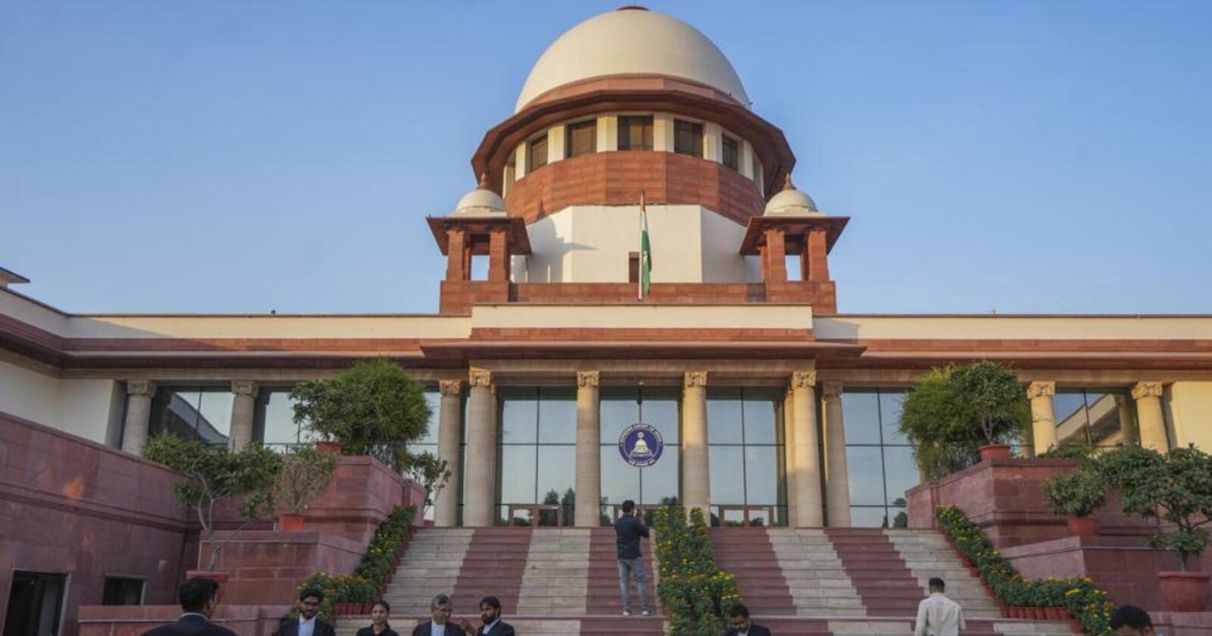
- Dr. Aman Hingorani, Senior Advocate, Supreme Court of India and Author, Unravelling the Kashmir Knot – Past, Present and Future (MacMillan)