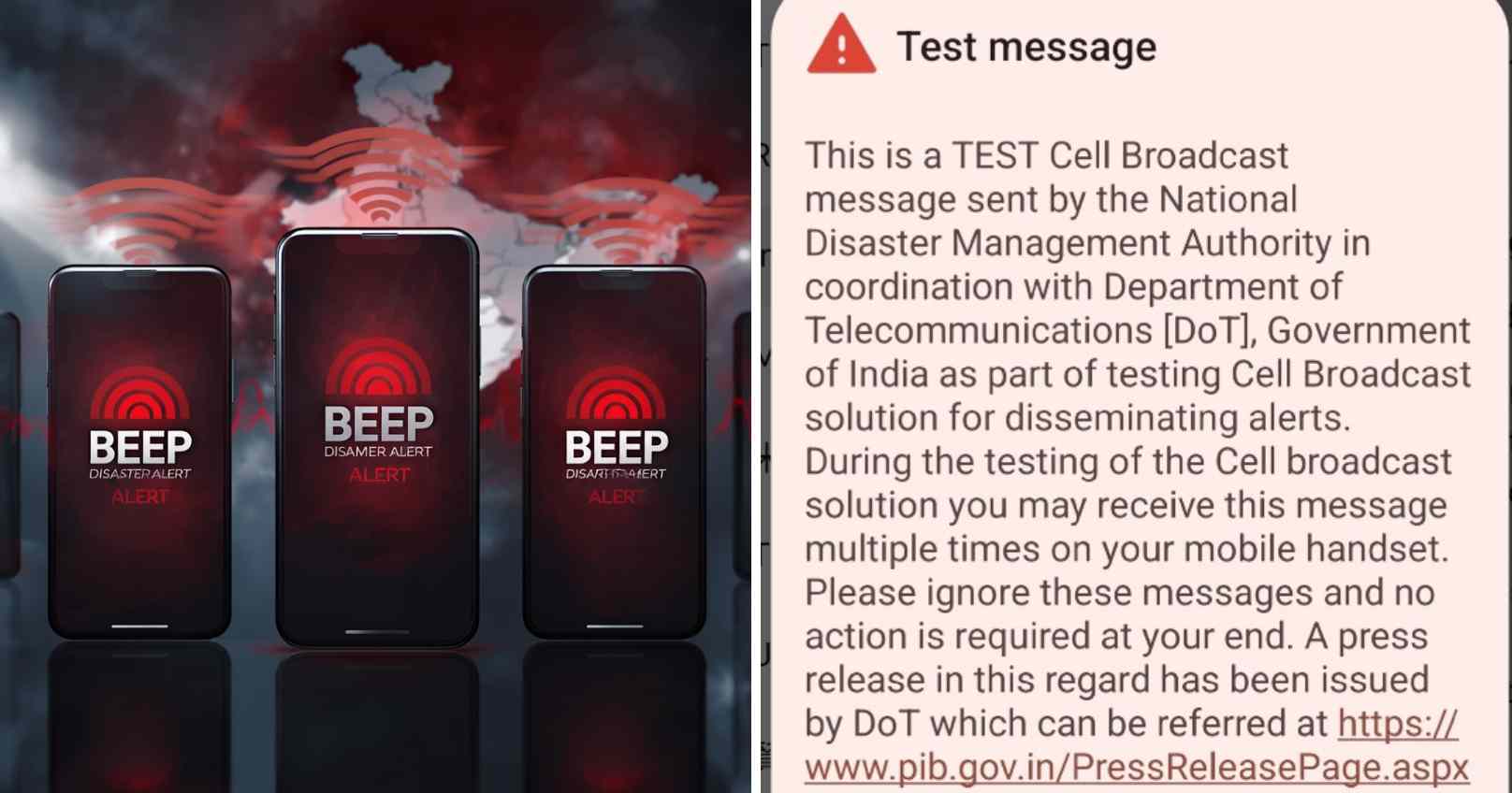
If an alarming notification flashed on your phone over the weekend, it was part of a nationwide drill and not an actual emergency. The Union government initiated a trial run of its homegrown Cell Broadcast emergency communication platform, sending a message labelled “Extremely Severe Alert” to mobile users across India. The message clarified that it was only a test and required no response.
The system was unveiled by Union Communications Minister Jyotiraditya Scindia in coordination with the National Disaster Management Authority (NDMA), under the overall supervision of Union Home Minister Amit Shah. The objective is to ensure that life-saving information can be delivered immediately during disasters or major public safety threats — without relying on internet connectivity or third-party applications.
At the heart of the rollout is SACHET, a unified alert mechanism developed by the Centre for Development of Telematics (C-DOT). Built on the globally recognised Common Alerting Protocol framework, the platform has been deployed across all 36 states and Union Territories.
Government data indicates that disaster agencies have already circulated more than 134 billion SMS warnings in multiple Indian languages over the years for cyclones, floods, lightning alerts and other natural calamities. However, officials describe the Cell Broadcast feature as a technological leap beyond conventional SMS messaging.
Unlike standard text alerts, the new broadcast system forces a high-priority notification to appear on screens with a loud alarm tone, even if a device is on silent or do-not-disturb mode. This ensures that critical warnings are not missed during emergencies.
The network is intended for both natural disasters — such as earthquakes, tsunamis and severe storms — and human-made crises including industrial accidents or gas leaks. Once fully integrated nationwide, the platform is expected to provide universal, immediate outreach during real-time emergencies.