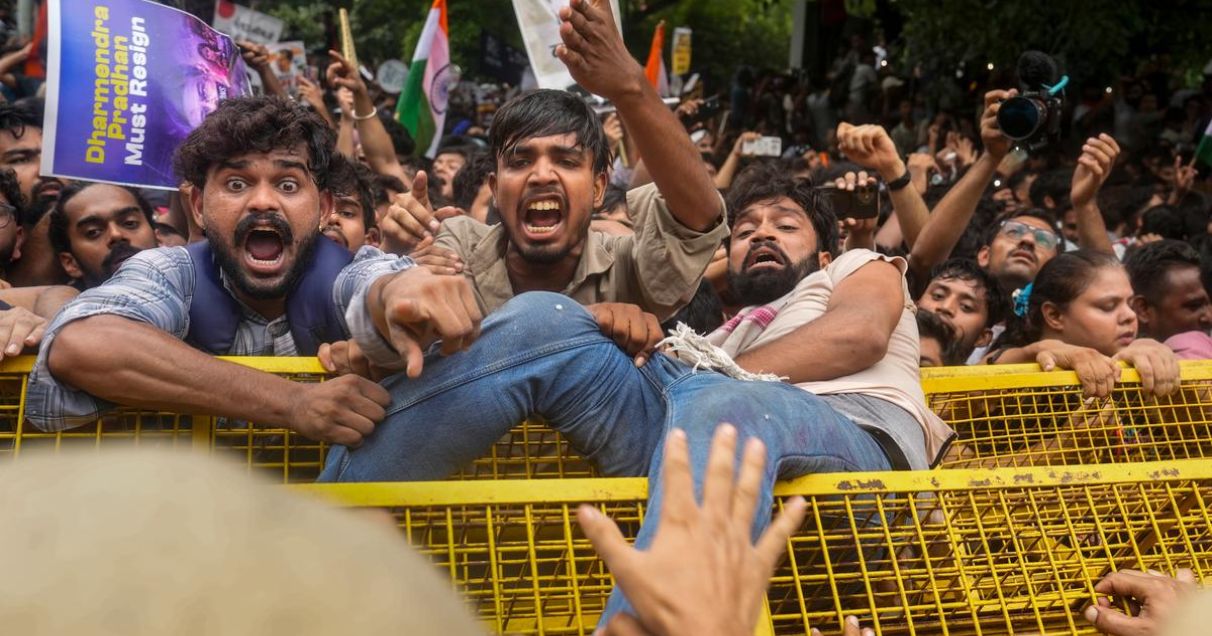
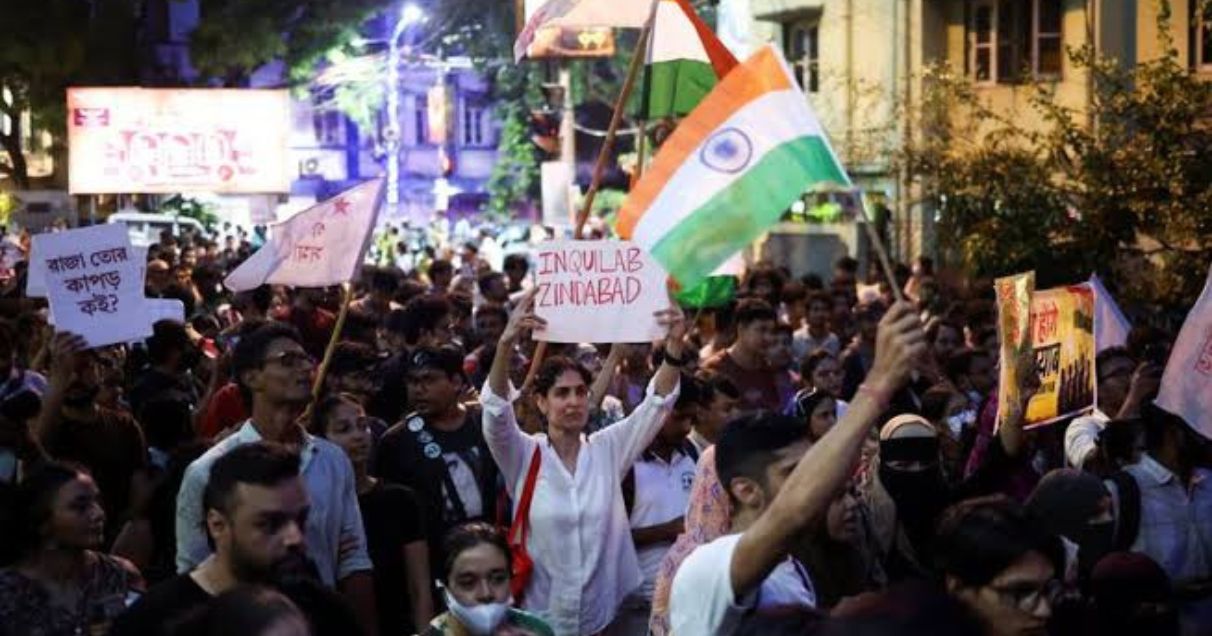
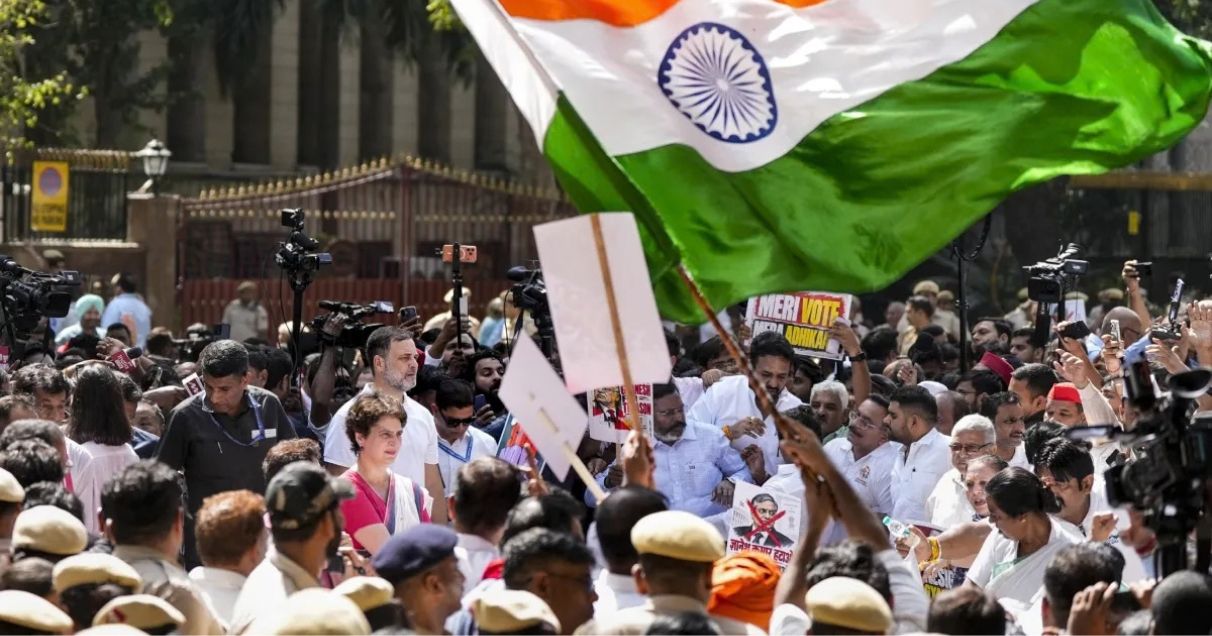
Tensions escalated ahead of the planned protest against Chief Election Commissioner Gyanesh Kumar at Delhi’s Jantar Mantar, with the Cockroach Janta Party (CJP) and Left organisations alleging that police were stopping demonstrators travelling to the capital and detaining activists along the way.
The groups have accused authorities of preventing students and volunteers from reaching Delhi for the October 10 demonstration, dubbed “Jantar Mantar 2.0”. The allegations come amid extensive security arrangements and transport restrictions across the national capital.
Students removed from Goa Express in Madhya Pradesh
In Madhya Pradesh, around 15 students travelling to Delhi aboard the Goa Express were made to get off the train, according to reports. Videos circulating online showed police personnel directing young passengers to leave the train, triggering commotion on the platform.
The students reportedly protested against the action before police removed them from the area.
Itarsi Government Railway Police inspector Sanjay Choukse confirmed that the students had been asked to leave the train but denied that they had been detained. He said they were later staying at a hotel voluntarily, PTI reported.
CJP founder Abhijeet Dipke criticised the incident on social media. He also alleged that volunteers from the organisation’s Telangana unit had been detained in Bhopal.
CJP alleges action against activists in several states
The organisation claimed that its members faced police action in multiple states, including West Bengal, Rajasthan, Maharashtra and Uttar Pradesh.
According to the CJP, a team in Kolkata was taken away by people in plain clothes and moved to undisclosed locations.
The group also alleged that Rajasthan Police took Deepak Baliyan, its organisational co-in-charge, from his home in Alwar despite his recovering from a leg fracture. The CJP said he was released several hours later after being transported over a long distance.
The organisation further claimed that police personnel were visiting paying guest accommodations and hostels in Delhi ahead of the demonstration.
These allegations could not be independently verified from the information provided.
Left student groups allege house arrests
Left organisations supporting the protest have also accused authorities of attempting to prevent activists from reaching Delhi.
The Students’ Federation of India (SFI) alleged that police personnel had visited the homes of its members to stop them from travelling to the capital.
The All India Students’ Association (AISA) separately claimed that activists were being placed under house arrest. Its president, Neha Bora, urged members to continue the agitation even if organisers were taken into custody.
Bora criticised the security measures, including the reported closure of metro stations and deployment of additional security personnel, describing them as excessive restrictions on protest.
Delhi under heightened security
Delhi Police has refused permission for the proposed demonstration at Jantar Mantar, but the CJP and other participating organisations have said they intend to continue their campaign.
The authorities have imposed extensive security measures across the city. According to the supplied report, trains scheduled to arrive at New Delhi and Hazrat Nizamuddin railway stations were cancelled, while entry and exit were restricted at 57 metro stations. Interchange facilities were to remain operational at metro stations other than New Delhi.
The restrictions have raised concerns over the impact on ordinary commuters and the ability of protesters to reach the capital.
Supreme Court questions blanket transport curbs
The restrictions also came under scrutiny in the Supreme Court, which said there could not be a blanket prohibition on metro and other train services in the name of managing a protest.
The court questioned the proportionality of the measures and urged authorities to consider alternatives to a complete shutdown of transport services.
With the protest scheduled for Saturday, the immediate questions remain whether demonstrators will be allowed to assemble, how authorities will manage security, and whether the transport restrictions will be eased.