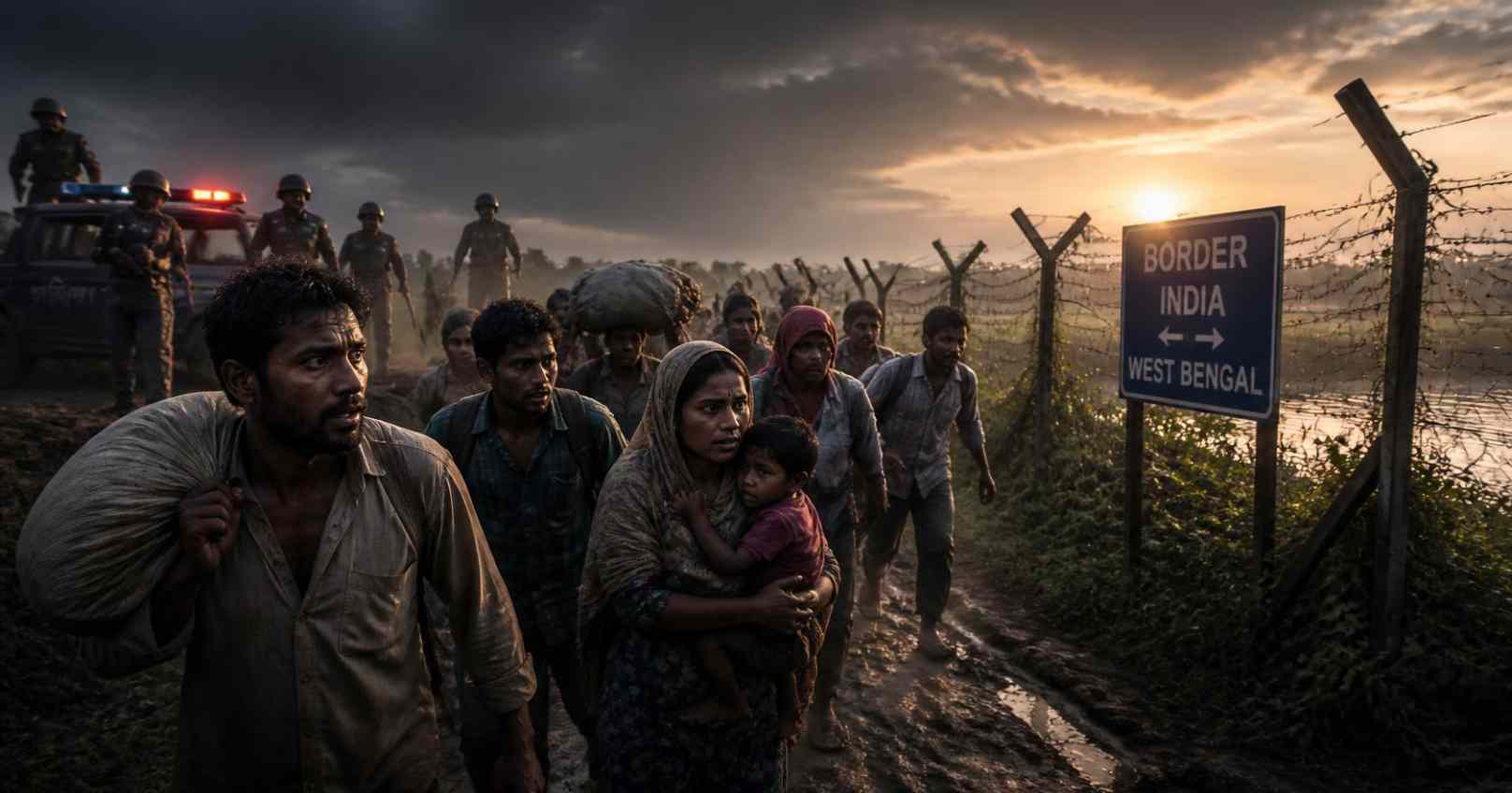
Amid a tightening crackdown on illegal immigration in West Bengal, hundreds of Bangladeshi nationals are reportedly gathering near border checkpoints and transit hubs, fearing detention and deportation proceedings.
Many of those attempting to leave or return to Bangladesh have now spoken publicly about how they allegedly entered India through informal crossing networks, often with the help of agents and forged identity documents. Several claimed they had been living in India for years — some since childhood — working as labourers, carpenters, domestic workers and masons.
The development comes after West Bengal Chief Minister Suvendu Adhikari announced a tougher policy against illegal migrants, stating that such individuals should be directly handed over to the Border Security Force instead of being produced before courts.
The state government has also started identifying and removing allegedly ineligible beneficiaries from welfare schemes while stepping up checks across border districts.
Several migrants described how organised crossing operations allegedly functioned along the India-Bangladesh border. According to their accounts, middlemen monitored border patrol patterns and moved groups across during gaps in surveillance, often under cover of darkness.
One migrant from Bangladesh’s Kushtia district claimed he paid around Rs 7,000 to Rs 8,000 to an agent who coordinated the crossing into India. He alleged that teams working near the border would wait for moments when patrol activity reduced before sending people across.
Another migrant currently based in Bengaluru claimed he entered India after paying an intermediary despite heavy security deployment near the border. He also alleged that identity documents like Aadhaar cards were later arranged through illegal channels for additional payments.
Authorities have long identified porous riverine and densely populated stretches along the 4,000-km India-Bangladesh border as vulnerable zones for smuggling and illegal crossings. According to the Union Home Ministry, nearly 79 per cent of the border has already been fenced.
Some migrants also alleged that local political workers helped them secure Indian identity documents after arriving in the country. One woman claimed she received voter and ration cards during the tenure of the All India Trinamool Congress government in West Bengal and even benefited from welfare schemes.
Another migrant alleged he had voted in India and that his family had received financial aid under state-run social schemes.
The allegations have intensified the political battle between the BJP government in Bengal and the Trinamool Congress. The BJP has repeatedly accused the previous administration led by Mamata Banerjee of ignoring illegal immigration for electoral gains — allegations the TMC has consistently denied.
Meanwhile, Union Home Minister Amit Shah recently stated that the government would not initiate legal action against those voluntarily returning to Bangladesh amid the current crackdown.
Reports from border areas suggest many migrants are now choosing to leave India voluntarily due to fears of detention centres, police verification drives and the inability to produce valid citizenship documents.
Several individuals waiting near border transit points said they had spent years working in India before deciding to return. Some claimed they entered the country as children alongside their families and had built their lives here over decades.
The developments have once again highlighted concerns over human trafficking networks, forged documentation systems and the larger administrative and security challenges linked to illegal immigration.