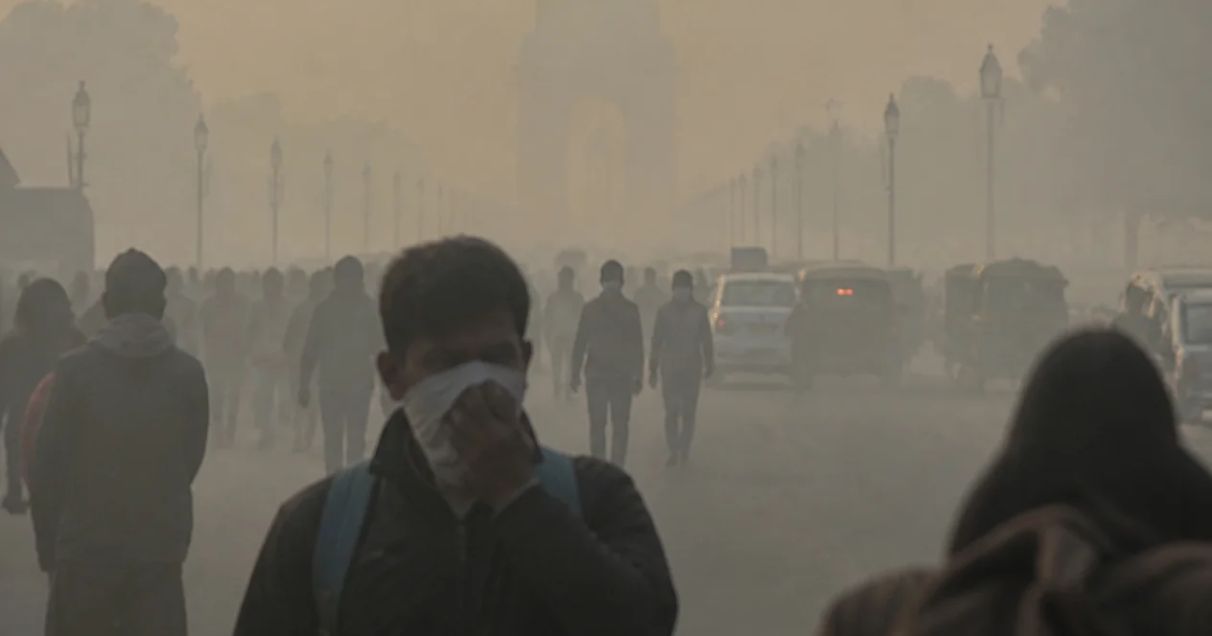
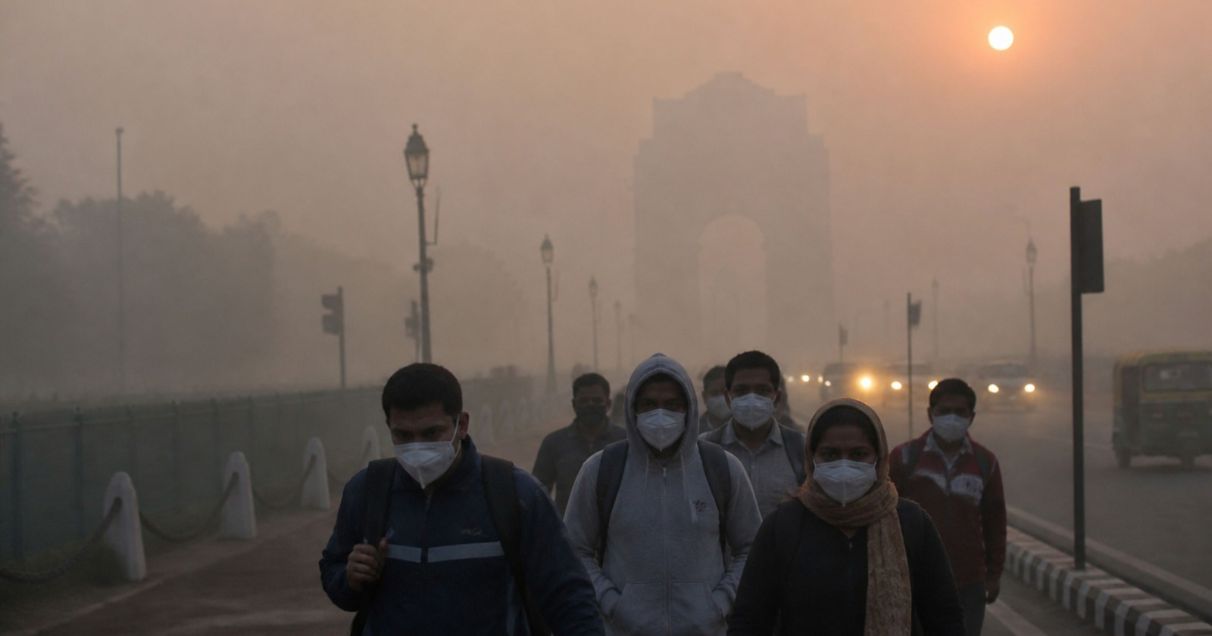
Delhi woke up to another spell of hazardous air on Friday, as fine particulate pollution climbed to levels far above health-based international guidelines. Data from AQI.in showed PM2.5 concentration at 296 micrograms per cubic metre at 9.30 am, almost 20 times the World Health Organisation's recommended 24-hour average limit.
The overall Air Quality Index (AQI) also crossed 400, placing the capital in the 'Severe' category under Central Pollution Control Board (CPCB) standards. Several areas recorded readings approaching 500, indicating an extremely poor pollution situation across parts of the city.
Why PM2.5 poses a serious health threat
PM2.5 describes airborne particles with a diameter of 2.5 micrometres or smaller. These pollutants are so tiny that a human hair is approximately 30 times wider than a typical PM2.5 particle.
Their small size allows them to bypass some of the body's natural defences. While larger particles are more likely to get trapped in the nose and throat, PM2.5 can penetrate deep into the lungs. Some particles may also enter the bloodstream and affect organs beyond the respiratory system.
Exposure to high concentrations can irritate the airways and aggravate asthma and other existing respiratory conditions. Sustained exposure is associated with a greater risk of cardiovascular and lung diseases, strokes and lung cancer. Research has also linked long-term exposure to PM2.5 with premature deaths.
The WHO recommends that the average PM2.5 concentration over 24 hours should remain below 15 micrograms per cubic metre. Delhi's reading of 296 micrograms per cubic metre at 9.30 am was therefore nearly 20 times that benchmark.
The comparison, however, involves a live reading and a guideline calculated over 24 hours, rather than two measurements covering identical time periods. Even with that distinction, the concentration highlights the scale of pollution residents are facing.
Crop-residue fires add to Delhi's pollution load
Smoke from stubble burning in Punjab and Haryana is contributing to the deterioration in air quality. Northwesterly winds are carrying emissions from agricultural fires towards Delhi, adding to the existing pollution.
Weather conditions are also making the situation harder to manage. Weak winds near the surface are limiting the movement of pollutants, allowing them to accumulate rather than disperse.
Vehicles, industries and dust worsen the problem
Agricultural fires are not the only source of the capital's polluted air. Emissions from vehicles and industries, construction activity, road dust and the burning of waste also contribute significantly to the pollution burden.
When these sources operate alongside unfavourable meteorological conditions, pollutants become trapped closer to the ground. This can push concentrations higher and prolong periods of poor air quality.
With no immediate weather system expected to bring rainfall or substantially improve the dispersal of pollutants, Delhi remains vulnerable to further deterioration in the coming days.