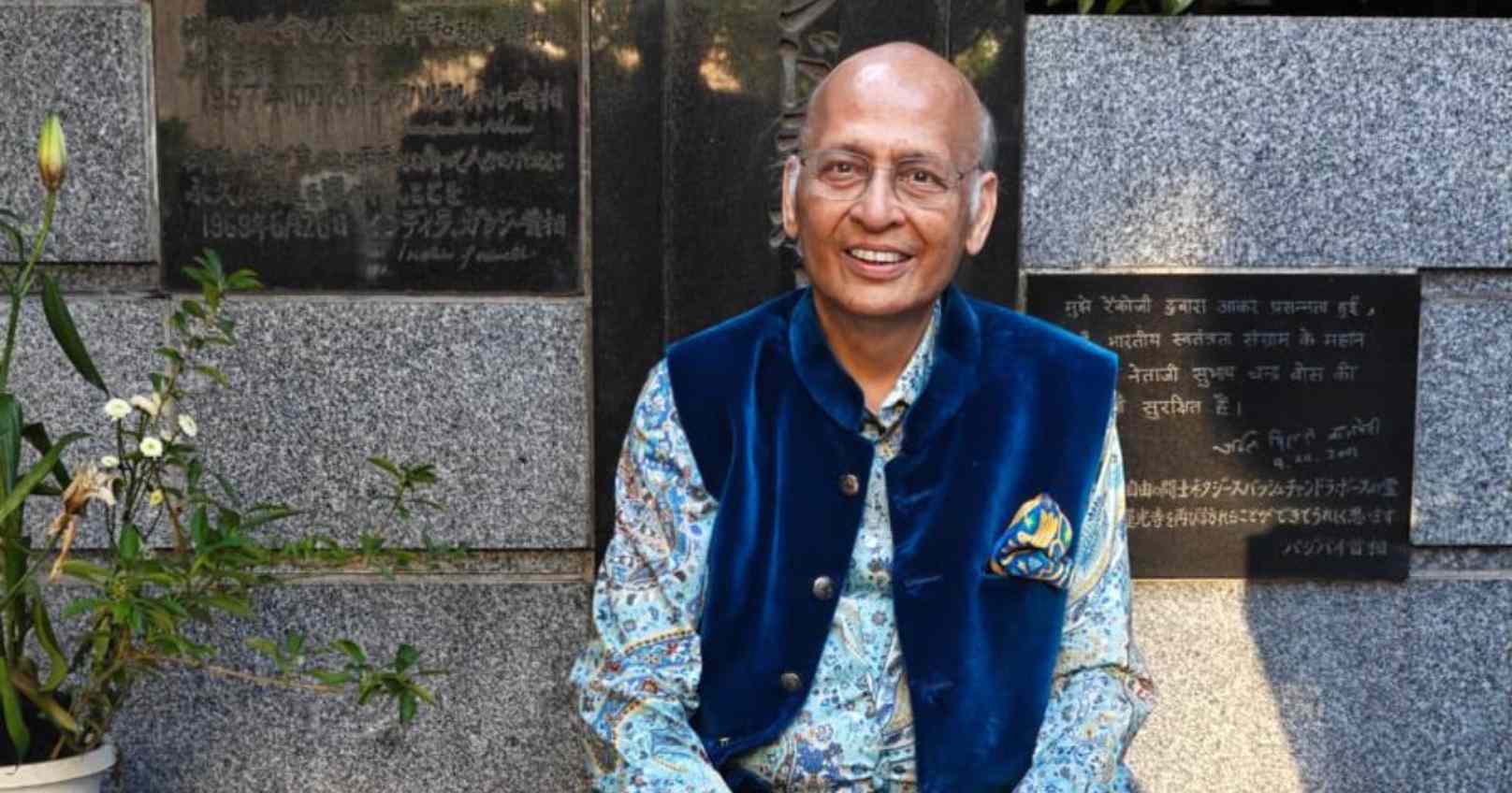
Speaking to a large gathering of Vice Chancellors of Japanese Universities, administrators, diplomats, distinguished professors and eminent members of civil society in Tokyo, Japan, on Universities of the Future, Dr Abhishek Singhvi, fourth term MP and eminent jurist, said that if democracy is to endure not just as a ballot-box ritual but as a way of life, then its beating heart must lie not in Parliament alone, but in our universities. The Minister of Education of Japan also attended the lecture.
He called Universities the unsung laboratories of liberty, the unheralded nurseries of the Republic. It is there, he said, that the grammar of inquiry as much as of dissent is learned, the alphabet of citizenship is practiced and the poetry of pluralism is composed.
Dr Abhishek Singhvi said that the classroom is not just a place of pedagogy; it is the crucible of character. It is where the ideals of the Constitution must leap from that parchment into practice. It is where the sterile statistics of enrollment must give way to the stirring symphony of enlightenment. Above all, he added, it is where the Indian mind must be taught not what to think, but how to think.
Dr Singhvi lamented that campuses that once echoed with Socratic inquiry now risk being reduced to soulless factories for credentialism. The rise of misinformation, the corrosion of academic freedom, and the narrowing of intellectual bandwidth into vocational silos has turned many campuses into echo chambers or, worse, tombs of thought.
A university cannot be told to behave, not to inquire. A democracy that fears its students has already begun to fear its future. The silencing of questions is not neutrality, it is complicity. Authoritarianism does not descend with jackboots, it seeps in through silences.
Dr Singhvi called for the need to rethink the university as a guardian of the Republic as well as a temple of knowledge. A university ought to be a lighthouse that shines its moral rays into the dark waters of injustice, ignorance and inequity rather than a walled garden isolated from the outside world. Dr Singhvi specifically called for every university to release an annual Social Influence Report or Social Institutional Responsibility card (SIR) that measures civic influence, public service and democratic engagement. This alone can go beyond mere citation metrics and job placements. Let SIR be our answer to corporate social responsibility.
Dr Abhishek Singhvi said that the new pedagogy should not merely prepare students for employment, but for engagement. He said that we must teach not only through books but through the ballot, the courtroom, the panchayat, and the protest march. Civic internships—- whether in courts, municipalities,NGOs or public policy labs—must be integral to every degree.
Dr Singhvi exhorted that to the budding engineer, let us teach the architecture of rights. To the aspiring manager, let us teach the ethics of equity. To every student, let us impart foundational legal literacy, not as rote learning but as an inoculation against tyranny.
He concluded by suggesting a remedial framework. First, he said we must enact strong legal protections for academic freedom and institutional autonomy. These are not luxuries, they are preconditions for intellectual honesty.
Second, he called for massive investment in DEI, in access, equity and digital inclusion is imperative. No student must be excluded for lack of privilege or proximity.
Third, he asked for elevation of paradigms of student agency. Universities must empower students as co-creators of their civic destiny. Leadership programs should produce not only CEOs and coders, but mayors, philosophers and public visionaries.
Fourth, Dr Singhvi said India must embrace global academic partnerships, particularly in Asia. An Indo-Japanese democratic education consortium can become a beacon for the world. Let us imagine campuses where Tokyo and Thiruvananthapuram meet to teach AI ethics, civic tech and constitutional jurisprudence.
He concluded that eventually, the health of our democracy will not be measured merely in GDP figures or global rankings. It will be measured by whether the Indian campus remains a place where it was safer to ask dangerous questions than to offer convenient lies.