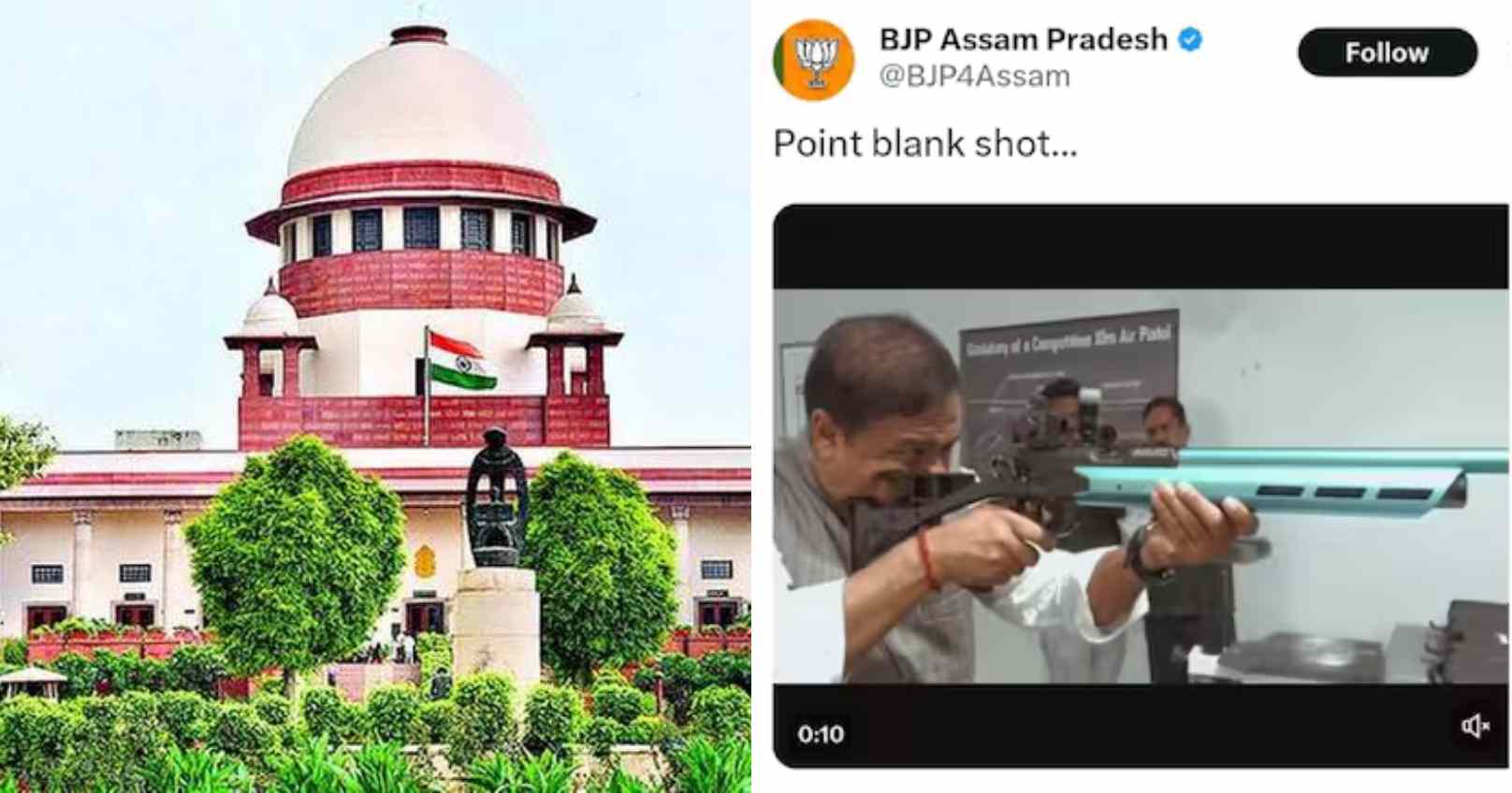
The Supreme Court on Tuesday expressed concern over attempts to drag political conflicts into the courtroom, as Chief Justice of India Surya Kant urged Communist Party leaders not to use legal proceedings to fight electoral battles. The remarks came during a hearing on petitions filed against Assam Chief Minister Himanta Biswa Sarma over a now-removed social media video.
The controversy stems from a clip originally shared by the Assam BJP on X, which appeared to show Sarma firing an air rifle, edited with artificial intelligence to depict bullets striking images of Muslim men. The post, titled “point blank shot,” triggered sharp criticism amid the run-up to the Assam Assembly elections.
Following the backlash, CPI(M) and CPI leader Annie Raja approached the apex court seeking swift legal action against the Chief Minister. Their petitions call for the registration of FIRs, alleging the video promotes communal hostility and constitutes hate speech. They also requested the formation of a Special Investigation Team to conduct an independent probe.
Arguing for urgent intervention, counsel for the CPI stated that despite multiple complaints, law enforcement agencies had not initiated any formal action. He cited previous Supreme Court rulings that mandate automatic FIR registration in cases involving hate speech and cognisable offences.
Responding to the submissions, Chief Justice Surya Kant warned against turning the Supreme Court into a battleground for political narratives, especially during election periods. He noted that while the court would consider scheduling the hearing, it would not encourage legal forums being used for partisan agendas.
The latest petitions follow an earlier plea submitted by civil society members and notable public figures, who drew attention to other alleged remarks by Sarma referencing “Miya Muslims” and accused him, along with other political leaders, of making divisive and anti-Muslim statements.
As political tensions escalate ahead of the elections, the case highlights growing concerns over the intersection of technology, political messaging, and communal harmony.