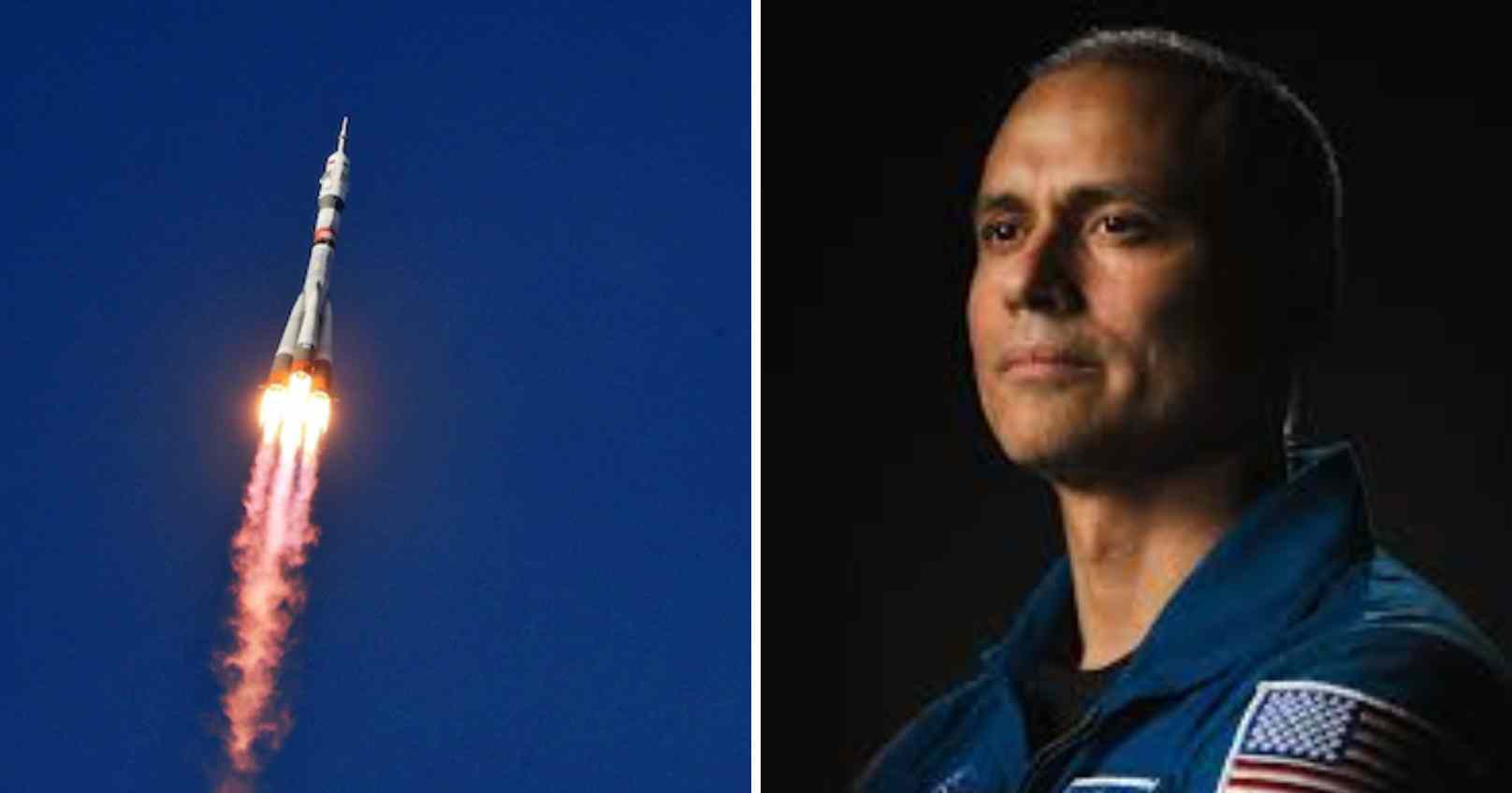
Indian-origin NASA astronaut Anil Menon has set off on an eight-month expedition to the International Space Station (ISS), joining two Russian cosmonauts aboard a Soyuz spacecraft launched from the Baikonur Cosmodrome.
During his stay aboard the orbiting laboratory, Menon will contribute to a wide range of scientific investigations designed to improve the safety of future space missions while developing technologies with potential applications on Earth.
Trained in emergency and aerospace medicine, Menon will wear two hats during the mission—conducting scientific research while also participating in medical studies that examine how the human body responds to long-term exposure to microgravity.
Among the mission's major objectives is the evaluation of an artificial intelligence-powered ultrasound system that can help astronauts perform medical scans independently. The technology is expected to play an important role in future deep-space missions, where communication delays with Earth could make immediate medical assistance impossible.
The expedition will also include research into semiconductor manufacturing in space. Scientists believe the microgravity environment can produce materials with fewer imperfections, potentially leading to higher-performance electronic components for computing, communications and other advanced technologies.
Another important area of study will focus on the effects of extended space travel on the human body. Researchers will examine changes in blood circulation, heart function and other physiological systems to better understand the health challenges astronauts may face during lengthy missions beyond Earth's orbit.
Menon will also support experiments involving bioprinting, where scientists aim to create complex biological tissues in microgravity. The research could contribute to advances in regenerative medicine, improve understanding of aging, and aid the development of future medical treatments.
Before being selected as a NASA astronaut, Menon served as a flight surgeon, working closely with astronauts and commercial spaceflight teams. His combined expertise in medicine and space operations makes him uniquely qualified for the demanding mission.
The information gathered during the eight-month stay aboard the ISS is expected to support NASA's long-term exploration goals, including upcoming Artemis missions to the Moon and future crewed expeditions to Mars.