KGD6: India Is Claiming $30 Billion and Negotiating at the Same Table
A gas field, a doubled price, four arbitrations and a petition that outlived its petitioner, what the Centre's promised status report must not be allowed to omit
23-08-2026

A gas field, a doubled price, four arbitrations and a petition that outlived its petitioner, what the Centre's promised status report must not be allowed to omit
23-08-2026On Friday, 21 August 2026, the Government of India informed the Supreme Court that it would place on record the latest developments in the long-running dispute with Reliance Industries Limited over gas production and pricing from the Krishna-Godavari basin. A bench comprising the Chief Justice of India and two companion judges was hearing a batch of petitions filed in 2013 by the late CPI leader Gurudas Dasgupta and the NGO Common Cause. The Attorney General submitted that no specific direction was needed because the government was itself willing to place the latest position before the court.
It was, in the language of the courtroom, an unremarkable submission. In the language of accountability, it was an admission: for eight years, on a matter the Supreme Court had itself thought serious enough to admit and hear at one point on a day-to-day basis, the record simply stopped.
The petitions were filed when a litre of petrol cost about seventy rupees. They have outlived more than a dozen Chief Justices of India, four petroleum ministers, two pricing formulas, and Gurudas Dasgupta himself, who died in 2019 with none of his questions answered.
Strip away the acronyms and the KG-D6 matter is a simple set of propositions that a citizen can hold in one hand.
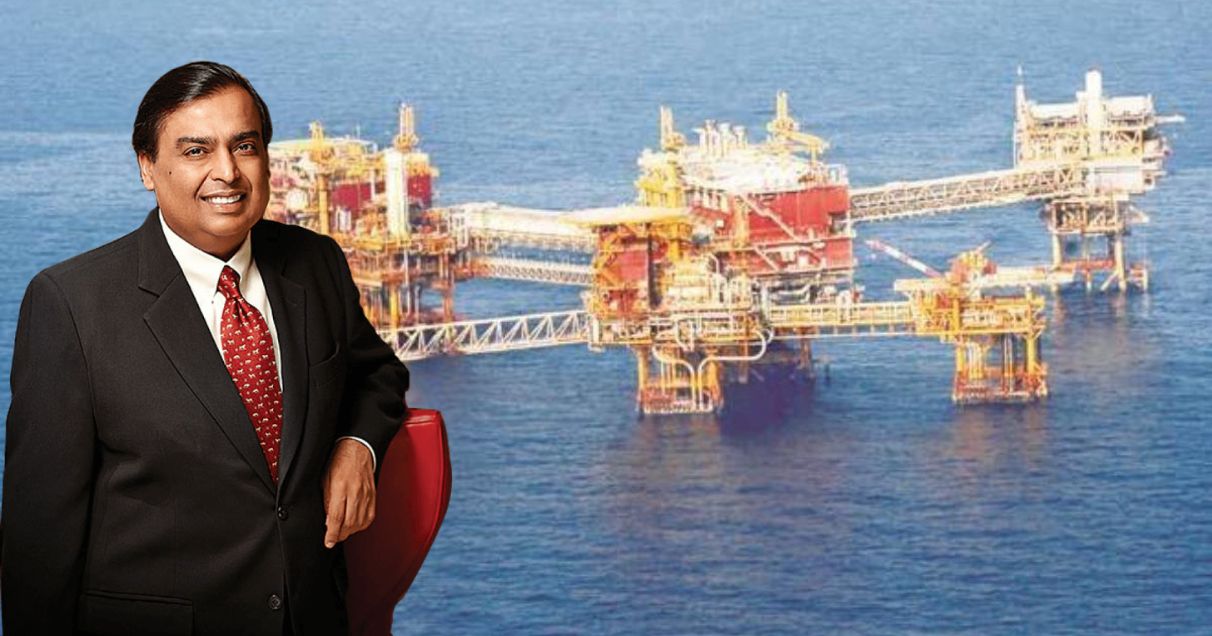
In 2000, a deep-water block off the Andhra coast was awarded to a private consortium under a production sharing contract. The state owns the hydrocarbons; the contractor spends the money to find and produce them, recovers those costs from the sale proceeds, and the government's share of the profit begins only after cost recovery. Every rupee of cost the contractor is permitted to recover is a rupee the exchequer does not receive first. That single arithmetic fact is the engine of every dispute that followed.
Production began in 2009 and peaked within a year at roughly 69 million standard cubic metres a day. Then it fell, steeply and continuously, to a small fraction of what the approved development plan had promised. The contractor's explanation has been consistent and is not implausible: the reservoir turned out to be geologically far more complex than anyone, including the government's own regulator, had understood. The government's regulator took a different view, and moved to disallow a proportionate share of costs on the reasoning that the contractor could not claim full recovery of a plan it had not delivered. In November 2011 the contractor invoked arbitration. That arbitration is still not finally decided in 2026.
Meanwhile the price question arrived. A committee headed by the chairman of the Prime Minister's Economic Advisory Council recommended a formula that would have roughly doubled the domestic gas price from $4.2 to $8.4 per mmBtu from April 2014. The Cabinet cleared it. The petitioners argued that the hike would transfer tens of thousands of crores a year from fertiliser, power and household consumers to producers, and that it was being granted to a field that was conspicuously failing to deliver its contracted output. Their pleadings put the annual burden at about Rs 54,500 crore and asserted that the contractor's own stated extraction cost was well under a dollar per unit.
It is worth stating plainly what happened next, because it is the strongest fact in the government's favour and it deserves to be said before the questions begin. The $8.4 price was never actually paid. The Election Commission deferred the revision during the 2014 general election; the incoming government replaced the Rangarajan formula in October 2014 with guidelines benchmarked to international hubs, and the notified price came in at $5.61. The Centre has since maintained, with justification, that the specific grievance that triggered the litigation was addressed by policy rather than by judicial order.
But the petitions were never only about $8.4. They also asked who audits the cost, who enforces the development plan, who recovers unexplored acreage, and who is answerable when a public natural resource under-delivers for a decade. Those questions were never adjudicated. They were adjourned.
|
When |
What happened |
|
Apr 2000 |
Production Sharing Contract for block KG-DWN-98/3 (KG-D6) signed under NELP-I with a consortium led by Reliance Industries with Niko Resources; BP later acquires a 30 per cent stake in 2011 in a deal valued at about $7.2 billion. |
|
2004-2006 |
Initial development plan for the D1-D3 fields is approved, followed by an addendum that raises projected capital expenditure several times over and targets a plateau of roughly 80 mmscmd. The escalation later becomes the central charge of the audit reports. |
|
Apr 2009 |
First gas flows. Output peaks at around 69 mmscmd in early 2010. |
|
2011 |
Output collapses. The Directorate General of Hydrocarbons and the petroleum ministry move to disallow a proportionate share of costs on the ground that the approved development plan was not delivered. In November 2011 the contractor invokes arbitration. |
|
2011-2014 |
Successive CAG audits of the block question capital expenditure escalation, contract award practices and the non-relinquishment of unexplored acreage. |
|
Jun 2013 |
On the Rangarajan Committee formula, the Cabinet clears a near-doubling of the domestic gas price from $4.2 to $8.4 per mmBtu with effect from 1 April 2014. |
|
Jul-Sep 2013 |
The Supreme Court issues notice on PILs by then CPI MP Gurudas Dasgupta and former power secretary E A S Sarma, by the NGO Common Cause, and by advocate M L Sharma. The petitions seek rollback of the price hike, enforcement of relinquishment and, in one case, cancellation of the contract. |
|
Feb-Apr 2014 |
Delhi's Anti-Corruption Branch registers an FIR naming, among others, two former petroleum ministers and the RIL chairman over the pricing decision. The Election Commission defers the price revision until the general election is over. |
|
Oct 2014 |
The new government supersedes the Rangarajan formula with fresh guidelines benchmarked to four international hubs. The notified price falls to $5.61, well below $8.4. |
|
Nov 2014 |
CAG tables a second audit report on the eastern offshore KG-D6 block, recommending disallowance of about $357 million of expenditure on drilling and contractor payments. |
|
2016 |
Acting on a committee headed by Justice A P Shah, the government raises a claim of about $1.55 billion over gas said to have migrated into the KG-D6 block from adjoining ONGC acreage. |
|
Jul 2018 |
An arbitral tribunal rejects the government's migration claim. This is the last substantive development the Supreme Court is being formally told about in 2026. |
|
May 2023 |
A single judge of the Delhi High Court upholds the 2018 award. |
|
Feb 2025 |
A division bench of the Delhi High Court sets the award aside, restoring the government's migration claim. The consortium appeals to the Supreme Court. |
|
2025 |
The petroleum ministry issues a demand notice of about $2.81 billion to the consortium. |
|
Nov-Dec 2025 |
Hearings conclude in the separate, fourteen-year-old cost recovery and underproduction arbitration. Reports indicate the government's claim in that reference exceeds $30 billion. The award is awaited. |
|
May 2026 |
The Supreme Court declines to freeze the migration appeals but subsequently permits the parties to explore conciliation. |
|
21 Aug 2026 |
The Centre tells a bench of the Chief Justice of India and two companion judges that it will place on record all developments since 2018 in the decade-old PILs. |
The most consequential thing that happened to the KG-D6 litigation is that it stopped being litigation. It became arbitration.
Between 2011 and 2026, the substance of the dispute migrated almost entirely into private tribunals: one reference on cost recovery and underproduction, another on gas said to have migrated underground from adjoining ONGC acreage, and the resulting appeals under the Arbitration and Conciliation Act. The forums are lawful. The contract provides for them. But their character is worth naming. Arbitral proceedings are confidential. Pleadings are not public documents. Awards are not published as judgments are. There is no intervener, no amicus, no public interest petitioner, and no citizen in the room.
A dispute over a national resource, valued by the government's own claims at tens of billions of dollars, has been adjudicated for fifteen years in rooms the public may not enter, on documents the public may not read.
The consequences of that migration are now visible. In the migration reference, a tribunal ruled against the government in 2018; a single judge of the Delhi High Court upheld that award in 2023; a division bench set it aside in February 2025; the appeal is now before the Supreme Court, where the consortium's foreign partners have argued that overturning a stable international award will deter foreign capital, and the Union has responded in unusually blunt language, characterising the extraction of migrated gas as amounting to theft. On the record before the court, the demand notice that followed runs to roughly $2.81 billion.
In the parallel cost recovery reference, hearings concluded in November 2025 after fourteen years. Reports of the government's submissions put its claim at more than $30 billion. Whichever side loses will almost certainly appeal, which means a dispute that began under one government, one pricing regime and one set of ministers may still be alive under the next.
And in May 2026, the parties told the Supreme Court that they wished to attempt conciliation. The court permitted it. Conciliation is a legitimate and often sensible way to end ruinous litigation. It is also, structurally, the least transparent thing that can happen to a public claim of this size: a negotiated number, arrived at privately, between a ministry and a contractor, over a resource that belongs to neither.
The abstraction in this story is the dollar-per-mmBtu figure. The concrete part is what sits downstream of it: urea, electricity, the CNG in an autorickshaw, the piped gas in a kitchen. Every upward revision in domestic gas price flows into the fertiliser subsidy bill, into the cost of gas-based power, and into city gas distribution tariffs. Every disallowed cost that is nonetheless recovered reduces the government's profit share, which is to say, it reduces public revenue.
Since 2023 the regime has changed again, on the recommendations of the Kirit Parikh committee: gas from legacy public sector fields is now benchmarked to a slope of the Indian crude basket with a floor and a ceiling, while deep-water and high-pressure fields of the KG-D6 type continue on a separate, higher ceiling with a roadmap towards full pricing freedom. Reasonable economists disagree about whether that is correct policy. What is not a matter of opinion is that no court, no parliamentary committee and no public process has ever tested whether the specific formulas applied to this specific block, over this specific decade, were arrived at fairly.
These are not accusations. They are questions capable of a documentary answer, and a status report that does not answer them is not a status report.
1. What has the exchequer actually earned?
Place on affidavit the year-wise profit petroleum, royalty and cess actually received by the Government of India from KG-D6 since first gas in 2009, set against the projections officially publicised at the time of the development plan approvals. If the gap is large, state the gap in rupees.
2. How much cost has been recovered, and how much was disallowed?
State the cumulative capital and operating expenditure claimed by the contractor, the amount permitted for recovery, the amount the DGH or the ministry proposed to disallow, and the amount actually withheld after all proceedings. A single consolidated table would settle a decade of speculation.
3. What became of the CAG's disallowance findings?
The 2014 audit report recommended disallowance of roughly $357 million on drilling and contractor payments. Was that recommendation accepted, rejected or allowed to lapse? What did the Public Accounts Committee conclude, what Action Taken Note was filed, and by whom was the final decision taken?
4. Why was unexplored acreage never relinquished?
Audit reports and the regulator both flagged non-relinquishment of contract area under the PSC. Specify what area was retained beyond the discovery areas, under which clause, on whose approval, and what that retention was worth.
5. On what basis was a price increase granted to an underperforming field?
When the pricing formula was approved in 2013, the block was producing a fraction of its approved plan and the government was simultaneously seeking to disallow its costs. Disclose the file notings, the ministries that dissented, and the legal advice on whether pricing benefits could or should have been linked to delivery obligations.
6. What did the pricing decisions cost consumers?
Quantify, for each year since 2014, the incremental fertiliser subsidy outgo, the incremental cost to gas-based power generation, and the incremental CNG and piped gas tariff attributable to domestic gas price revisions. If the government believes the number is small, publishing it ends the argument.
7. How can the state claim $30 billion and negotiate at the same time?
Explain the internal consistency of maintaining a claim reported at over $30 billion in one arbitration, a demand of about $2.81 billion in another, and simultaneously entering conciliation. Who approved the conciliation mandate, what is the reserve position, and which authority will sign off on any settlement figure?
8. What has this litigation cost the public?
Disclose the aggregate expenditure incurred by the Union, the DGH and any public sector entity on legal fees, senior counsel, foreign counsel, arbitrator fees and tribunal costs across all KG-D6 references since 2011.
9. Was anybody held accountable?
State whether any inquiry was conducted into the approval of the development plan addendum that multiplied projected capital expenditure, and what became of every criminal complaint, FIR or preliminary enquiry registered in relation to the gas pricing decisions, including the 2014 FIR registered in Delhi. Closure is an answer; silence is not.
10. Will any settlement be made public before it is signed?
Give an unambiguous undertaking on whether the terms of any conciliated settlement will be placed before the Supreme Court and laid before Parliament prior to execution, or whether the public will learn the number after it becomes binding.
Framed as a court would frame them, in the interest of the citizens on whose behalf the resource is held.
1. Does arbitration oust constitutional scrutiny?
Does the Union accept that the pendency of contractual arbitration between the state and a contractor cannot foreclose this Court's examination of Article 14 and public trust questions concerning a natural resource, and if it does accept that, why has the record before this Court stood still since 2018?
2. Who is the trustee, and how was the trust discharged?
If hydrocarbons in the seabed vest in the Union as trustee for the people, let the Union state on affidavit the specific mechanism by which the beneficiaries' interest was represented when the pricing formula, the cost recovery position and the development plan revisions were decided.
3. Produce the ledger.
Direct the Union to file a consolidated, audited statement of revenue realised versus revenue projected from this block, and of costs claimed versus costs allowed, in a form capable of being read by a citizen rather than only by a chartered accountant.
4. Why is the regulator not independent?
The Directorate General of Hydrocarbons audits, advises and negotiates while remaining an office under the very ministry whose decisions are in question. Should this Court not require the Union to explain why, more than two decades after NELP, India still has no independent statutory upstream regulator?
5. Is conciliation to be conducted behind the Court's back?
Since public interest petitions concerning this very block are pending, should any conciliated settlement not require leave of this Court before execution, with the terms placed on record?
6. What is the status of every audit objection?
Direct a compliance chart listing each CAG and DGH objection since 2011, the decision taken on it, the authority that took it, and the date. Where an objection was simply not pursued, the Union must say so in terms.
7. Does the prayer for an independent investigation survive?
The petitions sought a court-monitored investigation into the pricing decision. Let the Union state whether it opposes that prayer today, and on what ground, given that it now itself alleges conduct amounting to appropriation of gas belonging to a public sector undertaking.
8. Who speaks for the consumer in this courtroom?
Should the Court not appoint an amicus curiae, and issue notice to the fertiliser and power ministries and to city gas distribution regulators, so that the downstream incidence of gas pricing is argued by someone whose interest is neither the contractor's nor the ministry's?
9. Why did eight years pass?
Let the Union explain the institutional reason no status report was filed between 2018 and 2026, and what standing mechanism it proposes so that a matter admitted by this Court cannot again lie dormant for the better part of a decade.
10. Should there be a rule, not just a ruling?
Following this Court's own jurisprudence on the allocation of scarce natural resources, should it lay down that pricing formulas for publicly owned hydrocarbons must be preceded by published methodology, recorded dissent, and disclosure of the fiscal impact on consumers before Cabinet approval?
What the other side says, and why it matters
Fairness requires that the contractor's case be stated properly, not as a footnote. Reliance Industries and its partners have consistently denied any impropriety in the pricing decisions and have maintained that the fall in output was caused by unforeseen geological complexity rather than any deliberate withholding of production. They have pointed out that they invested at risk in a frontier deep-water play that few others would touch, that the government's own regulator approved every development plan and every cost at the time, and that an arbitral tribunal examined the migration allegation on evidence and rejected it in 2018. Their foreign partners have argued before the Supreme Court that reopening a settled award through subsequent judicial or legislative action damages India's standing as a destination for long-cycle capital. None of that is frivolous. A country that wants deep-water gas must be a country where contracts hold.
But both things can be true. A contract can be enforceable and a process can still have been opaque. The investor-confidence argument answers the question of whether India honours awards. It does not answer the question of whether Indian citizens were ever told what their gas was worth, what it cost to extract, and who decided the difference.
The Centre says it will file a status report. The value of that report will be measured by one test: whether it tells the Court what actually happened, or merely what has been listed. Eight years of silence produced a $2.81 billion demand, a claim reported at over $30 billion, a set-aside award, a fresh appeal and a conciliation table. All of that happened to a public asset while the public record showed nothing.
The petitioner who began this is dead. The gas he was arguing about is largely gone. The questions have not aged a day.
This document is written as commentary and analysis on a matter that is sub judice before the Supreme Court of India. Every factual assertion above is drawn from the public record: the reported proceedings of the Supreme Court and the Delhi High Court, tabled reports of the Comptroller and Auditor General, published government pricing guidelines, and contemporaneous news reporting including the Hindustan Times report of 22 August 2026 that occasioned this piece. Where a matter is contested, it is described as an allegation or a claim and attributed to the party making it. No finding of wrongdoing by any person or company is asserted or implied; the arbitral and judicial proceedings referred to remain pending. The questions set out in this document are questions, not conclusions. Before publication, the Ministry of Petroleum and Natural Gas and Reliance Industries Limited should each be offered a right of reply, and figures cited from reported sources should be verified against primary filings.

From the power and insolvency appeal courts to debt and military tribunals, chairs and member seats
Read More
An estimate of Yes Bank’s liability and capital impact after the Supreme Court’s ruling in Yes B
Read More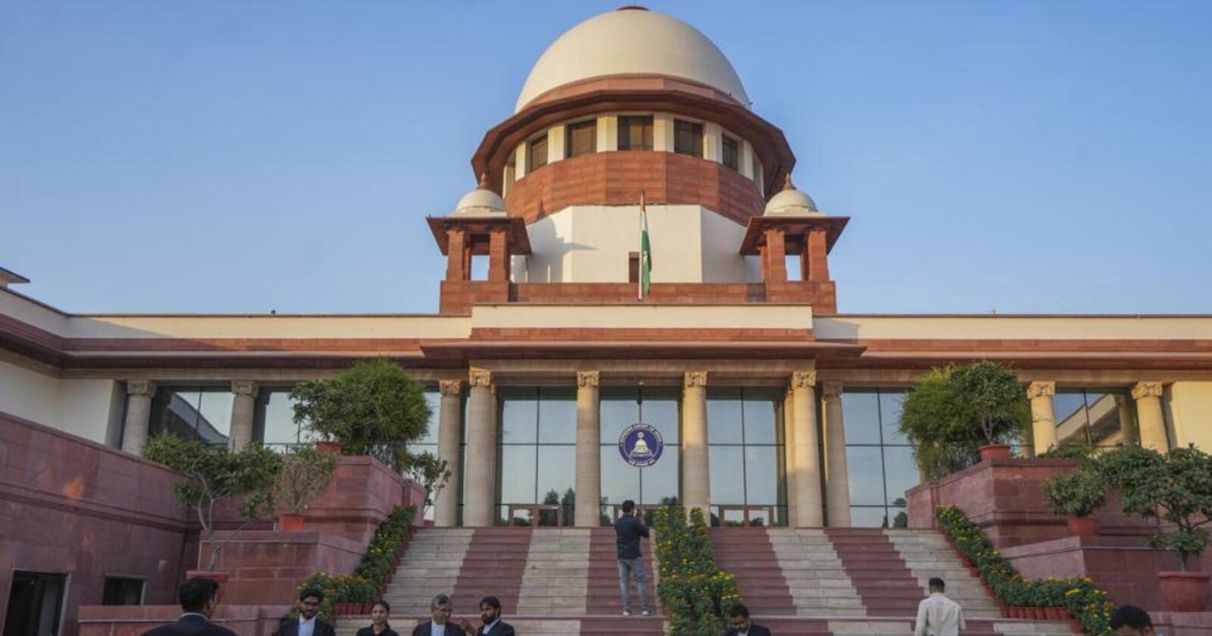
When the state wields a sledgehammer against citizens seeking accountability, the Supreme Court’s
Read More