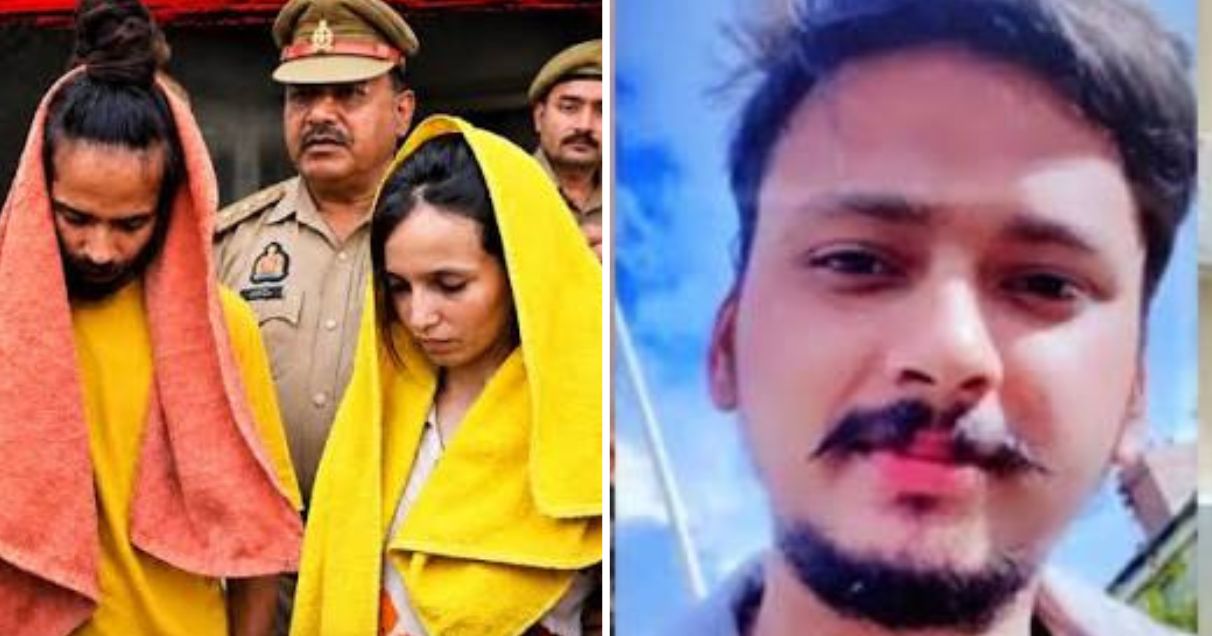
A Meerut court on Wednesday awarded the death penalty to Muskaan Rastogi and her partner Sahil Shukla for the murder of merchant navy officer Saurabh Rajput, bringing a significant development in one of Uttar Pradesh's most widely discussed criminal cases.
The murder, which took place in March 2025, attracted nationwide attention after investigators discovered Rajput's dismembered remains concealed inside a blue plastic drum filled with cement and sand.
District Judge Arvind Kumar Mishra pronounced the sentence approximately two weeks after finding both accused guilty of conspiring to murder Rajput and attempting to conceal the crime.
The trial involved 126 court hearings and the examination of 22 witnesses.
Court Finds Both Accused Guilty Of Planned Murder
According to the prosecution, Muskaan Rastogi and Sahil Shukla had planned Rajput's killing before carrying out the crime at his residence in Indra Nagar, Meerut, on March 3, 2025.
Investigators alleged that Rastogi first administered a sedative to her husband by mixing it into his food.
Shukla subsequently arrived at the residence, where the two allegedly attacked Rajput with a knife, causing fatal injuries.
The prosecution maintained that the accused then dismembered his body inside the bathroom and attempted to dispose of the remains without attracting suspicion.
The remains were placed inside a large blue industrial drum, which was subsequently filled with a mixture of cement, sand and water.
Investigators concluded that the accused used the material to conceal the remains and suppress the smell associated with decomposition.
Accused Allegedly Used Victim's Phone To Mislead Family
Following the killing, Rastogi and Shukla travelled to Himachal Pradesh, where they reportedly stayed at hotels in Shimla and Manali.
During their absence, Rastogi allegedly continued using Rajput's mobile phone to communicate with his relatives.
According to investigators, messages were sent from the victim's phone to create the impression that he was alive and travelling for professional commitments.
The prosecution relied on this alleged conduct as part of its case that the murder had been deliberately planned and followed by an organised attempt to prevent its discovery.
Six-Year-Old Daughter's Statement Draws Attention
The crime came to light after Rajput's relatives became increasingly suspicious about his whereabouts.
On March 17, 2025, family members approached the residence with the assistance of local authorities.
Reports also emerged that the couple's six-year-old daughter had indicated to neighbours that her father was inside the drum.
When police opened the sealed container, they discovered human remains subsequently identified as those of Rajput.
The discovery triggered an investigation that led to the arrest of Rastogi and Shukla two days later.
Shopkeepers, Mobile Records And Medical Evidence Strengthened Prosecution Case
The prosecution presented a combination of physical, forensic, electronic and circumstantial evidence during the trial.
Local traders testified about the purchase of materials allegedly used in committing and concealing the murder, including the plastic drum, cement, sand and sharp instruments.
Investigators also relied on call detail records and mobile tower location data to reconstruct the movements of the accused.
According to the prosecution, electronic evidence placed Shukla near the crime scene during the relevant period and subsequently established the movements of both accused during their trip to Himachal Pradesh.
Medical findings provided further support to the prosecution's case, with the post-mortem examination identifying stab injuries as the cause of Rajput's death.
The evidence was presented collectively to establish the alleged conspiracy, execution of the murder and subsequent concealment.
Muskaan's Parents Decline To Oppose Death Penalty
In a significant development ahead of sentencing, Rastogi's parents reportedly expressed sympathy for their deceased son-in-law and indicated that they would not oppose the imposition of capital punishment.
They described Rajput as a good person and reportedly told the court that they would not protest if the convicts received the death sentence.
Reports also indicated that Rastogi's family had not visited her during her imprisonment.
Death Sentence Subject To High Court Confirmation
The sentencing places the case within the framework of India's capital punishment jurisprudence.
Under Indian criminal law, a death sentence imposed by a Sessions Court cannot be executed unless it is confirmed by the jurisdictional High Court.
The Allahabad High Court will therefore be required to examine the death sentence through the statutory confirmation process.
The Supreme Court's established rarest of rare doctrine also requires courts to consider whether life imprisonment would be an inadequate alternative before capital punishment can be sustained.
Both convicts retain the right to challenge their conviction and sentence through the appellate process.