Marijuana remains prohibited under Nepal’s national narcotics laws, but one province has now taken a significant step towards changing how the plant is regulated.
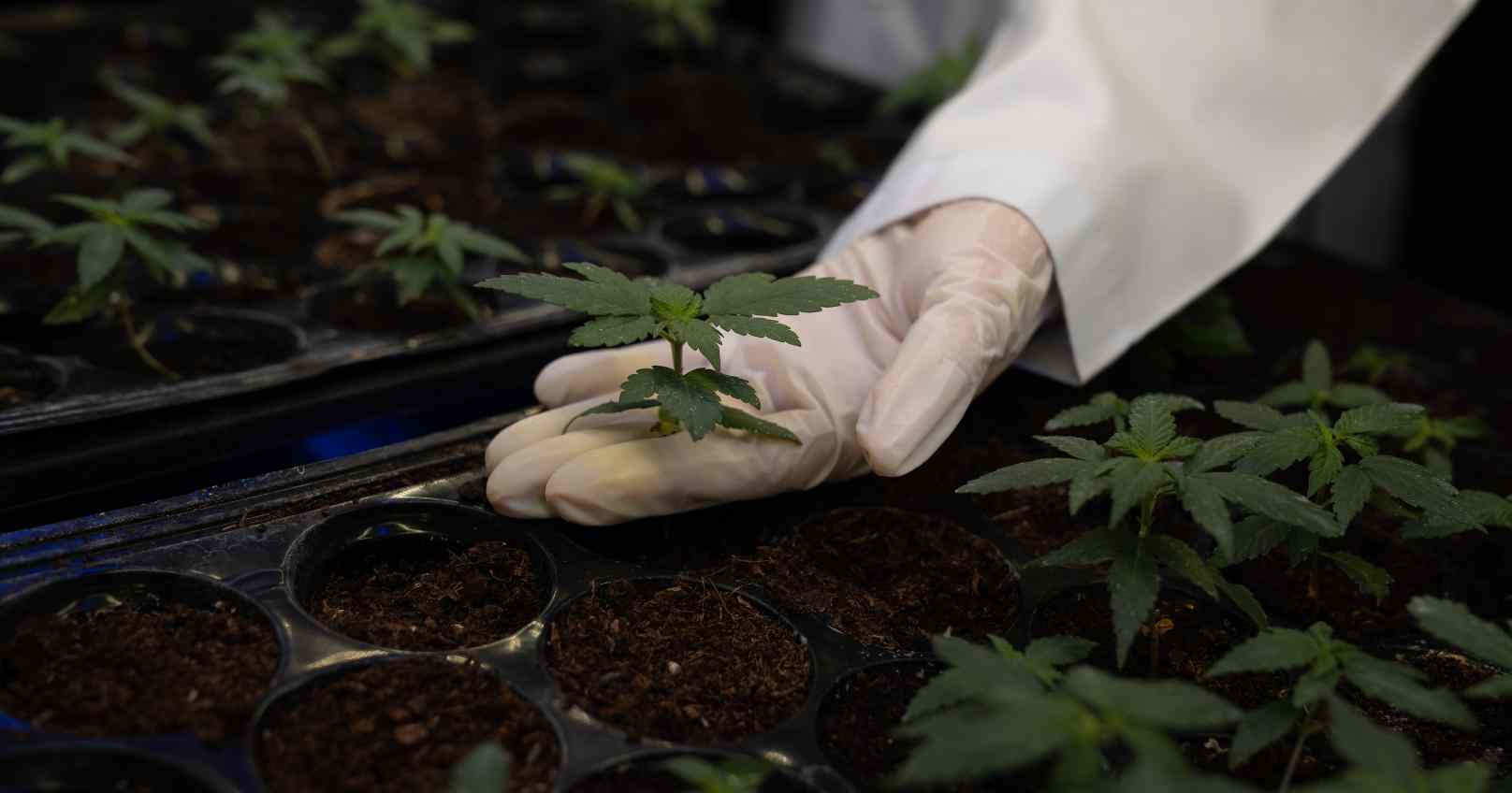
Gandaki province has approved legislation permitting the cultivation and medical use of cannabis under government supervision. The move makes it the first province in Nepal to create a legal framework for cannabis cultivation, even as the country's central law continues to prohibit the plant.
The legislation came into force after receiving the provincial chief's approval earlier this week, according to reports by the Associated Press.
Under the new framework, cannabis cultivation will not be freely permitted. Farmers will need licences from the provincial authorities and will be subject to government monitoring. The stated objective is to facilitate cannabis for medical purposes, rather than legalise recreational consumption.
Gandaki's Move Comes Despite Nepal's National Ban
Gandaki is one of Nepal's seven provinces and includes Pokhara as well as several major Himalayan trekking destinations.
The provincial assembly reportedly passed the legislation unanimously, with members from both the governing coalition and the opposition supporting it.
The development creates an unusual legal situation. While Gandaki has introduced a regulated exception, Nepal's national narcotics legislation continues to prohibit the cultivation, possession and use of marijuana.
Under the existing national framework, possession of cannabis for personal use can result in imprisonment of up to one month. Penalties are considerably more severe for those convicted of selling or distributing the drug, with sentences potentially extending to 10 years depending on the quantity involved.
The new provincial law therefore represents a major departure from Nepal's long-standing prohibitionist approach.
Why Bihar Could Be Watching Closely
Gandaki's decision is also notable from an Indian perspective because Nepal shares a border with India.
The province has a small border connection with Bihar's West Champaran district around Valmikinagar. Bihar, meanwhile, has maintained a prohibition policy on alcohol, with the sale and consumption of liquor banned in the state.
The differing approaches to intoxicants and cannabis across the border could attract attention, although the practical consequences of Gandaki's legislation remain unclear.
The new law specifically concerns licensed medical cultivation and does not amount to unrestricted recreational legalisation. How strictly the licensing system is implemented—and whether it has any wider impact on cannabis movement or consumption in the region—will depend on enforcement and the relationship between provincial and national authorities.
Cannabis Has Deep Roots In Nepal
Cannabis has a long association with Nepal's cultural and religious traditions.
The plant has historically grown naturally in parts of the Himalayan country and has been associated particularly with celebrations linked to Shivaratri, the festival dedicated to Lord Shiva.
During the festival, cannabis preparations have traditionally been consumed by devotees, and the practice has continued despite the country's formal prohibition.
Nepal's relationship with cannabis was considerably less restrictive before the modern ban.
Until the 1970s, marijuana was openly cultivated, sold and consumed in the country. Nepal also became a destination for foreign travellers and members of the international counterculture who were drawn to its cannabis culture.
That changed towards the end of the decade. Nepal outlawed marijuana in the late 1970s, bringing its legal trade to an end and tightening restrictions on its cultivation and consumption.
Since then, activists and advocates have periodically argued that the country should reconsider the ban, citing cannabis's historical presence, potential medical applications and possible economic benefits.
How India's Cannabis Law Differs
India also regulates cannabis under a restrictive national framework.
The Narcotic Drugs and Psychotropic Substances (NDPS) Act, 1985 prohibits activities involving cannabis resin, commonly known as charas, as well as the flowering and fruiting tops of the plant, commonly referred to as ganja, except where permitted for authorised medical, scientific or other legally sanctioned purposes.
However, Indian law makes a distinction between these parts of the cannabis plant and its leaves and seeds.
This distinction is one reason preparations such as bhang occupy a different legal position from ganja and charas. Bhang is permitted under regulated conditions in several parts of India, although state-level rules vary.
India has also seen increasing interest in the potential medical applications of cannabis. Research and certain cannabis-derived medicinal products can be undertaken within the country's regulatory framework where the required permissions and licences are obtained.
A Policy Experiment To Watch
Gandaki's decision does not mean that marijuana has been legalised throughout Nepal. The national prohibition remains in place, while the province has created a limited system for licensed cultivation and medical use.
That makes the move more of a policy experiment than a nationwide cannabis revolution.
Its success will depend on how licences are issued, how cultivation is monitored and how medical use is regulated. It could also provide Nepal with an opportunity to assess whether cannabis can generate legitimate medical and economic benefits without opening the door to uncontrolled recreational use.
For India, particularly states bordering Nepal, the development will be worth watching as Gandaki begins implementing its new framework.