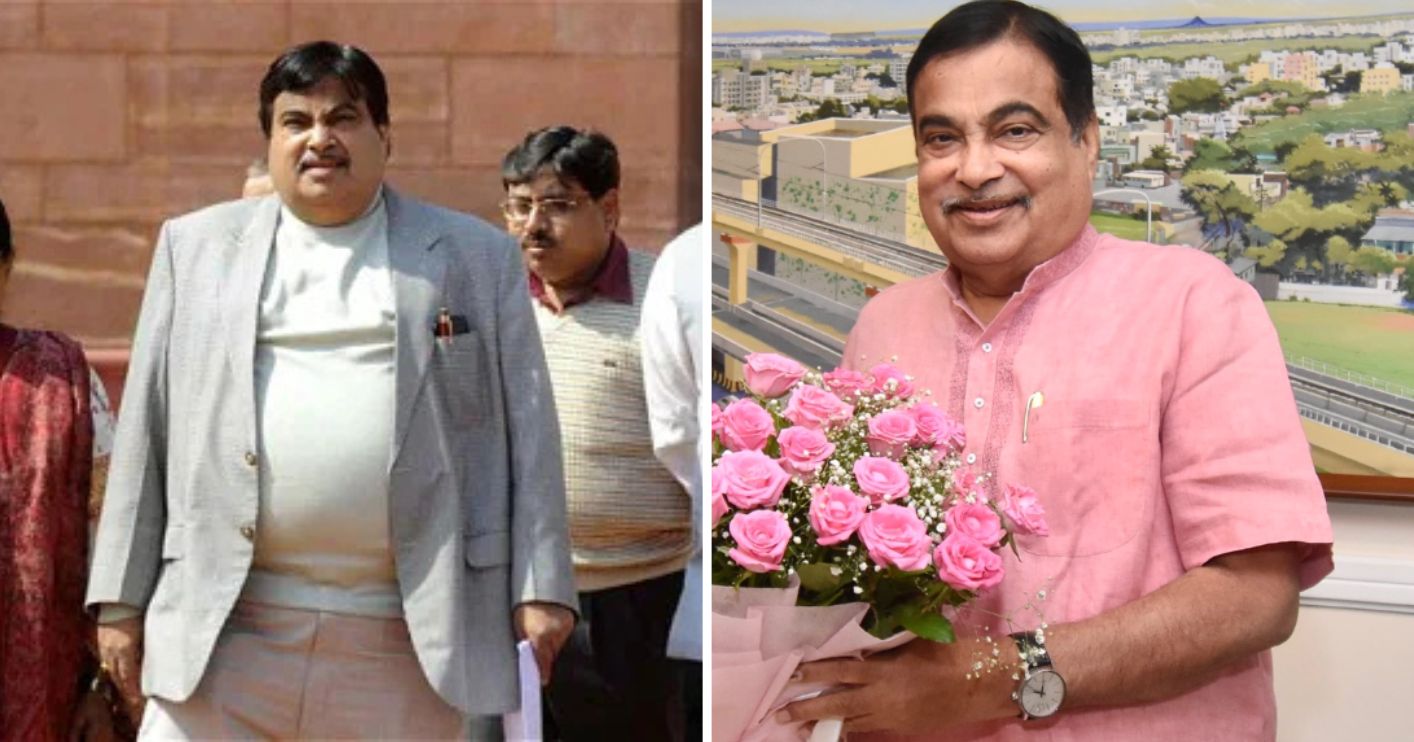
Union minister Nitin Gadkari has opened up about his dramatic weight loss, revealing that he shed around 46 kg after making significant changes to the way he approached his health.
Speaking with filmmaker Farah Khan on her YouTube channel, Gadkari said his weight had once reached approximately 135 kg. He now weighs around 89 kg, which he attributes largely to adopting a more disciplined lifestyle and incorporating regular physical activity into his routine.
From 135 kg to 89 kg
Gadkari described his transformation as something that developed from a broader change in his priorities rather than a short-term weight-loss effort.
The minister said the COVID pandemic was a major turning point for him. He recalled losing people close to him during that period, an experience that prompted him to pay greater attention to his own health.
He said the pandemic made him realise that good health could not be taken for granted and motivated him to make lasting changes.
Two-and-a-half hours of exercise every day
Despite his demanding political schedule, Gadkari said he now makes considerable time for physical activity.
He explained that even though his work can continue late into the night, he generally gets up around 7 am and spends approximately two to two-and-a-half hours exercising.
What was once an occasional activity has now become a fixed part of his daily routine.
Gadkari also acknowledged that his earlier lifestyle was considerably less structured. He described his past routine as “unplanned” and “undisciplined”, contrasting it with the consistency he follows now.
Why COVID became a turning point
For Gadkari, the change was not simply about reducing his weight.
He said the deaths of friends during the pandemic forced him to think more seriously about his own wellbeing. That experience led him to reassess his lifestyle and prioritise his health.
His message was essentially that weight reduction was a consequence of changing his habits, rather than the sole objective.
Weight loss is different for everyone
Gadkari's experience highlights the role exercise can play in improving overall fitness, but his routine should not be treated as a standard weight-loss formula.
The amount of physical activity required to lose weight varies depending on factors such as diet, age, fitness level, sleep, stress, existing medical conditions and medication.
Similarly, exercising for two or more hours every day may not be suitable for everyone. People beginning an exercise programme, particularly those with underlying health issues, should consider seeking medical advice and building up activity gradually.
Consistency over quick fixes
Gadkari's account places greater emphasis on maintaining healthy habits than on following a temporary diet or pursuing rapid weight reduction.
Regular physical activity, sensible nutrition, adequate sleep and sustainable lifestyle changes are generally more useful for long-term health than extreme measures.
His reported change from around 135 kg to 89 kg is substantial, but the larger takeaway from his account is the shift in his priorities after the pandemic.
For Gadkari, exercise has evolved from something occasional into a regular part of everyday life, with health becoming the primary motivation behind the transformation.