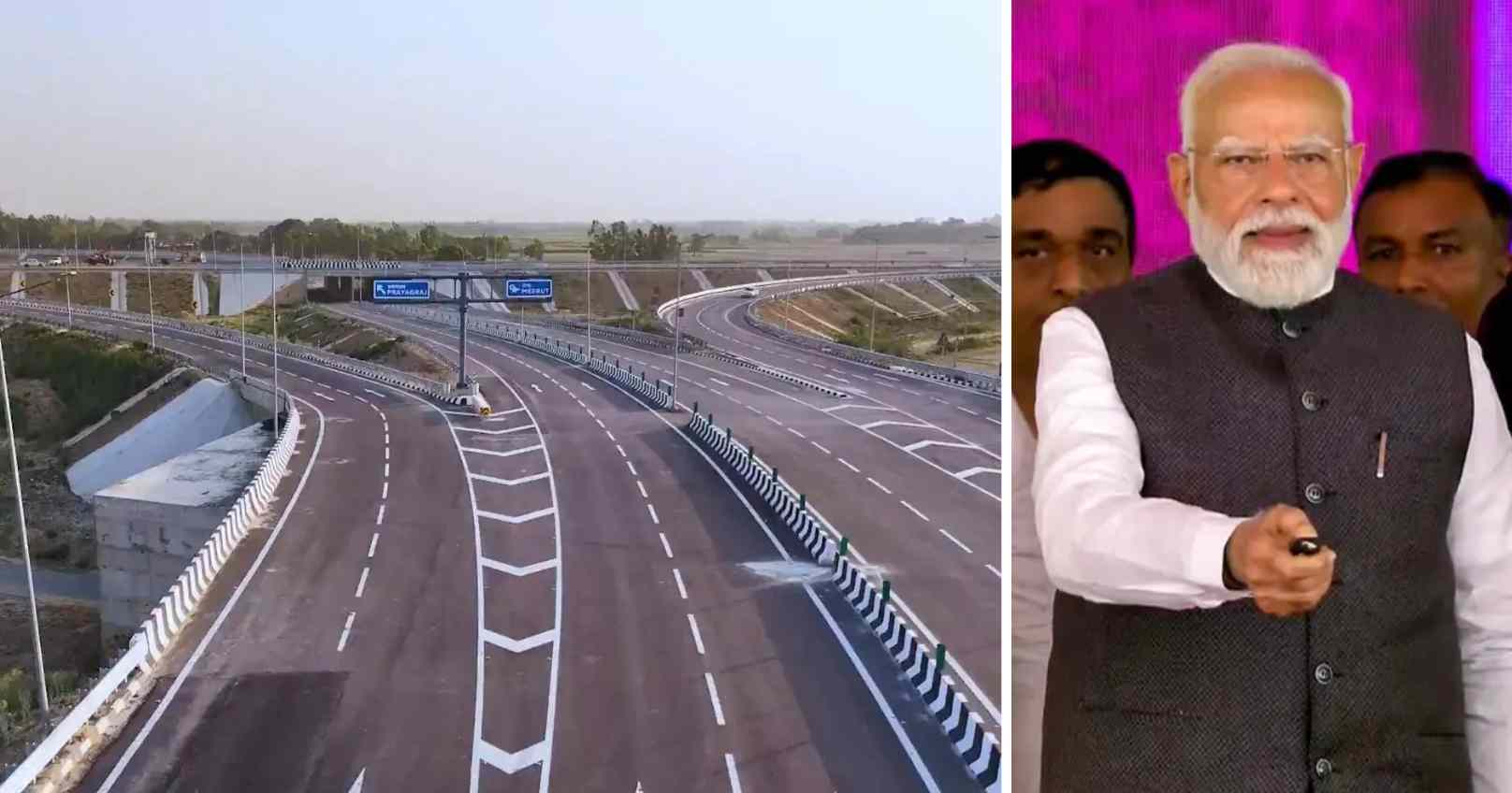
Prime Minister Narendra Modi on Wednesday formally opened the 594-kilometre-long Ganga Expressway, a flagship infrastructure project designed to connect Meerut in western Uttar Pradesh with Prayagraj in the east. Officials said the new corridor is set to improve transport efficiency and unlock fresh economic opportunities across the state.
The expressway runs through 12 districts — Meerut, Hapur, Bulandshahr, Amroha, Sambhal, Badaun, Shahjahanpur, Hardoi, Unnao, Rae Bareli, Pratapgarh and Prayagraj — and is expected to significantly shorten travel time while enabling smoother movement of passengers and freight.
Addressing a gathering in Hardoi during the inauguration ceremony, the Prime Minister compared the project’s importance to that of the river Ganga for the state, calling it a catalyst for accelerated development and improved connectivity.
Uttar Pradesh Chief Minister Yogi Adityanath described the corridor as a major milestone in the state’s infrastructure expansion. In a post on X, he said the six-lane highway — designed to be widened to eight lanes in the future — would serve as a crucial link for rural communities, farmers, businesses and young professionals, helping to bridge distances and strengthen economic prospects.
Union Minister and Uttar Pradesh BJP chief Pankaj Chaudhary also hailed the project, noting that it ranks among the longest expressways in India and represents a significant addition to the state’s road network.
Constructed under a public-private partnership model, the access-controlled highway has a design speed of 120 kmph. A 3.2-kilometre airstrip near Shahjahanpur has been built along the route, allowing emergency aircraft landings, including by the Indian Air Force.
Safety and monitoring infrastructure includes an Intelligent Traffic Management System (ITMS), CCTV cameras, emergency helplines, ambulances and highway patrol units aimed at ensuring secure travel.
The expressway is also expected to spur industrial growth. Plans for Integrated Manufacturing and Logistics Clusters along the corridor include warehousing facilities, cold storage units and food processing centres to attract investment and create jobs.
Authorities said the new highway will integrate with other major routes such as the Purvanchal, Agra-Lucknow, Bundelkhand and Gorakhpur Link expressways, forming an extensive transport grid across Uttar Pradesh. The project is projected to support large-scale employment and align with the state’s ambition of becoming a trillion-dollar economy.
During his visit, the Prime Minister also toured an exhibition organised by the Uttar Pradesh Expressways Industrial Development Authority (UPEIDA), planted saplings and addressed the public before concluding the programme.