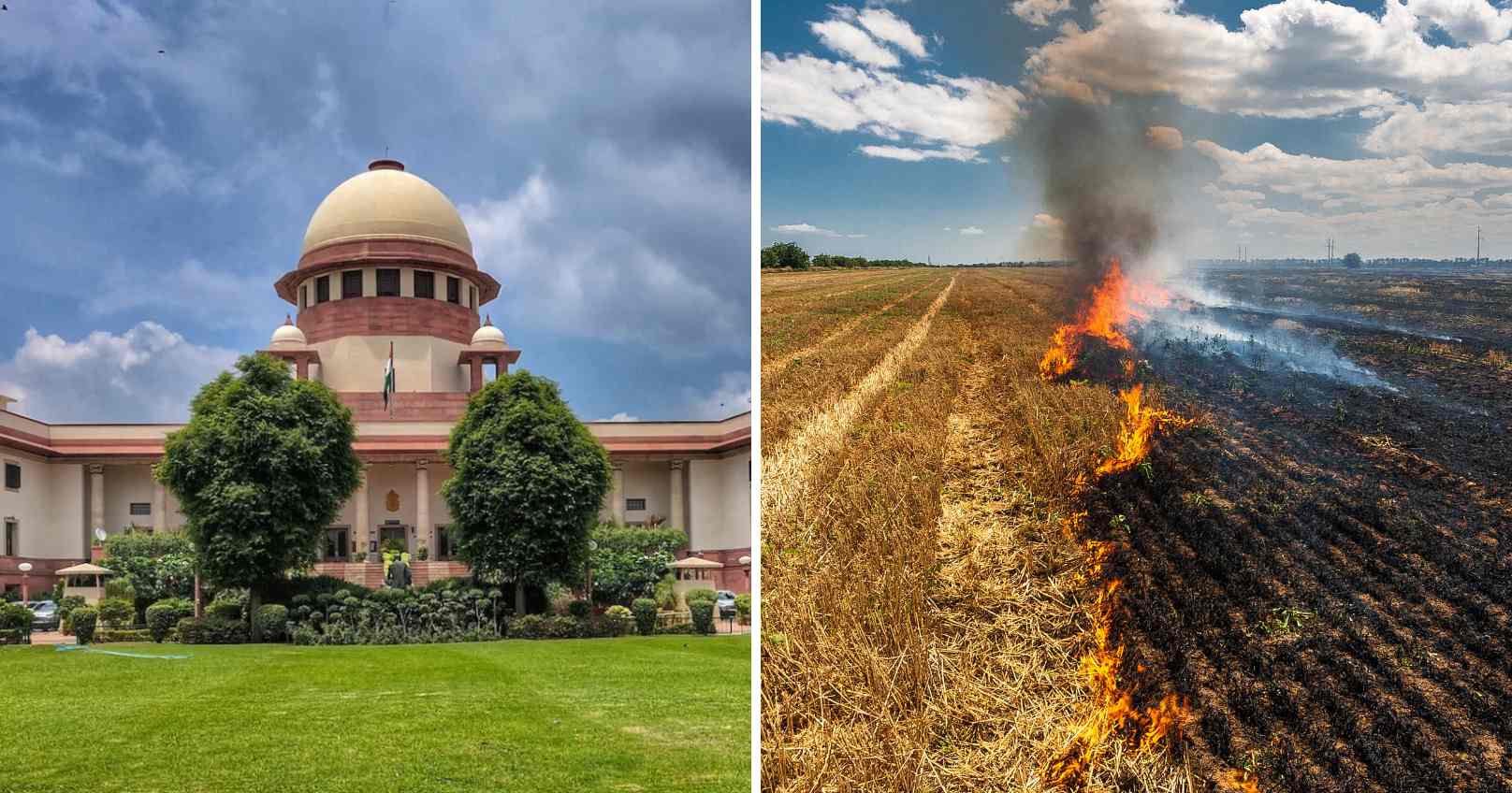
The Supreme Court on Monday demanded comprehensive updates on how effectively Delhi-NCR authorities are implementing the Graded Response Action Plan (GRAP), raising pointed questions about the execution of construction bans and other pollution-control measures.
During the session, the bench underscored that Delhi’s toxic air cannot be attributed to stubble burning alone and insisted on a broader examination of all contributing factors.
At the outset, Chief Justice of India Surya Kant and Justice Joymalya Bagchi noted that the capital’s pollution crisis is multi-layered.
“Crop residue burning is not the sole culprit,” Justice Bagchi told the Centre. “GRAP clearly restricts construction activity. To what degree has that actually been enforced? Include this in the action report.”
In response, the Additional Solicitor General said the government was ready with an extensive affidavit detailing steps taken across several pollution sources. “We have categorised the affidavit into industrial emissions, generator usage, biomass burning, and more. A detailed action plan can be filed,” the ASG stated.
CJI Surya Kant pressed the government to identify the biggest pollutant.
“What is the main source?” he asked. “Stubble burning has become something people conveniently pin everything on, but we do not want to fall into that trap.”
The bench sought clarity on dust pollution as well, probing how much particulate matter is released by vehicles — especially commercial fleets — and how these emissions multiply. “There are multiple contributors,” the CJI said. “Which one is the dominant one? That’s what needs to be determined.”
The court further remarked that stubble burning continued during the Covid lockdown, yet Delhi witnessed the cleanest skies in years. “Crop burning was happening then too. Why did we have blue skies? Because every other activity was halted. Someone must explain this,” the bench noted.
Cautioning all parties against politicising the issue, the CJI remarked, “Stubble burning cannot become a political football or a matter of ego. This requires a scientific approach.”
The bench also emphasised the need to educate farmers and equip them with practical alternatives. “Farmers must be made aware, and we need to ensure they have access to required machinery,” the judges said.
The court asked the Centre to outline its realistic expectations from its action plan. “If even your own expected outcomes aren’t met, should the strategy not be reconsidered?” the bench asked.
The ASG admitted that the aim of completely eliminating stubble burning in Punjab, Haryana, and Delhi had not been achieved. “The target was zero stubble burning across all three states. That goal hasn’t been met,” he said. He added that crop fires remain a seasonal contributor, not a constant one.