The Hammer and the fly: an exquisite metaphor for a grotesque reality
When the state wields a sledgehammer against citizens seeking accountability, the Supreme Court’s words ring hollow - unless backed by action
14-10-2026

When the state wields a sledgehammer against citizens seeking accountability, the Supreme Court’s words ring hollow - unless backed by action
14-10-2026It has become quite evident in the events of this week that fifty-seven metro stations in the city have been shut down, trains suspended, streets barricaded, and internet access banned in a four-kilometre radius of the protest site. A city of twenty million held to hostage, not by the protesters, but by the state’s fear of them.
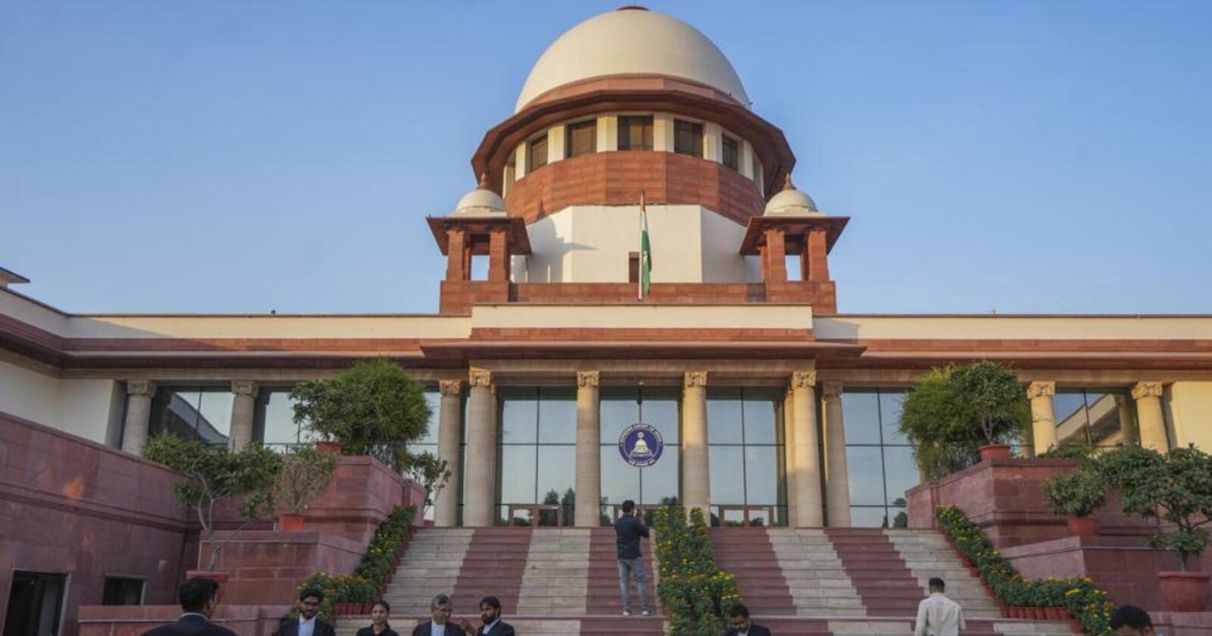
On 9th October 2026, during the protests calling for the resignation of the Chief Election Commissioner Gyanesh Kumar over the controversy involving the SIR of electoral rolls, a three-judge Bench of the Supreme Court, presided over by Chief Justice Surya Kant, observed something to the Centre and Delhi Police: “You cannot use a hammer to kill a fly.”
While discussing the necessity of prohibitory orders, it took a bench of the Supreme Court, petitioned by CPM general secretary MA Baby, to point out the obvious: “There is a distinction between complete prohibition and regulation…The word ‘closure’ in the metro notice appears to sit uncomfortably with the expression ‘frequency reduced’. Reduction of frequency is regulation. Closure is prohibition.”….” Not everyone has a car.” Tushar Mehta, the Solicitor General of India, conceded to reconsider. But the pattern is crystal clear: when citizens demand their constitutional right to peacefully assemble, the State’s default response is not regulation but prohibition; not proportionality but overreach.
However, this observation does not only relate to the issue of the metro stations. It reveals the disturbing practice of prohibition rather than regulation applied to the situation of a possible protest. The right to assemble peacefully protected by Article 19 of the Constitution cannot be made insignificant because of unreasonable restrictions under the pretext of public order.
In this case, the problem lies much deeper as it concerns the reaction of the State to its citizens’ call for accountability in the middle of an ongoing debate about the electoral integrity of the country. “A constitutional democracy should be evaluated not according to its ability to prohibit dissent but to accommodate it.”
A recent expose in the Indian Express revealed that during the span of a decade starting November 2025 and ending in August 2026, two Election Commissioners Dr. Sukhbir Singh Sandhu and Dr. Vivek Joshi recorded dissent in writing on at least 14 occasions against the decision taken unilaterally by the CEC. It is not just that. These are decisions regarding SIR of electoral rolls, resulting in approximately 13.37 crore names being omitted from the draft electoral rolls of 30 states and union territories.
In a statement issued by the Commission itself clarifies that the above-mentioned names were put in the ASDD category – Absent, Shifted, Dead, and Duplicate. According to the spokesperson of BJP, Sudhanshu Trivedi, 2.8 crore deceased voters, 6.3 crore of those who have shifted forever, 1 crore duplicate and 3 crore voters who could not be located. The Commission states that this is the normal revision of names; not deletion.
But here comes the tricky part: the petitioners argue that statutory Form 6 – Application for inclusion of name in electoral roll, has been unilaterally amended by the CEC, adding a mandatory “ancestral condition” for first-time voters without having any legislative backing. Two Election Commissioners explicitly labelled this amendment “unauthorised and illegal”.
Even more shocking: 16.10 lakh appeals have been filed by the ECI against the citizens of the country in West Bengal Appellate Tribunals without the knowledge or authorization of Commissioners Sandhu and Joshi. In his own words, recorded in writing, Commissioner Sandhu questioned: “Who was authorized to file these appeals on behalf of ECI and by whom?” The question hangs in the air like a bad smell.
Under Section 18 of the Chief Election Commissioner and Other Election Commissioners (Appointment, Conditions of Service and Term of Office) Act, 2023, the provisions are clear: “All business of the Election Commission shall, as far as possible, be transacted unanimously, and if the Chief Election Commissioner and other Election Commissioners differ in opinion on any matter, such matter shall be decided according to the opinion of the majority.”
The provisions of this statute couldn’t be more explicit. The CEC has one vote. The two Election Commissioners have two votes. In a 2-1 division, the majority wins. The CEC does not have the power of veto. The CEC does not have superiority over others. The CEC, in legal terms, is exactly at par with his other colleagues.
However, if the allegations are to be believed, for almost a year, decisions were taken and implemented in the name of the Commission despite the lack of concurrence from the majority of members.
The observations of the Court on October 9, 2026, did not come out of nowhere. They are based on the legal practice that has long recognized the right to protest as a fundamental right.
In Mazdoor Kisan Shakti Sangathan v. Union of India, the Supreme Court observed: “Right of people to hold peaceful protests and demonstrations etc. is a fundamental right guaranteed under Art. 19(1)(a) and 19(1)(b) … Peaceful protests and demonstrations, can be allowed in a guarded and regulated manner, to enable the protestors to exercise their right, ensuring that no inconvenience of any kind is caused to the residents.” Thus, the Court confirmed that “Holding peaceful demonstrations by the citizenry to air its grievances is a fundamental right… subject to reasonable restrictions, which can be imposed in the interests of sovereignty and integrity of India or public order”.
In Anita Thakur v. Government of Jammu & Kashmir, the Court was even more poetic: “An unarmed, peaceful protest procession in the land of ‘salt satyagraha’, fast-unto-death and ‘do or die’ is no jural anathema… One cherished and valuable aspect of political life in India is a tradition to express grievances through direct action or peaceful protest…..and the right to peaceful protest is now recognised as a fundamental right in the Constitution.”
In Bimal Gurung v. Union of India, the Court referred to several fundamental rights, as source of the right to protest: “We can appreciate that holding peaceful demonstration in order to air their grievances and to see that their voice is heard in the relevant quarters is the right of the people. Such a right can be traced to the fundamental freedom that is guaranteed under Articles 19(1)(a), 19(1)(b) and 19(1)(c) of the Constitution. Article 19(1)(a) confers freedom of speech… Article 19(1)(b) confers the right to assemble… Right to move freely given under Article 19(1)(d), again, ensures that the petitioners could take out peaceful march.”
The Supreme Court has reiterated many times that the right to protest is a fundamental right flowing from Articles 19(1)(a) and 19(1)(b) of the Constitution. This is not a concession made by the state. This is a guarantee obtained from the state by the Constitution. However, as much as this right is indispensable, it cannot be rendered illusory by administrative measures. As much as dissent is a constitutional right, it cannot be criminalized. As much as the opposition must be maintained, it cannot be silenced by pre-emptive prohibitions.
What is happening in Delhi is not unique. Everywhere in the world, mass protests have forced governments to backtrack on unpopular laws and policies. Evidence is overwhelming.
Ukraine, 2014: The Anti-Protest Laws
In January 2014, the Ukrainian parliament adopted a set of anti-protest laws that prohibited mass gatherings, blocking government buildings, and classified NGOs as foreign agents. These laws inflamed demonstrators, who started violent clashes with police. A few weeks later, the Ukrainian parliament convened an extraordinary sitting and adopted the resolution of revocation of all laws adopted on January 16 almost unanimously (361 out of 412 lawmakers). The Ukrainian prime minister resigned. The Ukrainian government gave amnesty to over 200 people who were detained during “Euro Maidan” protests. The protests started in November 2013 after the Ukrainian president announced that Ukraine would not join the EU. They continued for months regardless of cold weather and threats of violence. The government’s attempt to suppress the dissent by means of legislation had failed miserably.
Hong Kong, 2019: The Extradition Bill
For fourteen weeks, Hong Kong was rocked by protests virtually everyday regarding the extradition bill that would permit criminal suspects to be extradited to mainland China. Around 1,100 protestors were arrested. Police used water cannon, teargas, rubber bullets, and batons against the protestors. In September 2019, Chief Executive Carrie Lam declared the official withdrawal of the extradition bill. “In view of the public concern, we will withdraw the bill now,” she declared in a pre-recorded video message. The protestors had made the complete withdrawal of the bill a fundamental demand of the “five demands”. At least one of the demands was met. While the others, like amnesty for protestors and universal suffrage, had not been fulfilled yet, the government had been forced to concede on the central point.
Romania, 2017: The Corruption Decree
In February 2017, the Romanian government passed a decree that would make some corruption crimes decriminalized. Critics of the decree believed that it would absolve corrupt officials who were convicted or charged with corruption.
The protests were attended by hundreds of thousands of Romanians for five days in a row. These protests were the largest since the fall of communism in 1989.
Prime Minister Sorin Grindeanu succumbed to the pressure. “I don’t want to divide Romania. It cannot be divided into two,” he declared in his televised speech. “We will revoke the decree,” he declared further. “I heard and saw many opinions,” he added, “including ‘the voice of the street’.” “The voice of the street”. These words should sound familiar in Delhi today.
Kenya, 2024: The Finance Bill
In June 2024, Kenyan President William Ruto declared the withdrawal of a controversial finance bill which would increase taxes on imports of eggs and specialist hospital equipment. The declaration came after a month of massive protests when protestors stormed and burned the Parliament building and demanded the president to resign. At least 22 people were killed when the police opened fire against the protestors. President Ruto deployed the military to restore control of the legislature. However, being faced with the spread of protests all around the country, even into the government-supporting regions, Ruto gave in. “Listening keenly to the people of Kenya who have made it clear that they do not want anything to do with the finance bill 2024, I concede,” he stated in a press conference. The retreat was complete. The president who had marketed himself as the voice of the people was proven wrong by the youth-driven protest movement born on social media platforms.
A chilling precedent can be drawn from history. In November 2021, Prime Minister Narendra Modi announced the repeal of three controversial farm laws that had sparked the longest farmers’ protest in modern Indian history.
These laws were hastily adopted through a voice vote in Parliament without proper discussion, having been introduced through an executive ordinance, a tool traditionally reserved for emergencies. Farmers had protested for over a year, enduring heat, cold and the pandemic, while dozens had died.
Initially, the government had offered to place the laws in abeyance for two years. Farmers had rejected the proposal. The government then adopted a watch-and-wait policy. But then the Prime Minister appeared on national television: “Despite several attempts to explain the benefits to the farmers, we have failed. On the occasion of Guru Purab, the government has decided to repeal the three farm laws”.
Message is loud and clear: mass protests work. They don’t guarantee success. They exact a terrible price. But when the institutions fail, when Parliament hurriedly passes laws without debate, when the Executive chooses to ignore them, when the courts drag their feet, the streets remain the last resort of the citizens.
SATIRE OF SELF-INFLECTIONS
The Election Commission of India, the constitutionally mandated body responsible for holding free and fair elections, is suddenly facing a challenge of its own decisions being termed “unconstitutional, ultra vires, and void ab initio.” The protector of the electoral roll is accused of manipulating it. The custodian of the Model Code of Conduct is alleged of violation of statutory processes. The body meant to restore public faith in elections is under public protests demanding the resignation of its chief.
In a fictional world, this would be considered too absurd to be believable. But this is our real life.
It would not be inappropriate to recall the irony involved here, where the government, out of its fear of protests, ordered the closure of 57 metro stations, penalizing the millions of residents of Delhi for the sake of hundreds of citizens exercising their fundamental rights of peaceful assembly. The Supreme Court reminded the state that “you cannot use a hammer to kill a fly.”
But who is the hammer, and who is the fly?
Is the hammer the prohibitory orders by the state, and the fly, the peaceful protests? Is the hammer the alleged unilateral decisions of the CEC, and the fly, the 13.37 crore names missing from draft electoral rolls?
The metaphor works both ways. But that is what makes the matter even more problematic.
Protests work. It is never guaranteed to work. It comes at a terrible cost – in terms of time, resources, and lives lost. But in the face of institutional failures, it remains the only tool left for the citizenry.
The fly is not the protester. The fly is the problem – the allegations of unilateral decision making, the suppression of dissent, and the revisions in electoral rolls. The hammer is not the protest. The hammer is the government’s response – excessive, preemptory, and undemocratic.
The Supreme Court has reminded the government about how hammer should not be used against the fly. But it might as well remember that fly exists because the hammer was used initially, against institutions which were there to protect the people from such hammers.
-The views expressed in this article are the author’s own and do not necessarily reflect those of the publication.

At 46, Sanjay Gandhi’s son has already spent three terms in Parliament, written extensively on rur
Read More
More than 70 British parliamentarians have urged UN Secretary-General António Guterres to step up e
Read More
India’s data protection law does not reward the best-drafted document or the most expensive tool.
Read More