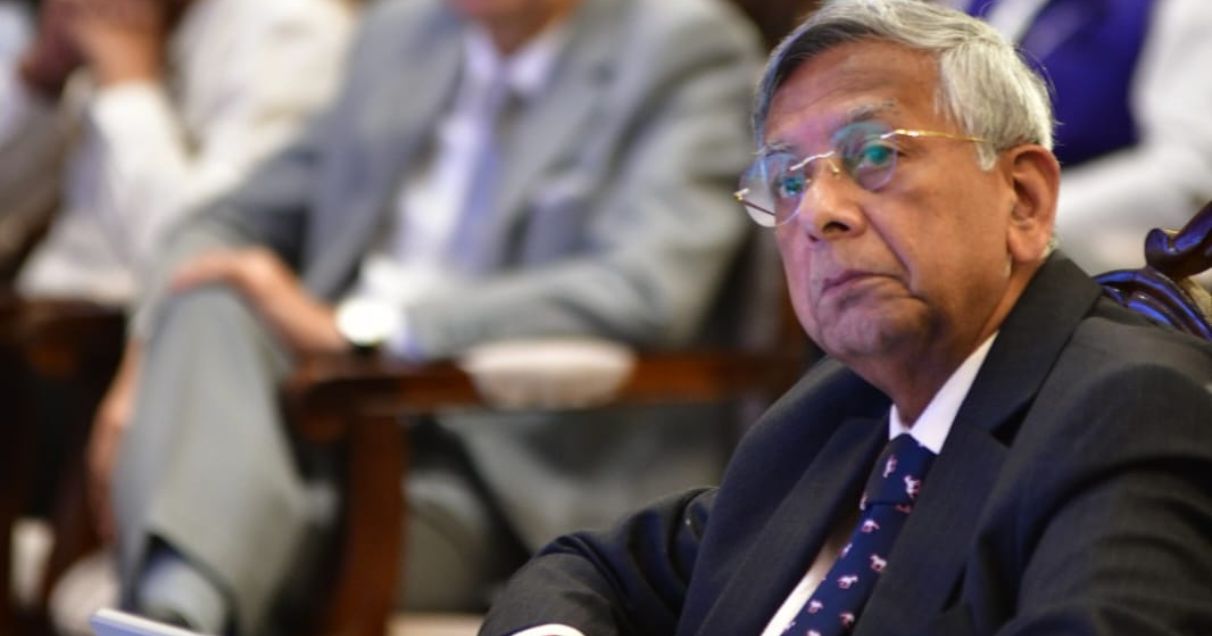
Speaking at the Gujarat High Court Arbitration Centre's Arbitration Week in GIFT City this month, Attorney General R Venkataramani said something that deserves more attention than a conference soundbite usually gets. He has been talking to the government, he said, about taking “a second look” at the memorandum that restricts the State's participation in arbitration, so that the norms become more relaxed. And he added the sentence that matters most: the memorandum is not a statute. It can be altered. It can be recalled.
Coming from the country's highest law officer, that is a remark of some courage. It is easier for an Attorney General to defend an executive instruction than to question it, and easier still to say nothing at all. Venkataramani has instead done what the office at its best is for, offering the government candid counsel rather than convenient endorsement, and doing so in public, where the commercial world that has to live with the policy can hear it. He has been engaging with the government on this quietly for some time; the conference remark reflects work already under way, not a rhetorical flourish.
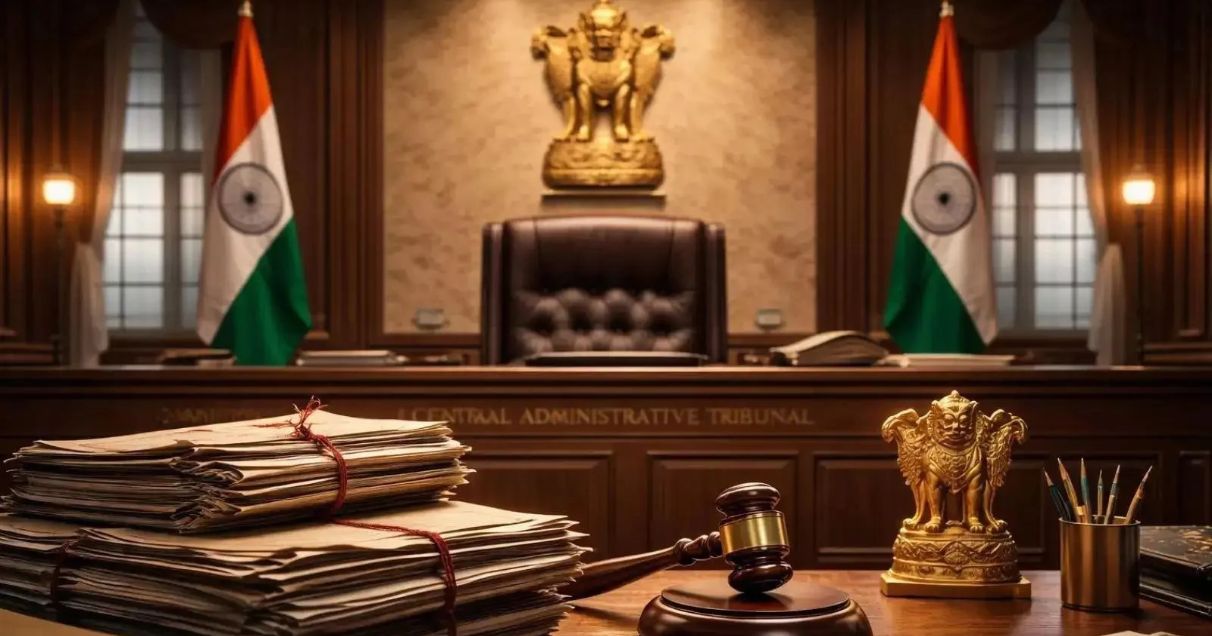
He is right on both counts, that the policy should be revisited, and that nothing in law prevents it. The Office Memorandum issued by the Ministry of Finance's Procurement Policy Division on 3 June 2024 is an administrative instruction, not legislation. It was written quickly, in a mood of exasperation, and it has since done quiet damage to a reform project that three amendments to the Arbitration and Conciliation Act, a new arbitral institution in Delhi, an arbitration ecosystem at GIFT City and a newly constituted Arbitration Bar of India have all been working to build.
What the memorandum actually does
The guidelines instruct government departments, central public sector enterprises, public sector banks and government companies that arbitration is not to be routinely included as a dispute resolution method in domestic procurement contracts, “particularly in large contracts”. Where an arbitration clause is used, it should ordinarily be confined to disputes valued below ₹10 crore. Anything above that threshold requires a conscious decision, recorded reasons, and the approval of a Secretary or an officer not below the rank of Joint Secretary, or, in a CPSE or public sector bank, the Managing Director. Departments are instead pointed towards mediation under the Mediation Act, 2023, and towards negotiated settlement through a high-level committee.
On paper the language is permissive; “may” does a lot of work in the text. In practice, in an administrative culture where no officer is ever punished for choosing the cautious path and many are investigated for choosing the commercial one, a requirement of written reasons plus Secretary-level sign-off is a prohibition wearing a suit. Two years on, the predictable has happened: arbitration clauses have quietly disappeared from the tender documents of the country's largest buyer of goods, services and infrastructure.
The grievance was real. The diagnosis was not.
It would be dishonest to pretend the memorandum came out of nowhere. It was written after a decade of dispiriting experience with public sector arbitration: tribunals of three retired judges paid by the sitting; hearings adjourned into a fourth year; claims and counterclaims argued exactly as they would have been in a courtroom, only more expensively; and awards that were then challenged under Section 34, appealed under Section 37, and carried up the hierarchy anyway. A handful of very large awards against public utilities, and the long enforcement battles that followed them, hardened the mood inside government considerably. The exchequer paid for the arbitration and then paid for the litigation about the arbitration.
Every one of those complaints is legitimate. None of them is a complaint about arbitration. They are complaints about ad hoc arbitration, the Indian variant, in which the parties appoint retired judges, procedure is improvised, fees are charged per hearing, and no institution exists to impose a timetable or a cost discipline. The government is not an innocent victim of that culture; it built a large part of it. For decades, public sector contracts required the contractor to pick an arbitrator from a panel drawn up by the employer, or let a departmental officer appoint the tribunal. The Supreme Court has since held that unilateral appointment of this kind cannot survive the equality principle. That holding was a verdict on how the State had been arbitrating, not on whether it should.
Treating the forum as the disease produces a rule that is precisely inverted. The ₹10 crore ceiling reserves arbitration for small disputes and forces large ones into court. But the case for arbitration is strongest exactly where the memorandum forbids it: multi-year EPC and concession disputes turning on delay analysis, variation claims, geotechnical conditions and expert evidence, where a specialist tribunal sitting continuously is faster and better than a generalist judge with a list of four hundred matters. And the cost objection runs the same way round. Institutional fees on a ₹500 crore claim are a rounding error; on a ₹5 lakh claim they are ruinous. The memorandum allocates arbitration to the disputes it suits least.
Mediation is not a substitute; it is a complement
The turn towards mediation is the memorandum's most sympathetic feature and its weakest link. Mediation works when both sides face a credible and reasonably prompt alternative. Remove arbitration and the government's alternative becomes a writ petition or a commercial suit resolved, optimistically, in eight to twelve years. That does not create settlements; it creates leverage. A contractor with wages to pay accepts a haircut it does not believe in, and the public exchequer books a saving that is really a transfer from a supplier's balance sheet.
There is a deeper problem the memorandum does not touch. Indian officials do not avoid settlement because they lack a statute, the Mediation Act, 2023 exists. They avoid it because signing away a rupee of a government claim invites the attention of the vigilance machinery, the auditor and, in the worst case, an investigating agency, years later, when the commercial context has evaporated and only the signature remains. An arbitral award is administratively safe precisely because it is imposed. A settlement has to be owned. Until an officer who settles reasonably and in good faith is protected as firmly as an officer who litigates pointlessly, mediation will remain a policy that is announced rather than used.
What everyone else does
No major arbitration jurisdiction limits state participation by the value of the dispute. Brazil is the instructive case, because it travelled in the opposite direction from India after facing the same anxieties. Law No. 13,129 of 2015 amended the Brazilian Arbitration Act to state expressly that the public administration — direct and indirect, including state-owned enterprises — may arbitrate disputes concerning disposable patrimonial rights, and the 2021 public procurement statute carried the principle into contracting practice. Brazil's concessions, oil and gas, ports and power sectors now arbitrate as a matter of course, with the federal audit court supervising the framework rather than forbidding it.
The United States authorises federal agencies to use binding arbitration under the Administrative Dispute Resolution Act of 1996, with procurement-specific machinery in the Federal Acquisition Regulation. The United Kingdom's departments and public bodies arbitrate under standard-form construction and energy contracts and are bound by a government-wide commitment to use proportionate dispute resolution; Westminster's response to arbitration's shortcomings in 2025 was to modernise the Arbitration Act, not to fence the State out of it. Singapore's statutory boards and agencies arbitrate at SIAC without a value cap, which is one reason a small state is trusted with disputes many times the size of its economy.
France is the cautionary tale. Article 2060 of the Civil Code long barred public entities from arbitrating, and the country then spent decades legislating exceptions, litigating the boundaries and watching sophisticated counterparties structure around the rule. India should not import a restriction that France has been trying to escape since before the Arbitration and Conciliation Act was drafted. What these jurisdictions actually use to control the risks the memorandum worries about is not a threshold. It is institutional appointment, published fee scales, tight timetables, disclosure standards and a disciplined approach to challenging awards.
The signalling cost, and the capital-exporter problem
India is asking the world to arbitrate here. The India International Arbitration Centre was given statutory status in 2019. GIFT City is being built out as an international dispute resolution seat. The Arbitration Bar of India was launched to professionalise the practice. A draft amendment Bill circulated in 2024 , still, remarkably, only a consultation draft, proposes emergency arbitrators, appellate arbitral tribunals and a stronger institutional framework. Against all of that, the single most important commercial actor in the country instructs its officers not to agree to arbitration in anything that matters. Foreign counsel notice. So do bidders, who price sovereign counterparty risk into their tenders; the State ultimately pays that premium, it simply pays it in the contract price rather than in arbitrators' fees, and it never sees the line item.
The Attorney General's most far-sighted point at GIFT City was about India's changing position in the world economy. India is no longer only a recipient of foreign investment; it is increasingly an exporter of capital, and Indian companies and financial institutions will be claimants abroad. A state that has written arbitration out of its own procurement contracts argues from a weakened position when it insists on neutral fora for its nationals overseas, and when it negotiates investment treaties on the strength of its domestic dispute resolution architecture. Consistency at home is not sentiment. It is negotiating capital.
Withdraw the ceiling, keep the discipline
Repealing the value threshold is not an argument for returning to the old regime. It is an argument for replacing a blunt exclusion with a quality regime. Six measures would do more than the memorandum ever could.
First, withdraw the ₹10 crore ceiling and reverse the default: arbitration in procurement contracts above a modest floor, litigation below it, since small claims genuinely are cheaper in a commercial court.
Second, make institutional arbitration mandatory for government contracts, with the tribunal appointed by the institution and not by the employer. This codifies what the Supreme Court has already held and removes the structural distrust that made government arbitration a fight before it began.
Third, adopt ad valorem fee schedules, expedited procedures for mid-value claims, and a hard limit on adjournments, enforced by the institution rather than by the parties' goodwill.
Fourth, create a genuine safe harbour. An officer who settles a claim, or declines to challenge an award, on recorded reasons and independent advice should be protected from vigilance and audit action absent mala fides or illicit gain. This is the highest-value reform available and it costs nothing.
Fifth, impose a real litigation policy on challenges. Awards against the government should be appealed only after a reasoned internal review certifies a ground under Section 34, not reflexively because no one wants to be the officer who let an award stand.
Sixth, build tiered clauses on major infrastructure — standing dispute boards, then mediation, then institutional arbitration — which is how the rest of the world resolves most construction disputes before they ever reach a tribunal.
The Attorney General also warned against knee-jerk reactions and called for a twenty to thirty year roadmap for India's engagement with arbitration, domestic and international. That is exactly the right frame, and it is rarer than it should be in a debate usually conducted in the language of the last bad outcome. Judged against it, the June 2024 memorandum is what a knee-jerk reaction looks like when it is typed on official letterhead: a response to a run of unhappy experiences, generalised into a rule for every case that will ever arise. It was issued in a fortnight; the reputational damage will take a decade to undo if it stays.
Venkataramani was equally unsparing about his own side of the profession, telling the Bar it has been a part-time activist and has not played its role in the shift from ad hoc to institutional arbitration. That criticism lands, and the Bar would do well to accept it rather than applaud it. But the Bar cannot institutionalise a market that the country's largest contracting party has been instructed to stay out of.
The memorandum is not a statute. It can be recalled by the same authority that issued it, and it should be, because a state that will not submit its own commercial disputes to neutral adjudication has no standing to ask anyone else to submit theirs here. The Attorney General has done the system a service by saying as much publicly, and by carrying the argument into government rather than leaving it on the conference circuit. The response now rests with the government he advises.