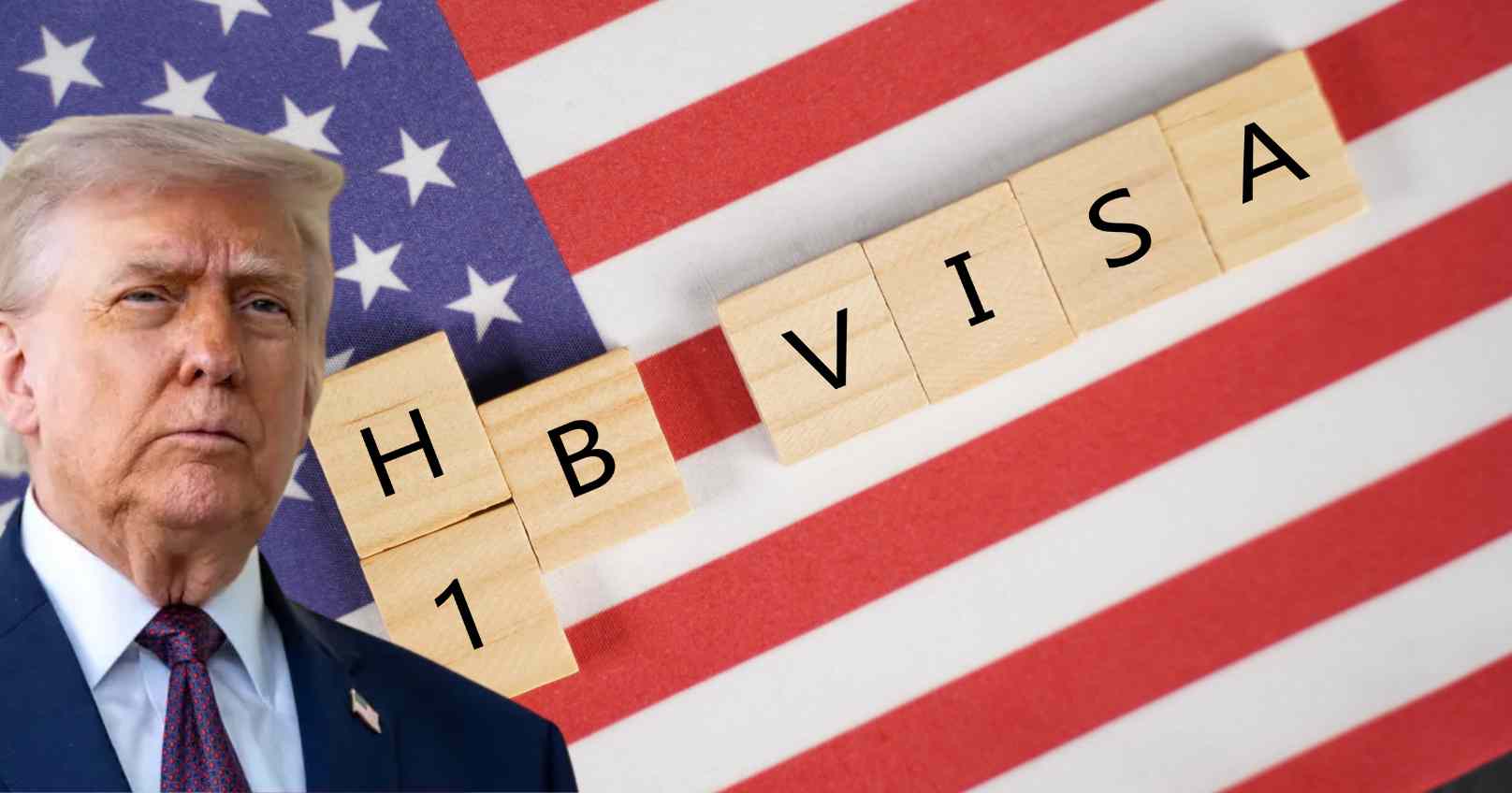
After years of tightening odds in the H-1B visa lottery, US employers are seeing a dramatic shift in 2026. Selection rates for the high-skilled worker visa have climbed to levels not witnessed in recent cycles, with many firms reporting success rates above 50%, and in some cases touching 75%.
The improvement, however, is not due to an expansion of available visas. Instead, it stems largely from policy measures introduced under US President Donald Trump that significantly reduced the number of applicants entering the lottery.
According to reporting by Bloomberg Law, immigration attorneys and major employers have observed far stronger lottery outcomes compared to previous years, when the probability of selection hovered near 33%.
Business immigration firm BAL said some of its clients recorded selection rates exceeding 60%. Other prominent firms such as Ogletree Deakins, Erickson Immigration Group and Boundless Immigration also reported markedly improved outcomes. In several high-wage and master’s degree categories, approval rates crossed the 75% mark.
Why the Odds Improved
The stronger selection rates are tied to structural changes implemented by the Trump administration. One of the most impactful measures was a $100,000 fee imposed on companies hiring new H-1B workers from overseas. The additional cost discouraged many employers from recruiting internationally, sharply narrowing the applicant base.
Sectors such as universities and hospitals, which have historically relied on foreign professionals, were particularly affected. Many technology companies and other businesses subject to the annual visa cap also reduced or paused overseas sponsorships. In recent years, that group had accounted for roughly 40% of new H-1B hires.
As a result, overall lottery registrations dropped significantly. Estimates cited by Bloomberg Law, drawing on projections from immigration services firm Lawfully, suggest that between 195,000 and 235,000 applications were submitted this spring — potentially 43% fewer than the previous year and the lowest since the electronic lottery system began in 2020. For comparison, registrations had surpassed 750,000 just three years ago.
With the statutory cap fixed at 85,000 visas, the smaller pool naturally translated into better mathematical odds for those who entered the lottery.
Immigration attorney Kelli Duehning of BAL described the six-figure fee as the primary factor behind the shift. The policy particularly benefited candidates already in the US, as their employers could register them without incurring the added expense.
Weighted Lottery Favors Higher Salaries
In addition to the fee, the administration finalised changes to the lottery system in December. The previous random selection model was replaced by a weighted framework that prioritises higher wage levels. Depending on salary bands, applicants can receive multiple entries — up to four chances — increasing the likelihood of selection for better-paid and more senior roles.
The revised approach channels visas toward experienced professionals rather than entry-level workers, aligning with the administration’s stated objective of favouring top-tier talent.
Alejandra Zapatero of Erickson Immigration Group told Bloomberg Law that her firm’s major corporate clients saw selection rates ranging between 44% and 71%, with the strongest outcomes concentrated in upper wage brackets.
Broader Industry Trends
Beyond policy shifts, labour market dynamics have also contributed to the smaller applicant pool. The technology sector, traditionally one of the biggest users of the H-1B programme, has scaled back hiring after investing heavily in Artificial Intelligence and focusing on senior-level recruitment.
Uncertainty surrounding regulatory changes has further encouraged some employers to delay participation in the lottery this year.
Meanwhile, the $100,000 fee faces legal challenges in multiple federal courts, including the US Court of Appeals for the District of Columbia Circuit and district courts in California and Massachusetts. Even if courts overturn the fee, upcoming Labour Department proposals could substantially raise wage requirements for H-1B positions, potentially reshaping employer demand once again.
Outlook
In effect, the administration’s policies have reduced the volume of applications, making the 2026 H-1B lottery significantly more predictable for those who applied. While higher-paid, experienced professionals are currently benefiting from improved odds, the programme’s future will depend on ongoing court decisions and further regulatory adjustments.